7 Ways the ESV Journaling PDF Files Can Improve Your Bible Study

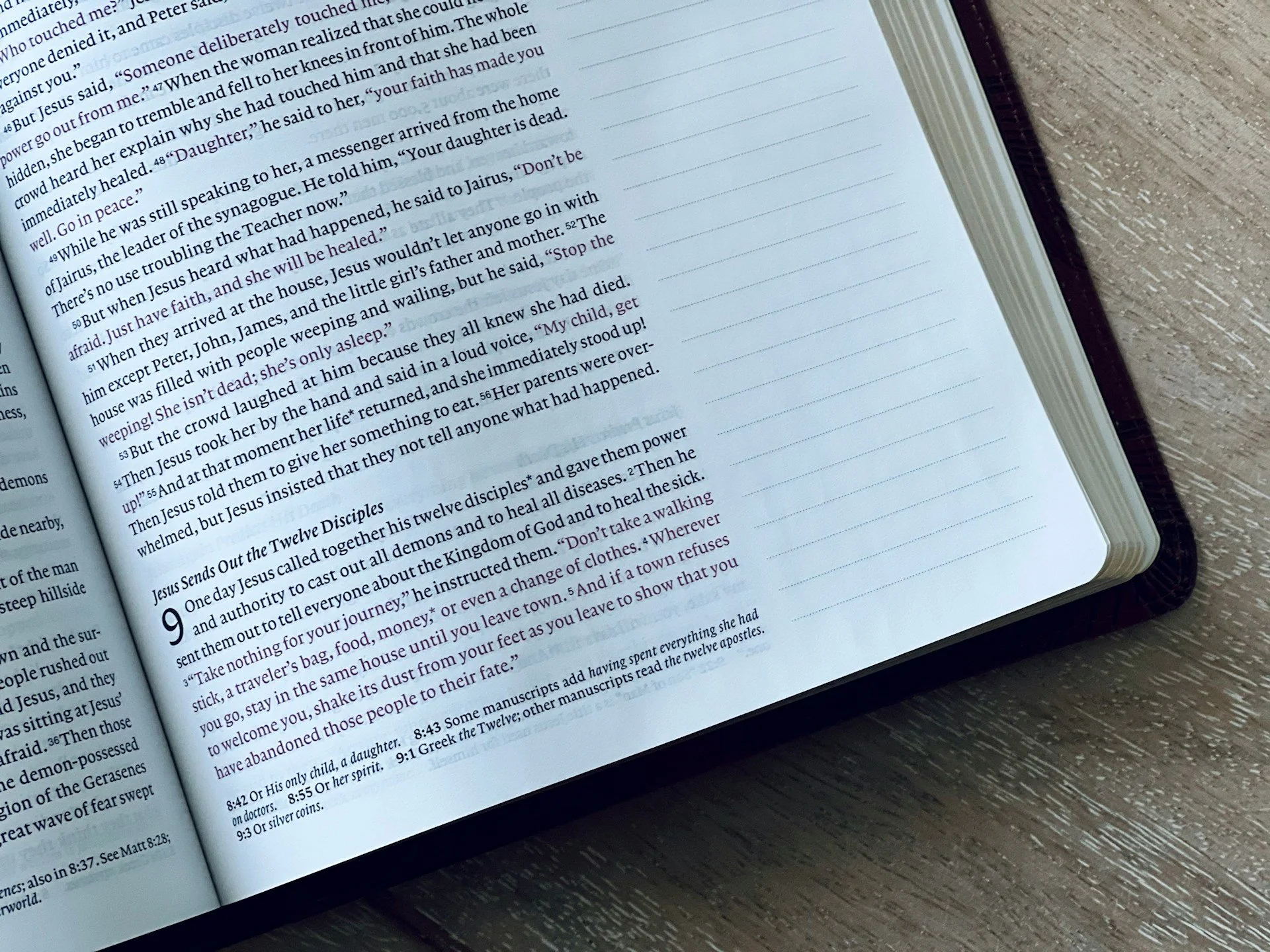
Journaling Bible, open to a page.

There are piles of Bible study tools available. Some are wonderful. Some are unnecessary. Some are junk. And some seem designed mainly to help us avoid actually reading the Bible.

But every so often, a simple tool comes along that really does help. I’m thrilled about just such a tool.

Crossway’s ESV Bible, Portrait Journaling Edition PDF Download is one of those tools.

This is not complicated. That is part of the beauty of it. You purchase the PDF download, and then you receive the complete Bible text separated into 66 PDF files, one for each book of the Bible. So instead of carrying around an entire journaling Bible or trying to squeeze notes into the tiny margin of a regular Bible, you can print the book of the Bible you are studying and mark it up. And maybe keep it forever or only use it temporarily.

I’ve found that the PDF edition allows users to download, print, and journal alongside chosen portions of Scripture. The portrait edition uses an 8.5" x 11" layout, 9.5-point type, and ruled margins beside the biblical text. It is designed for personal devotions, small-group study, Sunday School preparation, and sermon preparation.

That is exactly why I like it!

I have used journaling Bibles for years. I love them. I write in them. I underline. I circle. I draw lines. I add all kinds of notes. But there are times when I want to work through a passage for a specific purpose without making those notes permanent in my other journaling Bibles. A printed PDF gives me that freedom.

With all that in mind, here are seven ways this tool can help improve your Bible study.

1. Print only the book or passage you are studying

One of the best features is also the simplest. The download contains a folder with 66 PDF files. Each file is a book of the Bible.

So, if you are studying 1 John, you open the 1 John PDF and print it. If you are working through Philippians with a small group, print Philippians. If you are preparing to teach Jonah, print Jonah. There is no need to print the whole Bible, buy another bound volume, or haul around more paper than necessary.

This makes Bible study feel more focused. You are not staring at everything at once. You are working through the actual book in front of you.

2. Mark it up without hesitation

A printed copy gives you permission to be messy.

Circle repeated words. Underline key phrases. Draw arrows. Box commands. Highlight contrasts. Write questions in the margin. Put a large question mark next to something you need to study later. Track themes. Mark structure. Note Old Testament echoes. Write down cross-references.

You can do all of that in a Bible, too, of course. But sometimes I hesitate because I do not want to clutter the page forever. A printout removes that pressure.

This is especially useful when you are still early in the study process. Some early notes are gold. Some are not. They looked useful at first, but after a closer look, they need to go. That is fine. Print another copy.

3. Use it for sermon or teaching preparation

For preachers and Bible teachers, this is outstanding.

Print the book or passage you are teaching and carry it with you. Work through the text slowly. Mark the flow of thought. Identify the author’s argument. Note transitions. Write down illustrations, questions, applications, and connections to the gospel.

If you are preaching through a book, you can divide the printed pages according to sermon units. You can mark where one sermon ends and another begins. You can track repeated themes across the book. You can keep your notes tied directly to the text instead of scattered across notebooks, apps, napkins, and the foggy recesses of your memory.

The page keeps asking the right question: What does the text say? And that question is far better than “What clever thing can I say this week?”

4. Bring it to a small group Bible study

This may be one of the most practical uses.

Bring a printed passage to a small group and write down what others in your group observe. Note questions that come up. Record the applications people share. Write down prayer requests right there in your Scriptures for that particular small group. Add names. Capture the way the Spirit is using the Word among real people in the room. And it’s okay, because you won’t likely keep these pages forever. (If there’s something really good, see idea 7 below.)

Those notes may not belong in your primary Bible forever. But they do belong somewhere. The printed PDF gives you a place to put them right next to the passage being studied.

That matters because Bible study is not merely information transfer. We are not trying to win Bible trivia night. We are seeking to hear God’s Word, understand it rightly, believe it, obey it, and help one another do the same.

5. Create a study binder for a book of the Bible

After printing a biblical book, you can staple it, clip it, or put it in a binder. A binder gives you room to add other material, too.

You might include:

  1. Your printed ESV journaling pages

  2. Sermon notes

  3. Study questions

  4. Word studies

  5. Maps or charts

  6. Prayer requests

  7. Reflections after teaching or discussion

Over time, you build a record of your study through that book. This can become especially useful if you later teach the same book again. You will not be starting from nothing. You will be starting from your previous labor in the Word.

That said, do not let the binder become the point. The goal is to know, live, and proclaim God’s Word.

6. Study with a specific purpose in mind

Sometimes you read a biblical book devotionally. Sometimes you study it for preaching. Sometimes you study it with a small group. Sometimes you are tracing a theme, preparing a class, counseling someone, or working through a theological question.

The same passage may need different kinds of notes for different purposes.

A printed PDF allows you to make a copy for one specific study. You might print Ephesians and trace every reference to the church. You might print Mark and mark every question Jesus asks. You might print Genesis and trace creation, promise, covenant, and blessing. You might print 1 Peter and look for how suffering and hope are held together.

This keeps your study active. You are not just reading words on a page. You are observing, asking, marking, connecting, and thinking. That is not a gimmick. That is part of careful Bible study.

7. Transfer the best notes into your Bible later

The printed pages can function like a workshop.

Work there first. Make the mess there. Sort out your thoughts there. Then, after you have studied, prayed, discussed, taught, or preached the passage, transfer the most helpful notes into your Bible or a permanent notebook.

This helps keep your Bible from becoming cluttered with half-formed thoughts while still preserving the insights worth keeping.

It also encourages patience. Bible study often gets better after a second pass. The first pass raises questions. The second pass begins to see structure. The third pass starts to notice what was obvious all along, which is humbling but good for the soul.

A few practical reminders

Remember that this tool will not study the Bible for you. It gives you room to work. You still have to do the work.

Print the passage. Read it slowly. Pray. Observe. Ask good questions. Look at the context. Trace the argument. Consider how the passage points us to Christ. Apply it honestly. Then obey.

The tool is useful because it gets you closer to the text, not farther from it.

Final thoughts

I really like these ESV Journaling PDF files. A lot. They are simple, affordable, printable, and genuinely useful. For pastors, teachers, small-group leaders, and everyday Christians who want to grow in Bible study, this is money well spent.

You get the Bible divided into 66 printable PDF files. You can print one book, one section, or one passage. You can write all over it. You can carry it around. You can put it in a binder. You can use it for personal devotions, sermon prep, small-group study, or one-off projects. It’s tangible paper, and it works well for all of this.

Anything that helps Christians spend more careful time in the Bible is worth considering. And this does that.


What Should Christians Think About Modern Israel?

"Modern Israel?" stated in front of a stone wall and flag of Israel. Bryan and Josiah are in the corner of the image.

In the final episode of “Israel, the Church, and God’s Promises,” Bryan Catherman and Josiah Walker finally answer the question many people wanted answered in episode one: What should Christians think about modern Israel? We took the scenic route because the Bible took the scenic route. Abraham, Sinai, land, exile, prophets, Jesus, the church, Romans 9 to 11.

Romans 11 gives us important guardrails. Paul speaks of a partial hardening, the fullness of the Gentiles, and the hope that “all Israel will be saved.” Christians have understood that phrase in different ways, and faithful believers disagree about the details. But Romans 11 is clear about at least this much: God has not failed, Gentiles have no reason to boast, unbelief matters, and any future hope for Jewish people comes only through Christ.

The picture of the olive tree is especially helpful. Some branches are broken off because of unbelief. Gentiles are grafted in by faith. Natural branches can be grafted back in. That means this is not about Gentile arrogance or Jewish dismissal. It is one tree, one root, one people of God gathered through faith in Christ.

That helps us speak carefully about modern Israel. Modern Israel is a real nation-state in God’s providence, but it is not automatically identical with biblical covenant Israel. Christians may disagree about how modern Israel relates to prophecy, but we should not hand any modern nation a theological blank check. Not Israel. Not America. Not anybody. Nations can be significant without being infallible.

So Christians should reject anti-Semitism without hesitation. We should pray for Jewish people to know Christ. We should also reject hatred toward Palestinians, Arabs, and others in the region. They, too, are image-bearers. We should care about peace, justice, truth, and the advance of the gospel among all peoples.

Our hope is not in borders, leaders, armies, elections, or prophecy charts. Our hope is in Jesus Christ, the risen King. The Bible begins in Genesis and ends in Revelation, with God dwelling forever with his redeemed people in the new creation. That is where the promises finally land. Subscribe and listen wherever you get podcasts, watch on our YouTube channel, or listen here:

Salty Believer Unscripted What Should Christians Think About Modern Israel?

Subscribe to Salty Believer Unscripted wherever you listen to podcasts, or visit the Salty Believer Unscripted podcast page for subscription options and the full episode archive.

Did God Reject Israel?

In episode 8 of “Israel, the Church, and God’s Promises,” Bryan Catherman and Josiah Walker turn to Romans 9-11 and ask Paul’s question: Did God reject Israel? After walking through Abraham, Sinai, the land, exile, the prophets, Jesus, and the church, Paul now forces us to slow down and hold several truths together.

Romans 9 begins with grief. Paul is not treating Israel as a detached theological puzzle. He loves his kinsmen according to the flesh and aches over their rejection of Christ. If our theology makes us indifferent toward Jewish people, we are not following Paul.

At the same time, Paul insists that God’s word has not failed. Israel had real privileges, but physical descent never guaranteed salvation. “Not all who are descended from Israel belong to Israel.” God’s promises are fulfilled by grace, promise, and faith, not mere bloodline.

Romans 10 shows that Israel’s problem was not a lack of religion or zeal. They stumbled over Christ. Romans 11 then gives us the category of the remnant. God has not rejected his people, and Paul himself is evidence. A remnant remains by grace.

This episode sets up the final question in the series: “What should Christians think about modern Israel?” Before we answer that, Romans 9-11 gives us the categories we need. God has not failed. Unbelief matters. Christ is central. Subscribe and listen wherever you get podcasts, watch on our YouTube channel, or listen here:

Salty Believer Unscripted Did God Reject Israel?

Subscribe to Salty Believer Unscripted wherever you listen to podcasts, or visit the Salty Believer Unscripted podcast page for subscription options and the full episode archive.

Why Younger Evangelicals Are Looking for Older Worship

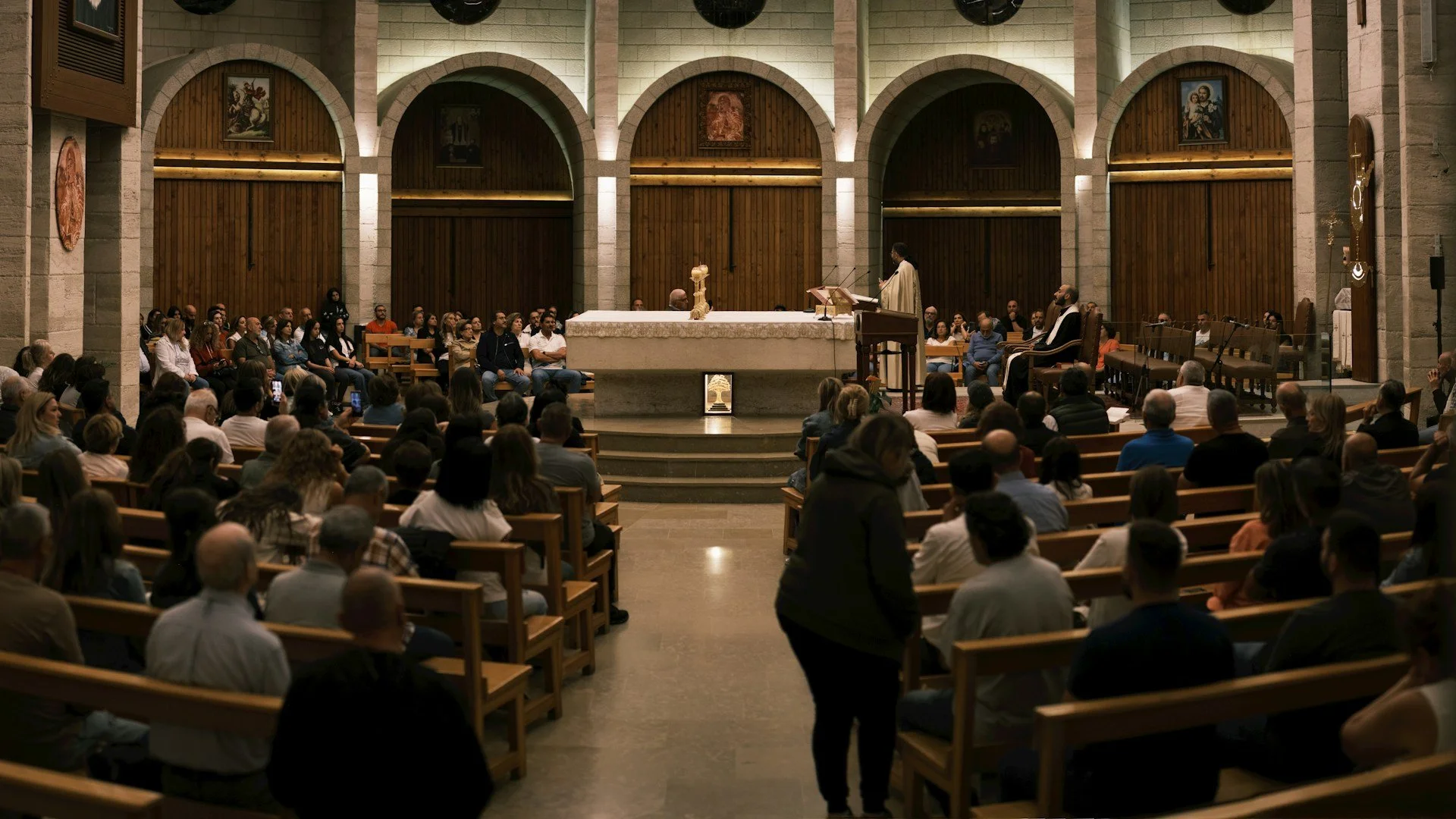
A group of people in wooden pews in an old, formal church setting.

    My son and his friends tried something last Sunday, and they are not alone. Young evangelicals are making choices that would have shocked the church-growth experts from the 1990s. More young people are walking into Orthodox parishes, Catholic Masses, Anglican services, Presbyterian churches, and Lutheran sanctuaries because the worship feels older, thicker, less manufactured, and more trustworthy. Not every one of them is converting. Headlines love drama. Still, something real is happening. In a world full of Photoshop, algorithms, and AI, many younger Christians are asking if worship should be less about what we create and more about a faith we receive (Jude 3). This question could mark the next major shift in evangelical worship.

    This is not the first time evangelical worship has shifted between generations. It’s been happening since the beginning. I’ve been thinking about what we can see from where we stand today. Churches from the Greatest Generation valued reverence. Baby Boomer churches focused on being relevant. Gen X looked for conviction. Now, a new generation seems to want something lasting and tangible. The real issue is not about which generation was right or wrong, but about what each group values, why those values changed worship, and whether those values are disciplined by Scripture or quietly left unchecked.

    Each generation often sees things their parents missed and forgets things their grandparents understood. This does not mean every change is wise, but it does make each shift easier to understand. Worship practices are never neutral (Colossians 3:16-17; Hebrews 12:28-29). Things like architecture, clothing, music, preaching style, lighting, sacraments, and the minister’s role all send messages about God, the church, the world, and Christian life. Some messages are intentional, while others are picked up without much thought. The risk comes when a generation confuses its own instincts with true biblical faithfulness.

Received Reverence

    Churches built by the Greatest Generation often valued reverence, duty, order, and respect in the community. The gathering space felt like a true sanctuary. Preachers wore ties and usually jackets. Preaching was typically textual and doctrinal, sometimes revivalistic, and often included a little “fire and brimstone.” Music came from congregational singing, piano, and organ. The notes echoed in the rafters. Worship was formal, predictable, and communal. People dressed up for church because it was not seen as a casual place. It belonged to the Lord, and people entered with clear seriousness.

    This expression of worship had strengths. It recognized God’s holiness and saw the church as a covenant community, not just a group of religious consumers. It kept a sense of sacred space and shared responsibility. But it also had weaknesses. Reverence could harden into a desire to look respectable. Formality could become a substitute for spiritual vitality. Legalism had too much room to flex. Someone could look ready for worship but remain untouched by God’s Word. A suit can hide a cold heart just as much as a graphic tee.

Marketed Relevance

    Churches influenced by Baby Boomers—sometimes called Jesus Freak, Seeker-Sensitive, or Purpose-Driven—often valued accessibility, authenticity, informality, and evangelistic effectiveness. While Received Reverence made church feel sacred, Marketed Relevance wanted the church to feel welcoming. Sanctuaries turned into auditoriums. Pulpits became music stands or plexiglass lecterns. Preachers stopped wearing ties and jackets. Some preachers bought expensive sneakers. Music grew to include guitars, drums, praise teams, and full bands. The lights came down. The stage became central. Topical preaching was king, often beginning with the felt needs of the listener: marriage, parenting, stress, money, purpose, or fulfillment. More church consultants appeared, bringing more programs, clearer branding, measurable goals, and constant pressure to make Sunday morning feel accessible to the outsider. (This shift is captured in the film, “Jesus Revolution.”)

    The Boomer approach to worship had significant strengths. It remembered that lost people were actually lost, that churches could become unnecessarily confusing for outsiders, and that sermons should connect biblical truth to real human struggles. But it also had serious weaknesses. In trying to remove unnecessary barriers, churches sometimes stripped away things that mattered. Worship could morph from shaping saints before God to just creating an experience for religious consumers. The congregation became more like an audience, the service like a product, and the pastor like a presenter. Preaching became more about making people feel good than about true discipleship. The real risk was not guitars, screens, casual clothes, or practical sermons, but letting practical usefulness become the main measure of faithfulness (2 Timothy 4:1-5).

Recovered Conviction

    Churches influenced by Gen X the Young, Restless, and Reformed movement valued biblical authority, doctrinal depth, theological clarity, and seriousness about the local church. (Oh, that describes this author.) Where Marketed Relevance wanted the church to feel approachable, Recovered Conviction wanted the local church to feel anchored. The lights came back up. The Bible moved back to the center. Sermons became longer, denser, and more focused on the text. Expositional preaching became the norm, often going through books of the Bible, with the main point of the passage setting the agenda for the sermon and, in turn, the entire worship service. Music still used guitars, drums, and bands, but the lyrics were expected to have more theological depth. Hymns made a comeback, sometimes with new arrangements. Songwriters with weak theology or questionable ecclesiology were often rejected. Doctrine mattered. (This shift is featured in the movie, “The Calvinist.”)

    This way of worship had real strengths. It recovered confidence in Scripture, seriousness in preaching, theological depth in worship, and concern for meaningful church membership, elders, discipleship, and discipline. It reminded churches that Christians are shaped by truth, not merely by atmosphere or accessibility. But it also had weaknesses. Theological precision could be mistaken for spiritual maturity. Discernment could turn into cynicism. Conference culture and celebrity pastors sometimes replaced the church-centered instincts the movement wanted to recover. Worship could become intellectually rich but emotionally cautious, or it could lack beauty. The danger wasn’t doctrine, exposition, theological songs, or strong ecclesiology. The danger was letting conviction become identity, and identity become a tribe.

Disenchanted Authenticity

The Millennial generation sits between Recovered Conviction and Embodied Permanence, and their impact is harder to define because they often move in two directions at once. Many Millennials were drawn to Gen X’s focus on doctrine. They wanted serious preaching, deeper theology, meaningful membership, and churches that did more than just follow the latest leadership trends. Others felt the same longing now seen among younger evangelicals. They wanted worship that felt less artificial, more grounded, more communal, and more real. Some ended up deconstructing their faith, while others started looking for the path younger generations are now taking. Regardless of direction, they all sought a stronger community. In many ways, Millennials became a hinge generation. They grew up in seeker-sensitive churches, were shaped by the Reformed resurgence, and began to question whether the church’s worship, leadership, and community life truly matched its beliefs. Instead of creating a single new worship style, their main contribution was a call for integrity. They wanted conviction, but they wanted it to be something they could live out, sing about, confess, practice, and trust. It’s complicated, as some leaned one way but felt pulled in the opposite direction.

Embodied Permanence

    The churches drawing many younger evangelicals today often value rootedness, beauty, continuity, sacrament, and embodied worship. Where my generation’s Recovered Conviction wants the church to feel anchored in the Text, Embodied Permanence wants the church to feel received from the past, with a kind of authenticity that cannot be manufactured by AI. Architecture matters again. The Table matters. The calendar, the creed, the prayers, and even body posture all contribute to forming the worshiper. Robes on ministers can feel less like artificial formality and more like a way to hide the man's personality and highlight the office he holds. Weekly communion is seen not as an optional add-on but as a regular act of worship. Preaching is not abandoned, but it takes a new place. The sermon becomes part of a larger act of worship shaped by Scripture, prayer, confession, creed, and the Table. In a world of Photoshop, algorithms, AI, and constant self-invention, this expression feels durable. It feels “real.” (While news stories report the shift, Matthew Bingham’s book, A Heart Aflame for God: A Reformed Approach to Spiritual Formation, gets at what young people are looking for.)

    This expression of worship carries real strengths. It remembers that Christians are not merely brains receiving information or consumers evaluating an experience. We are embodied creatures formed by repeated practices, shared words, visible signs, and gathered worship (Acts 2:42; 1 Corinthians 10:16-17). It pushes back against celebrity-driven ministry by emphasizing office over personality. It recovers the fact that the church did not begin with us, which remains disappointing news to every generation, but useful all the same. Yet, it also has weaknesses. Beauty can become aestheticism. Tradition can become authority. Sacrament can be detached from the preached Word. A longing for rootedness can lead some to Rome or Eastern Orthodoxy without adequately wrestling with justification, Scripture, the nature of the church, or the priesthood of all believers. The danger is not liturgy, robes, weekly communion, ancient prayers, or historical awareness. The people of God have walked this path before. The danger is allowing permanence to become a substitute for biblical faithfulness.

The Real Question Is Not Style

    The real question isn’t whether churches should use organs or guitars, robes or jackets, weekly or monthly communion, stained glass or black ceilings. The real question is whether our worship is shaped by Scripture or just by generational habits. Every generation brings real concerns. Every generation also brings its own idols and blind spots. The church’s job is not to chase after generational values but to bring those values under the authority of God’s Word. So when my son and his friends walk into worship gatherings with older liturgy and older prayers, I’m not worried that they are asking the question. I’m more concerned that every generation learns to answer it with an open Bible.

Did the Church Replace Israel?

Words reading, "Israel Replaced?"

In episode 7 of “Israel, the Church, and God’s Promises,” Bryan Catherman and Josiah Walker address the question people often throw into the room with a lit fuse: Did the church replace Israel? “Replacement theology” is often used before it is defined. Sometimes it means God cast Israel aside, started over with the Gentiles, and treated the Jews as yesterday’s covenant leftovers. That is not what we are arguing, and it is not what the New Testament teaches.

The episode sorts through several major views: dispensationalism, progressive dispensationalism, covenant theology, and progressive covenantalism. These frameworks answer the Israel and church question differently, and faithful Christians have landed in different places. Still, the issue should be settled by Scripture rather than favorite teachers, bestselling novels, or laminated prophecy charts.

Ephesians 2 gives us a crucial category. Gentiles are brought near by the blood of Christ, but Jews are not pushed out. Christ breaks down the dividing wall of hostility and creates one new humanity in himself. That is not a Gentile takeover. It is gospel reconciliation.

Galatians 3 presses the point further. Paul says those who belong to Christ are Abraham’s offspring, heirs according to the promise. The promises do not bypass Israel and land on Gentiles. They come to Christ, Israel’s Messiah, and extend to all who are united to him by faith. Ethnicity cannot save anyone. First John is plain: “No one who denies the Son has the Father” (1 John 2:23). That is true for Jews and Gentiles alike.

First Peter 2 uses Israel’s calling language for believers in Christ: chosen race, royal priesthood, holy nation, and God’s own possession. That does not mean Gentiles stole Israel’s identity. It means Christ fulfilled Israel’s calling and now gathers one people to proclaim his excellencies among the nations. This is not replacement theology in the crude sense. It is fulfillment in Christ, inclusion through the gospel, and one redeemed people built on the cornerstone. Subscribe and listen wherever you get podcasts, watch on our YouTube channel, or listen here:

Salty Believer Unscripted Did the Church Replace Israel?

Subscribe to Salty Believer Unscripted wherever you listen to podcasts, or visit the Salty Believer Unscripted podcast page for subscription options and the full episode archive.

Is Jesus the True Israel?

In episode 6 of “Israel, the Church, and God’s Promises,” Bryan Catherman and Josiah Walker ask how Jesus fits into Israel’s story. Many conversations jump from Abraham’s promises straight to modern politics or prophecy debates, but Christians cannot jump over Jesus. He is not an interruption in the story. He is the one the story was moving toward.

Matthew 2 applies Hosea 11 to Jesus: “Out of Egypt I called my son.” Hosea was speaking about Israel, yet Matthew shows that Jesus retraces Israel’s story as the faithful Son. Israel was brought out of Egypt, tested in the wilderness, and failed. Jesus comes out of Egypt, is tested in the wilderness, and obeys. Where Israel grumbled, Jesus trusted.

Jesus does not replace Israel in some crude sense, as though God tossed Israel aside and started over. Jesus is Israel’s Messiah, the faithful Israelite, the Son of David, the true King, and the true temple. The Davidic kingdom and the temple do not get discarded. They reach their goal in Christ.

The new covenant promises from Jeremiah and Ezekiel also find their fulfillment in him. God promised new hearts, the law written within his people, the Spirit, forgiveness, and cleansing. At the Last Supper, Jesus says the new covenant comes through his blood. Israel needed more than return from exile. Israel needed redemption from sin. So do we.

This prepares us for the next question: if Jesus fulfills Israel’s story, how should we understand the church? Is this “replacement theology,” or is something better happening in Christ? Subscribe and listen wherever you get podcasts, watch on our YouTube channel, or listen here:

Salty Believer Unscripted Is Jesus the True Israel?

Subscribe to Salty Believer Unscripted wherever you listen to podcasts, or visit the Salty Believer Unscripted podcast page for subscription options and the full episode archive.

Ben Sasse and the Grace of Dying Honestly

Ben Sasse in a Nebraska hat being interviewed.

Ben Sasse is dying, and he is doing something strangely beautiful with the time he has left. He is telling the truth.

Not the sentimental kind of truth we usually get when public figures talk about mortality. Not the soft-focus Hallmark theology where death becomes merely “part of the journey.” Sasse is speaking like a man who has read his Bible, believes it, and knows he is about to meet the God who wrote it.

In that sense, he sounds almost like a modern-day Puritan. Not the caricature of dour men allergic to joy, but the real thing: Christians who knew how to look death in the face without pretending it was harmless. They called death an enemy, because Scripture does. They also knew Christ had defeated that enemy, because Scripture says that too.

Sasse, the former Republican senator from Nebraska, served in the U.S. Senate from 2015 to 2023 before becoming president of the University of Florida. In December 2025, he announced that he had been diagnosed with metastasized stage-four pancreatic cancer and wrote plainly, “I’m gonna die.” CBS reported that he was initially given three to four months to live, though treatment has given him more time than expected. As of his 60 Minutes interview, he described himself as living on “extended time already.”

But what makes Sasse worth watching right now is not merely that he is dying. Everyone is. Some of us just maintain the illusion of control. What stands out is how he is dying. He is not raging at God. He is not baptizing denial in religious language. He is turning to Scripture, confessing his dependence, and naming cancer as both wicked and, in the mysterious providence of God, sanctifying.

In his conversation with Ross Douthat, Sasse said he would not want a sovereign God to answer all his prayers with a yes, because he is not omniscient. He called his suffering a “winnowing,” not salvific, but sanctifying. In the same interview, when asked what he would say to the skeptic, Sasse did not reach for therapeutic fog. He said, “Let’s read the book of Romans together.” That is exactly the kind of answer a dying Christian should give. Take up and read.

In his 60 Minutes interview with Scott Pelley, Sasse was just as direct. “Death is wicked. Death is evil. Death is not how it’s supposed to be.” Then he added that his diagnosis has been “a touch of grace” because it forces him to tell the truth about himself. Cancer, he said, has made him closer to God because he can acknowledge his dependence in a new way.

That is not stoicism. That is Christianity with its spine still attached.

So watch Ben Sasse. Listen to him. Not because he is a flawless man or because his political résumé needs polishing. This is not hagiography. It is something more useful. It is an invitation to consider how a Christian faces the final enemy with an open Bible, a sober mind, and a confidence that death does not get the last word.

Here is a man who appears to be living well at the end of his life. We would be wise to pay attention before the moment passes.


Here’s a section of the New York Times interview with Ross Douthat asking Ben Sasse questions about his faith (starting at 1:00:50):

Ross Douthat: One of my recent guests was Bart Irman, who's New Testament scholar, well known, as a skeptic who was a Christian, was evangelical Christian for a time and lost his Christian faith. And in our conversation, he talked about the idea that he didn't lose his faith because he decided that the gospels weren't historically reliable, though that was mostly what we argued about, right, but because of the problem of evil, of human suffering. And he specifically talked about unanswered prayers. And as you know, I assume you've prayed for healing.

Ben Sasse: Yes, sir.

Ross Douthat: Not to be the guy who just beats the odds, but to be the miracle story, right? Um, God hasn't answered those prayers yet. Are you angry at God ever?

Ben Sasse: No.

Ross Douthat: Not at all?

Ben Sasse: No. I wouldn't want a sovereign God to defer to all of my prayers with a yes. Because I'm not omniscient. I don't know what the weaving together of the tapestry of full redemption should look like, but I know going through the period of suffering that I'm going through is a benefit because it is a winnowing. I'm filled with dross, and this suffering is not salvific, but it's sanctifying, and I'm grateful for it.

Tim Keller, who I know you knew, who's in my denomination, a Presbyterian pastor in New York, who also died of pancreatic cancer, said, "I hate pancreatic cancer. I would never wish it on anyone, but I would never want to go back to a time in my life where I didn't know the prayer of pancreatic cancer." Meaning I know in the midst of this disease know much more the truth of my finitude than I ever let myself believe in the past. The hubristic nonsense that I was actually, you know, ‘I believe in God and grateful and blessed, but I can build a storehouse that can be pretty deistically persuasive. My storehouse can have enough resources that I can operate without a need.’ But that's not true. I can't. I can't keep the orbits, the planets in orbit. I can't. I can't even grow skin on my face.

Ross Douthat: For the listener or viewer who, whether for man's reasons or others, doesn't believe in God, right, and finds your cosmic optimism admirable, but maybe thinks that you're deluding yourself on the brink of actual finitude. What would you say to that person?

Ben Sasse: Let's read the book of Romans together. In Romans 1, Paul's essentially laying out a catechetical argument for the structure of Christianity against a Jewish messianic hopeful backdrop. He says in chapter one, there are lots of intellectual arguments you can make against God, but you kind of have to start with a fundamental question about what do you do with this moral issue of our own conscience? And does the individual in your hypothetical really start with the claim that things are right in your soul? Because I can't relate to that. Things are not right in my soul. My soul thinks Ben should be God, and I want that to die. Cancer sucks, but I'm pretty grateful that cancer is a stake against my delusional selfdolatry.

Ross Douthat: Do you think you're ready to die? Do you feel ready?

Ben Sasse: I don't feel ready, but to whom would I go? I have confidence that when Jesus says to the disciples, he didn't want to be identified as the Messiah yet—”You keep these crowds away, you know, don't tell about the the water into wine miracle at the feast.” How amazing is it that Jesus’ first miracle is a big ass party? Let's drink more together. But he says, "You can't keep the children from me." And we're told that we get to approach the almighty. We get to approach the divine and call him daddy. Aba father. That's pretty glorious. And I know that that's what I need.

Here’s a section of the 60 Minutes with Scott Pelley (starting at 32:52):

Scott Pelley: You are completely devoted to your faith—what’s known as reformed Christianity or Calvinism. And one of the tenants of that faith is that God ordains everything. And I wonder why you think God has put you to this test.

Ben Sasse: Death is wicked. Death is evil. Death is not how it's supposed to be. And me getting a cancer diagnosis again is pretty small on the grand scheme of things, but it's a touch of grace because it forces me to tell the truth. And the lie I want to tell myself is that I'm the center of everything. And I'm going to be around forever. And I can work harder and store up enough that I can atone for my own brokenness. I can't. And so I hate cancer, but I'm also grateful for it. I tell a lot more truth to myself than I used to when I thought I was super omni-competent and interesting.

Tim Keller was a pastor in New York City. He's in my denomination, and he died of pancreatic cancer a couple of years ago. And he had a line. He said, 'I hate pancreatic cancer. I would never wish it on anybody, but I also would never want to go back to a time in life where I didn't know the prayer of pancreatic cancer.' And I feel that to be true.

I started being symptomatic the last couple weeks of October. I wasn't diagnosed until mid-December. We had trouble figuring out what was going on because I was training for some sprint triathlons, and I was doing some stupid stuff in my training. And so I thought I'd pulled a bunch of muscles in my abdomen. I was in really bad pain for a number of weeks. I'm now on a lot of morphine, and I've also got the benefit of this drug, which is, you know, scare quotes, but miraculously reduced my tumor volume enough that I have a lot less tumor pressure on my spine. So, the combination of a great drug and morphine, another useful drug, I'm in so much less pain now than I was from Halloween to Thanksgiving.

But at that point, I was on the floor in the shower, running the water, trying to remove a valve on my shower to make it hotter. I'd be five times a night up in the middle of the night in the shower, trying to scald my back to try to make the throbbing of what turned out to be tumors pushing on my spine cease. It was horrible. I'm super grateful that I had that pain.

Scott Pelley: Cancer has made you closer to God?

Ben Sasse: Definitely because I can acknowledge my dependence in a new way.

Do Not Let a Fallen Author Derail Your Bible Study

women sitting round a table doing a Bible study. Bibles are open. There are no workbooks in the study.

It’s happened yet again. A prominent pastor and author has resigned from the ministry due to a significant sin issue. This time it was Sam Allberry. Books and content were pulled fast. It’s nothing new. American Christianity and the “Big Eva” machine often see this.  

But this time, the problem landed in a very practical place. A small-group Bible study was already planned using his materials.

Now what?

First, remember this: the Bible did not fall.

A pastor may fall. An author may fall. A ministry platform may wobble like a folding table at a church potluck. But the Word of God remains. “The grass withers, the flower fades, but the word of our God will stand forever” (Isaiah 40:8). Jesus said, “Heaven and earth will pass away, but my words will not pass away” (Matthew 24:35).

The authority of a Bible study never came from the author whose name appears on the cover. It did not come from the publisher, the video series, the discussion guide, the glossy headshot, or the sharp advertisement.

The authority comes from Scripture.

So Christians should not panic. We should grieve. We should pray. We should be sober about sin. We should be careful not to gossip. But we should not act as though the kingdom of God depends on the continued availability of a workbook.

It does not.

Still, a church leader has a real shepherding decision to make.

One option is to keep going with the study and say nothing. If the group is nearly finished and everyone already has the book, this might be reasonable. The material may still contain true and helpful teaching. A fallen teacher does not make every sentence he ever wrote false.

But this option has problems. The author may become the center of discussion. New people may not be able to get the book. The leader may spend more time explaining the situation than teaching the passage. At that point, the study is no longer serving the group well.

Another option is to pause and address the matter briefly. This can be wise. Silence often creates suspicion, especially when everyone already knows what happened because everyone has a phone and, tragically, access to the internet.

A leader might say something like this:

“We had planned to use this study before this came up. The author’s public disqualification from ministry and the practical concerns now surrounding the material, means we need to pause and discuss it. We are continuing with this study but will, as always, exercise discernment with what we read, as we should. We share this today because shepherding requires wisdom. We will pray for everyone involved, avoid speculation, and continue studying God’s Word together.”

Then move on.

That last part matters. Move on. Do not turn the Bible study into a weekly scandal symposium.

A third option is to replace the study with another workbook. There is nothing wrong with a good workbook. Good resources are gifts. Faithful teachers can serve the church well. A workbook can provide structure, especially for newer or inexperienced leaders. If the direction is changed, something should be said about why, but just as the previous option, say it and move on.

But this option may miss the larger opportunity. If one celebrity workbook disappears and the only solution is to hunt for another, we may be revealing a weakness in our discipleship. Are we teaching people to study the Bible, or are we teaching them to consume Bible-study products? Those are not the same thing.

The strongest option (if time is available) is to drop the workbook and teach the group how to study the Bible.

Use a simple method like OIA: Observation, Interpretation, and Application.

Observation asks, “What does the text say?”

Interpretation asks, “What does the text mean?”

Application asks, “How should we respond?”

That is not flashy. It will not trend. It doesn’t come with cool videos. But it is faithful.

In Observation, the group slows down and looks carefully at the passage. Who is speaking? Who is being addressed? What words are repeated? What commands are given? What comes before and after? What is emphasized?

In Interpretation, the group works to understand the author’s intended meaning. What did this mean in context? How does it fit within the book? How does it fit within the whole Bible? How does it point us to Christ?

In Application, the group asks how the Word should shape faith, repentance, obedience, worship, hope, and life together in the church.

This trains people to open the Bible with confidence. A new believer can learn it. A mature Christian can keep growing in it. A small group can use it every week.

Here is a simple plan. Pick a book of the Bible. Choose a manageable passage each week. Read it aloud. Pray. Walk through Observation, Interpretation, and Application together. Keep the group tethered to the Text. Do not rush to the application before anyone has observed what God actually said. That is how people end up ‘baptizing’ their opinions with Bible words.

When a public Christian leader falls, the church should not be smug. Sin is too serious for smugness. “Let anyone who thinks that he stands take heed lest he fall” (1 Corinthians 10:12). We should pray for repentance, restoration where appropriate, wise elders, wounded people, and sober churches.

But we should also learn.

Maybe one lesson is that the local church has outsourced too much discipleship to outside voices. Maybe we have trusted polished curriculum more than healthy training. Maybe we have made small-group leaders dependent on workbooks when we should have been teaching them to handle Scripture.

A fallen author creates problems. A pulled book creates inconvenience. A distracted group creates shepherding challenges. But none of that changes the assignment.

Open the Bible. Read it carefully. Study it in context. Teach people to observe, interpret, and apply. Trust the Holy Spirit to work through the Word.

The Bible did not fall. So pick it up.

Did the Prophets Promise Israel More Than Land?

In episode 5 of “Israel, the Church, and God’s Promises,” Bryan Catherman and Josiah Walker turn to the Old Testament prophets and ask what God promised after exile. Israel had received the land, broke the covenant, divided into two kingdoms, and suffered judgment. Assyria wiped out the northern kingdom, and Babylon carried Judah into exile. So the question becomes: what now? Were the people merely waiting for better borders, a rebuilt city, and a stronger army? The prophets had more to say than that. Apparently, God’s restoration plan was larger than a national infrastructure project.

Jeremiah 31 points to the new covenant. God promises to write his law on the hearts of his people, forgive their iniquity, and remember their sin no more. That is a much deeper answer than simply returning from exile. Returning home mattered, but coming home with the same old heart would not solve the problem. Israel’s exile exposed covenant failure, but Jeremiah promised a future work of God that would address the heart.

Ezekiel 36 presses the same issue even further. God promises to act for the sake of his holy name, cleanse his people, give them a new heart, put his Spirit within them, and cause them to walk in his statutes. The issue was never merely location. Israel needed cleansing. Israel needed renewal. Israel needed the Spirit. The land mattered, but geography was never going to regenerate sinners. Dirt is useful for farming, but it remains unimpressive at producing new birth.

Ezekiel 37 then points toward one restored people under one Davidic King. God promises to gather, cleanse, unite, and dwell with his people. The divided kingdom will not remain divided forever. The people of God will not finally be defined by exile, idolatry, or fractured kingdoms, but by God’s gracious restoration under the King he provides.

All of this keeps pushing the story forward. The prophets do not shrink God’s promises down to land, borders, and national recovery. They speak of forgiveness, cleansing, covenant renewal, the Spirit, one people, one King, and the nations seeing the glory of God. That prepares us for the next major question in the series: how does Jesus fulfill Israel’s story? Subscribe and listen wherever you get podcasts, watch on our YouTube channel, or listen here:

Salty Believer Unscripted Did the Prophets Promise Israel More Than Land?

Subscribe to Salty Believer Unscripted wherever you listen to podcasts, or visit the Salty Believer Unscripted podcast page for subscription options and the full episode archive.

Did Israel Receive the Promised Land or Lose It?

In episode 4 of “Israel, the Church, and God’s Promises,” Bryan Catherman and Josiah Walker move from Abraham and Sinai into Joshua, David, and exile. The question is simple enough on the surface: Did Israel receive the promised land, or did they blow it? The answer is yes. Welcome to biblical theology, where the answers are clear but not always convenient for people who want them printed on a bumper sticker.

Joshua 21 says the Lord gave Israel all the land he swore to give their fathers, they took possession of it, and not one word of all God’s good promises failed. That matters. Christians should not talk as if the land promise was never fulfilled in any real sense. The text says God kept his promise. Israel received the land. Full stop. But Joshua is not the end of the story. The land mattered, but the land was never the whole goal.

That becomes clearer in 2 Samuel 7, where the promise moves forward through David. Israel needs more than land. They need a faithful king, God’s presence, covenant faithfulness, and a kingdom that lasts. God promises David a house and a throne forever, which pushes the story beyond mere geography. A place to live is good, but sinful people in a good land still have the same old problem. The dirt was never going to regenerate anyone. Soil is useful, but it is not the Holy Spirit.

Then the story turns ugly. The kingdom divides, the kings rebel, Israel and Judah break the covenant, and exile comes. The northern kingdom falls in 2 Kings 17, and Judah falls in 2 Kings 25. Exile was a covenant judgment, but it was not divine failure. God had kept his promises, and Israel had broken the covenant. Both truths have to be held together. If we miss either one, we flatten the Bible and end up with slogans instead of Scripture.

All of this sets up the prophets, who speak of something deeper than borders and national recovery. Israel needs forgiveness, cleansing, heart change, covenant renewal, and a true Davidic king. So before we rush to modern Israel, politics, prophecy, or policy questions, we need to follow the Bible’s own storyline. God gave the land. Israel broke the covenant. The story still points beyond the land to the greater restoration only God can bring. Subscribe and listen wherever you get podcasts, watch on our YouTube channel, or listen here:

Salty Believer Unscripted Did Israel Receive the Promised Land or Lose It?

Subscribe to Salty Believer Unscripted wherever you listen to podcasts, or visit the Salty Believer Unscripted podcast page for subscription options and the full episode archive.

Israel at Sinai: Chosen for What?

In episode 3 of “Israel, the Church, and God’s Promises,” Bryan Catherman and Josiah Walker turn to Sinai and ask what Israel’s chosenness actually meant. That question matters because Israel’s election is often misunderstood. God did not choose Israel because they were impressive, powerful, morally superior, or unusually good at keeping covenant. Deuteronomy 7 says the opposite. The Lord chose Israel because he loved them and because he was keeping the oath he swore to their fathers. In other words, Israel was chosen by grace. Apparently God has never been especially interested in auditioning nations for moral excellence. Shocking, I know.

Anchored in Exodus 19 and Deuteronomy 7, this episode looks at Israel as God’s treasured possession, a kingdom of priests, and a holy nation. Israel’s chosenness was real, but it was never meant to terminate on Israel alone. God set Israel apart for the sake of his larger redemptive purposes, including blessing for the nations. Bryan and Josiah also discuss why the law followed redemption. God did not give Israel the law so they could earn deliverance from Egypt. He redeemed them first, then gave them the law as his covenant people. Grace came before Sinai. Obedience was the response of a redeemed people, not the purchase price of redemption.

The episode also considers how the land functioned under the Mosaic covenant. Israel’s possession and enjoyment of the land were covenantally conditioned. The land mattered, but the deeper issue was always whether an unholy people could dwell with a holy God. That is why exile was not a glitch in the system. Exile was covenant judgment.

All of this sets the stage for the prophets, who looked beyond external possession and national identity to the need for heart change, the work of the Spirit, and the promise of the new covenant. If we are going to think clearly about Israel, the Church, and God’s promises, we have to understand Sinai, holiness, covenant blessing, covenant judgment, and the problem of the human heart. Subscribe and listen wherever you get podcasts, watch on our YouTube channel, or listen here:

Salty Believer Unscripted Israel at Sinai: Chosen for What?

Subscribe to Salty Believer Unscripted wherever you listen to podcasts, or visit the Salty Believer Unscripted podcast page for subscription options and the full episode archive.

What Did God Promise Abraham? Israel, the Church, and God’s Promises

Before Christians jump to headlines, modern Israel, prophecy charts, or end-times conclusions, we should probably do something reckless and open the Bible. In episode 2 of “Israel, the Church, and God’s Promises,” Bryan Catherman and Josiah Walker slow down and ask the foundational question: What did God actually promise Abraham? That question matters because the conversation about Israel and the Church does not begin with modern politics, current events, or someone’s laminated end-times timeline from 1987. It begins in Genesis, where God makes covenant promises to Abraham.

In this episode, Bryan and Josiah walk through Genesis 12, 15, 17, and 22, tracing the promise of land, seed, and blessing. These promises are real. They are covenantal. They are rooted in history. God truly made promises to Abraham and his offspring. At the same time, those promises are already bigger than one man, one nation, or one strip of land.

If we are going to think clearly about Israel, the Church, and God’s promises, we have to begin where the Bible begins. Genesis gives us the framework for understanding the rest of the story, including the people of God, the nations, the covenants, Christ, and the fulfillment of God’s redemptive plan. This second episode starts where this conversation has to start: with Abraham and the promises of God. Listen and subscribe to Salty Believer wherever you get podcasts, watch on our YouTube channel, or listen here:

Salty Believer Unscripted More Than Land: God's Promise to Abraham

Subscribe to Salty Believer Unscripted wherever you listen to podcasts, or visit the Salty Believer Unscripted podcast page for subscription options and the full episode archive.

Redemption Song by Sean Demars

Why do Christians sing?

That question may sound simple, but it gets underneath far more than musical preference, Sunday morning style, or whether someone thinks the worship leader picked the right key. Congregational singing is not filler. It is not the spiritual warm-up act before the sermon. It is one of the ways God’s redeemed people respond to his saving work.

In Redemption Song: A Primer on Singing for the People of God, Sean DeMars helps Christians think biblically about why God’s people sing. Published by Christian Focus in 2025, this short and accessible book is built around the Song of Moses in Exodus 15. After God redeemed Israel from slavery and brought them through the Red Sea, Moses and the people sang. Redemption gave birth to praise.

That is still what God’s people do.

DeMars draws eleven insights from Exodus 15, showing that Christians sing in response to God, sing together, sing to God about God, sing the truth, sing the whole counsel of God, sing history, sing as leaders, sing to bear witness, sing with wonder, and sing with joy. That is a much better framework than the usual worship debates, which often generate more heat than light. And yes, sometimes more entertainment than theology.

This book is especially useful for pastors and worship leaders, but it is not only for them. Church members should read it too. Singing belongs to the whole congregation. The church is not an audience watching a few gifted people perform religious music from a stage. The church is a redeemed people lifting their voices together in praise to the God who saves.

That also means pastors should sing. They should sing clearly, visibly, and gladly. A pastor in the front row mumbling through the songs like he is waiting for the real ministry to begin is teaching the church something. Unfortunately, he is teaching the wrong lesson. The congregation needs to see that the Word preached and the Word sung belong together in the worship of God.

One caution may be helpful. Readers who are very new to biblical conversations about worship may find some of the book’s contrasts a little pointed. I do not think DeMars is wrong in what he argues. In fact, I think his biblical instincts are right. But a reader who has only thought about worship through the lens of personal preference, style, or emotional experience may need to read slowly and carefully. Some of the arguments may require a little pastoral patience to receive well. That is not a reason to avoid the book. It is a reason to engage it thoughtfully.

And honestly, that may be part of the book’s usefulness. Worship is one of those areas where many Christians have strong opinions but thin categories. DeMars gives readers better categories. He pushes us back to Scripture and reminds us that singing is not merely about what we like. It is about who God is, what God has done, and how God’s redeemed people respond together.

Redemption Song is a helpful resource for Christians who want to better understand worship, congregational singing, and the role of song in the life of the church. The book is short, but it is packed with biblical reflection. It would be a good read for pastors, elders, worship leaders, small groups, church staff, and church members who want to grow in the joy and responsibility of singing praise to God and one another.

Why are there so many songs in the Bible? Why should Christians sing in church? Why should they sing outside of church? Why does singing help us remember truth, express joy, and bear witness to the glory of God?

Redemption Song helps answer those questions with Scripture open.

I highly recommend it.

Find it where you get books, or order it here. Find more book reviews and recommendations here.

Israel, the Church, and God’s Promises: Why This Conversation Matters

This episode of Salty Believer Unscripted begins a new series called “Israel, the Church, and God’s Promises.” Bryan and Josiah are stepping into a subject that is often important, often confusing, and often handled with all the subtlety of a flaming shopping cart. How does Israel relate to the Church? What does the Bible mean when it speaks of Israel? Are we talking about biblical Israel, ethnic Israel, covenant Israel, remnant Israel, national Israel, or modern Israel? How should Christians think about the promises of God, the people of God, and the unfolding storyline of Scripture?

Those questions matter. They also tend to make people nervous. In some circles, one poorly worded sentence can get a Christian labeled pro-Israel, anti-Israel, replacement-theology-adjacent, dispensational, covenantal, liberal, or possibly all of the above before the coffee is even poured. That probably tells us we need more Bible, less tribal sorting, and fewer theological reflex hammers.

In this opening episode, Bryan and Josiah introduce the purpose of the series and begin asking the kinds of questions that will guide the conversation. What does Scripture actually say? Why are Christians so passionate about this topic? Why does modern Israel become such a flashpoint in church life? What are we missing when we flatten the Bible’s storyline into our preferred system? How should the promises of God shape our understanding of Christ, the Church, Israel, and the nations?

This is the introduction to a nine-week series exploring Israel, the Church, and God’s promises. The goal is not to win an argument for a theological team jersey. The goal is to slow down, open the Bible, ask better questions, and think more carefully about how God keeps his promises in Christ. Listen and subscribe to Salty Believer Unscripted wherever you get podcasts, watch on the Salty Believer YouTube channel, or listen here:

Salty Believer Unscripted How to Think About Israel without Losing Your Mind

Subscribe to Salty Believer Unscripted wherever you listen to podcasts, or visit the Salty Believer Unscripted podcast page for subscription options and the full episode archive.

The Way to Be Near: A Summary of the Day of Atonement and Its Fulfillment in Christ

Leviticus 16 makes one thing painfully clear. Sinful people do not stroll into the presence of a holy God on their own terms. The chapter opens with a warning that hangs over everything that follows. Nadab and Abihu died because they approached the Lord in a way he had not commanded. That is not just background information. It sets the tone for the entire chapter. If sinners are going to draw near to God and live, God himself must provide the way.

That is exactly what we see on the Day of Atonement. Aaron did not get to improvise. He had to do precisely what God commanded. He washed. He put on the prescribed garments. He first offered a bull as a sin offering for himself and his household. Before he could represent the people, his own guilt had to be addressed. Then he entered the Most Holy Place with incense and blood. The incense covered the space above mercy seat, and the blood was put on the mercy seat. Even that detail says something important. Access to God was restricted, dangerous, and carefully regulated.

Once atonement had been made for himself, Aaron turned to the people. Two goats were presented before the Lord. One was chosen for sacrifice, and its blood was brought into the Most Holy Place to make atonement for the sins of Israel. Blood from the bull and the goat was also applied to the altar, showing that sin had polluted even the holy things associated with God’s dwelling among his people. The other goat remained alive. Aaron laid both hands on its head and confessed over it the sins of the nation. Then the goat was sent away into the wilderness, carrying away the guilt of the people from the camp.

Taken together, the two goats give a fuller picture of atonement. Sin must be judged, and sin must be removed. Forgiveness is never casual. It is not sentimental. It is not God pretending evil does not matter. Death is required. Cleansing is required. A mediator is required. God must provide all of it.

The rest of the chapter keeps pressing the point. Aaron changed garments again. Burnt offerings were made. The remains of the sin offerings were taken outside the camp and burned. Those who handled the remains or led away the scapegoat had to wash before coming back. The whole day taught Israel that sin brings uncleanness and death. And yet, for all its seriousness and all its God-given importance, the whole thing had to be repeated every year. That tells you something. The Day of Atonement was real, but it was not final. It preserved covenant fellowship, but it did not bring permanent cleansing or open access once for all. It pointed forward.

And of course, it pointed to Christ.

Leviticus 16 was preparing God’s people to understand Jesus. Aaron entered an earthly sanctuary, but Jesus came as Immanuel, God with us. He is the true meeting place between God and man. Aaron was a sinful priest who needed sacrifice for himself before he could minister for others. Jesus is the sinless High Priest. He had no guilt to confess and no need to offer for himself. He came in perfect holiness and perfect obedience. What Aaron could only dramatize, Jesus actually accomplished.

Jesus also fulfills what the sacrifices on that day were pointing toward. Aaron brought animal blood into the holy place. Jesus entered by means of his own blood and secured eternal redemption for his people. The old covenant sacrifices had to be repeated because they could never finally cleanse the conscience or perfect the worshiper. Christ offered himself once for all.

In him, the imagery of the two goats comes together. Like the sacrificed goat, Jesus bears the judgment sin deserves. He dies in the place of sinners. Like the scapegoat, he carries away the guilt of his people. Their sin is removed from them. This is why the categories of propitiation and expiation matter. In Christ, God’s righteous wrath against sin is satisfied, and our sin is taken away. The cross is not a vague symbol of love. It is the place where God deals with sin fully and finally.

Because of Christ, access to God is no longer merely symbolic, temporary, or limited to one man on one day. Jesus has opened the way. By his death, resurrection, and ongoing priestly work, sinners can now draw near to God with confidence. He is the way to the Father. We do not create access to God. We do not negotiate our own terms. God makes the way, and he has made it through Jesus Christ.

That is the great lesson of Leviticus 16. It is also the glory of the gospel.

Train Them Up: Youth Ministry

How do we train up the next generation in the church?

That question is bigger than youth group, Wednesday night activities, or keeping teenagers entertained with snacks and Nerf battles. Though, apparently, the Nerf battles survive. Youth ministry should not replace parents, and it should not disconnect students from the life of the church. It should help students know Christ, love Scripture, worship with God’s people, and grow into faithful Christian adulthood.

In this episode of Salty Believer Unscripted, I’m joined by Max Deitz and Daniel the Intern as we wrap up the “Train Them Up” series. We talk about youth ministry, parents as the primary disciplers of their children, helping students own their faith, and preparing young people for life beyond high school. We also discuss Rebecca McLaughlin’s book, 10 Questions Every Teen Should Ask (and Answer) about Christianity, and why students need biblical answers to real questions before the world starts handing them bad answers with impressive confidence.

Training the next generation is not optional. The world is already doing it. Subscribe and listen to this episode wherever you get podcasts, watch on our YouTube channel, or listen here:

Salty Believer Unscripted Train Them Up: Youth Ministry

Subscribe to Salty Believer Unscripted wherever you listen to podcasts, or visit the Salty Believer Unscripted podcast page for subscription options and the full episode archive.

Loving Your Country Without Worshiping It

With America’s 250th anniversary, we’re moving through another season of patriotic reflection. Christians should be asking a better question than the usual political talking points answer. How should Christians live as citizens of heaven while also living as citizens of an earthly nation?

That question matters because Christians are often tempted toward two opposite errors. Some speak and act as if their nation is central to God’s redemptive plan in a way Scripture never claims. Others speak as if heavenly citizenship makes earthly citizenship trivial. Both errors distort the Christian’s calling, and the Bible gives us something better. Christians are citizens of heaven who still live, work, worship, and serve as a part of an earthly nation.

Paul says it plainly in Philippians 3:20: “Our citizenship is in heaven, and we eagerly wait for a Savior from there, the Lord Jesus Christ.” That claim should settle the issue of ultimate identity. A Christian is not defined first by nationality, ethnicity, party affiliation, or cultural location. He is defined by union with Christ. He belongs to another kingdom. He awaits another King. His ultimate hope is not tied to national prosperity, political stability, or cultural influence. His hope is tied to the return of Jesus Christ.

That is why Christians must never confuse an earthly nation with the kingdom of God. America is not the new Israel. The Constitution is not Scripture. The stars and stripes do not fly over the throne room of heaven. Nations matter, and they matter a great deal, but they remain temporary. They rise and fall under the providence of God while Christ alone reigns forever.

Still, the fact that our citizenship is in heaven does not mean our earthly citizenship is meaningless. God has established governing authorities for a purpose. Romans 13 teaches that government is a servant of God for order and justice in a fallen world. Civil authority is not ultimate, but it is real. Christians should therefore be good citizens in the ordinary sense. They should obey laws, pay taxes, show honor where honor is due, and live in a way that contributes to peace and order.

That kind of submission is not weakness. It is an expression of trust in God’s providence. Christians do not submit to government because governments are righteous. They are not. Christians submit because God is sovereign, and he has ordained structures of authority for human good. Even flawed governments can serve God’s purposes. History is full of evidence for that grim  truth.

But submission to civil government has a limit. Government is a servant, not a god. When the state commands what God forbids or forbids what God commands, the Christian must obey God rather than man. The apostles made that clear in Acts 4 and 5 when they were ordered to stop preaching Christ. Their response was respectful, direct, and unwavering. They did not become revolutionaries. They did not grovel. They obeyed God.

That distinction matters. Christians should not confuse inconvenience with persecution or preference with conviction. A bruised political ego is not the same thing as a crisis of conscience. Faithful civil disobedience is not about personal annoyance, tribal rage, or social media community. It is about obedience to Christ, even when it has a cost.

So the Christian’s posture toward earthly government is neither blind loyalty nor reflexive hostility. He honors lawful authority because God established it. The Christian resists unlawful demands when those demands require sin. He does both as a man under the lordship of Jesus Christ.

Jeremiah 29 helps us see the broader picture. God’s people were living in exile, far from home, under pagan rule. The Lord did not tell them to retreat into isolation or dissolve into the idolatry around them. He told them to build houses, plant gardens, raise families, and seek the welfare of the city where he had sent them. That remains a useful pattern for Christians today.

We are not home yet, but neither are we nowhere. God has placed us in real communities with real neighbors and real responsibilities. Christians should seek the good of the place where they live. They should pray for leaders, love their neighbors, work honestly, care about justice, protect the vulnerable, and speak truth without apology. They should do good in the public square without imagining that the public square is where redemption will finally come from.

That is the balance Christians must learn to keep. We are citizens of heaven, so we do not idolize earthly nations. We are residents on earth, so we do not abandon our earthly responsibilities. We honor government without worshiping it. We love our country without confusing it with the kingdom of God. We seek the welfare of our communities without losing sight of our true home.

In the end, heavenly citizenship does not make Christians less useful on earth. It makes them more faithful. Because our hope is anchored in Christ, we can live with courage, humility, and clarity in the midst of political confusion. Because we know who reigns from heaven, we can engage life on earth without panic. And because we await a better country, we are freed to live well in this one.

That is how Christians live as citizens of heaven while also living as citizens of an earthly nation. Their highest allegiance belongs to Christ. Everything else must take its proper place.

Why Would I Wear Orange on Saint Patrick’s Day?

When most people think of Saint Patrick’s Day, they think green. Green shirts, green hats, green rivers, and plenty of other novelty green junk to give Target a boost in sales. But some people wear orange on Saint Patrick’s Day. Why?

The answer has less to do with Patrick and more to do with Irish history.

The color orange is tied to William of Orange, the Protestant king who defeated the Catholic King James II at the Battle of the Boyne in 1690. Over time, “orange” became a symbol of Protestant identity in Ireland.

So if green came to represent Irish Catholic identity and nationalism, orange came to represent Irish Protestant identity.

That is also why the Irish flag includes both green and orange, with white in between. The point was to symbolize peace between those two communities.

So why would someone wear orange on Saint Patrick’s Day?

I had an Irish friend who had one Protestant parent and one Roman Catholic. His childhood was a bit like the flag. As an adult and a born-again Christian, he wore orange on Saint Patrick’s Day. Wearing orange is a way of saying that Irish identity is not exclusively green, Catholic, or nationalist. It is a reminder that Ireland has long been home to Protestants too, and that its history is more complicated than the sentimental version served with corned beef and green beer.

That being said, wearing orange may be about more than religious affections. For some, green and orange is political. It may be read as a statement about identity, allegiance, and history. So, a person wearing orange on March 17 may be making a historical, political, or religious point, or all three.

In the end, wearing orange on Saint Patrick’s Day is not really about Patrick. It is about the contested story of Ireland itself. Happy Saint Patrick’s Day!

Train Them Up: Accessing Disciples

How do you know who to disciple? How do you know when to stop discipling someone? How do you know when you’re making progress? When are we done? In this episode of Salty Believer Unscripted, Josiah Walker and Bryan Catherman talk about how to access a disciple and the discipleship process. Subscribe and listen to this episode wherever you get podcasts, watch on our YouTube channel, or listen here:

Salty Believer Unscripted Accessing Disciples

Subscribe to the Salty Believer Unscripted on your favorite podcast app, or use these links:
RSS FeedApple Podcasts | iTunes  | Amazon Music | Audible | Player FM | iHeartRADIO | Pocket Casts | Castbox | Podbean | Good Pods | Spotify | Podcast Addict | Pandora | Podchaser | Listen Notes | YouTube (audio) | YouTube (video)

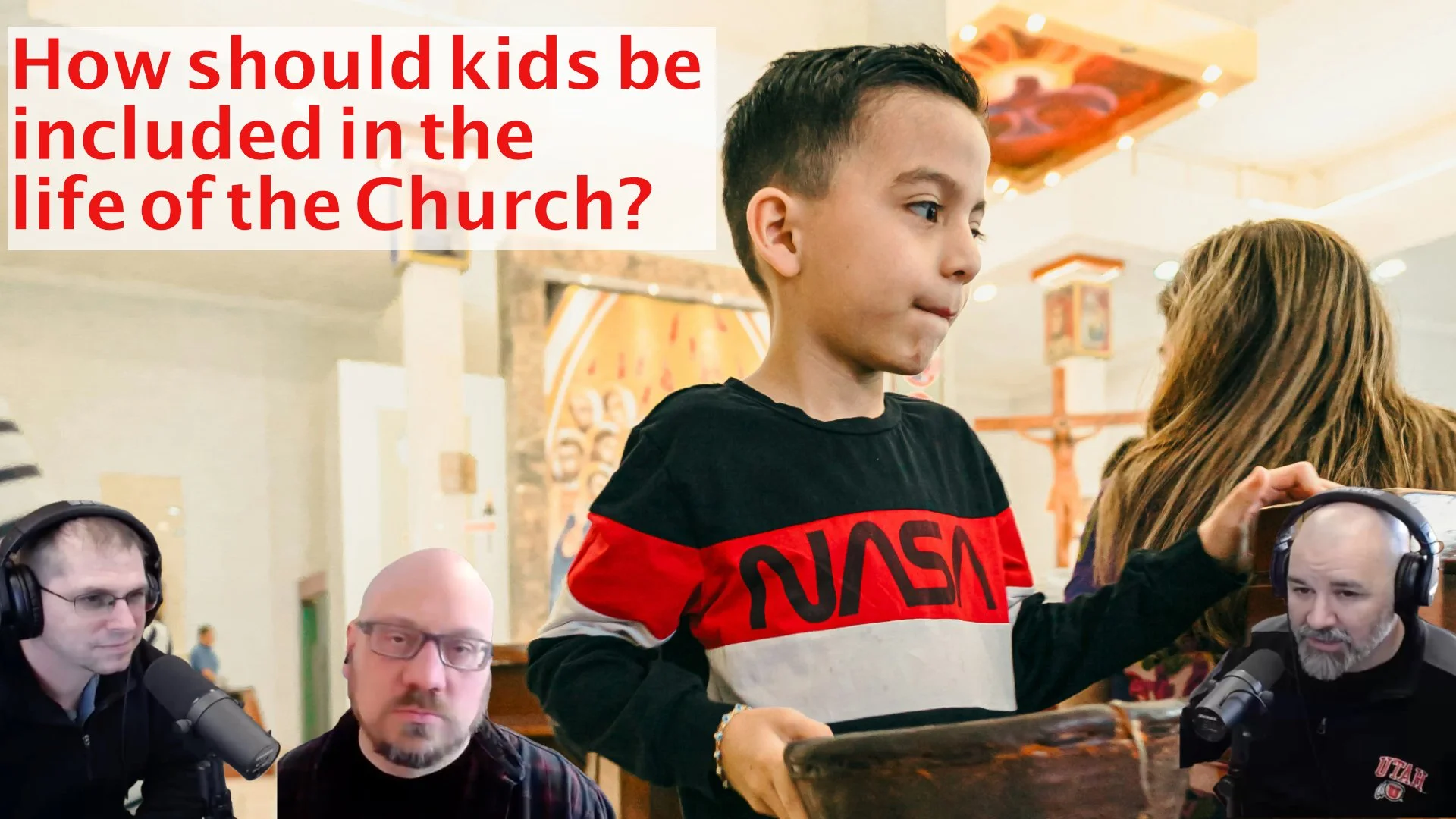
Including Children in the Life of the Church

How do we bring young people into the life of the Church? What is their role? How should they be included and how should they be excluded from aspects of the Sunday worship gathering, small groups, service, and other ways we live out our faith in the local church? Kirk Galster, Josiah Walker, and Bryan Catherman discuss this challenging topic and address some of these questions. Should the church include children in aspects of the worship gathering, and in what ways? Collecting the offering, serving on the worship team, and leading in other ways? Should little kids become members? What about young people preaching? This conversation is more than just including children in the worship service. This is about really bringing them in, maybe all the way in. How can children, young people, and new believers be included in the life of the Church, and how does this help train up the next generation? Listen to this episode wherever you get podcasts, watch on YouTube, or listen here:

Salty Believer Unscripted Including Children in the Life of the Church

In addition, this episode of Salty Believer Unscripted was unsponsored by the Reformed Sage, and therefore, we shared an unsolicited, unpaid advertisement for them. (Seriously, the Reformation Sage didn’t pay us to talk about it, and they don’t even know we exist. We just like the Reformed Sage and think you should too.)

Subscribe to the Salty Believer Unscripted on your favorite podcast app, or use these links:
RSS FeedApple Podcasts | iTunes  | Amazon Music | Audible | Player FM | iHeartRADIO | Pocket Casts | Castbox | Podbean | Good Pods | Spotify | Podcast Addict | Pandora | Podchaser | Listen Notes | YouTube (audio) | YouTube (video)