
Ben Sasse and the Grace of Dying Honestly
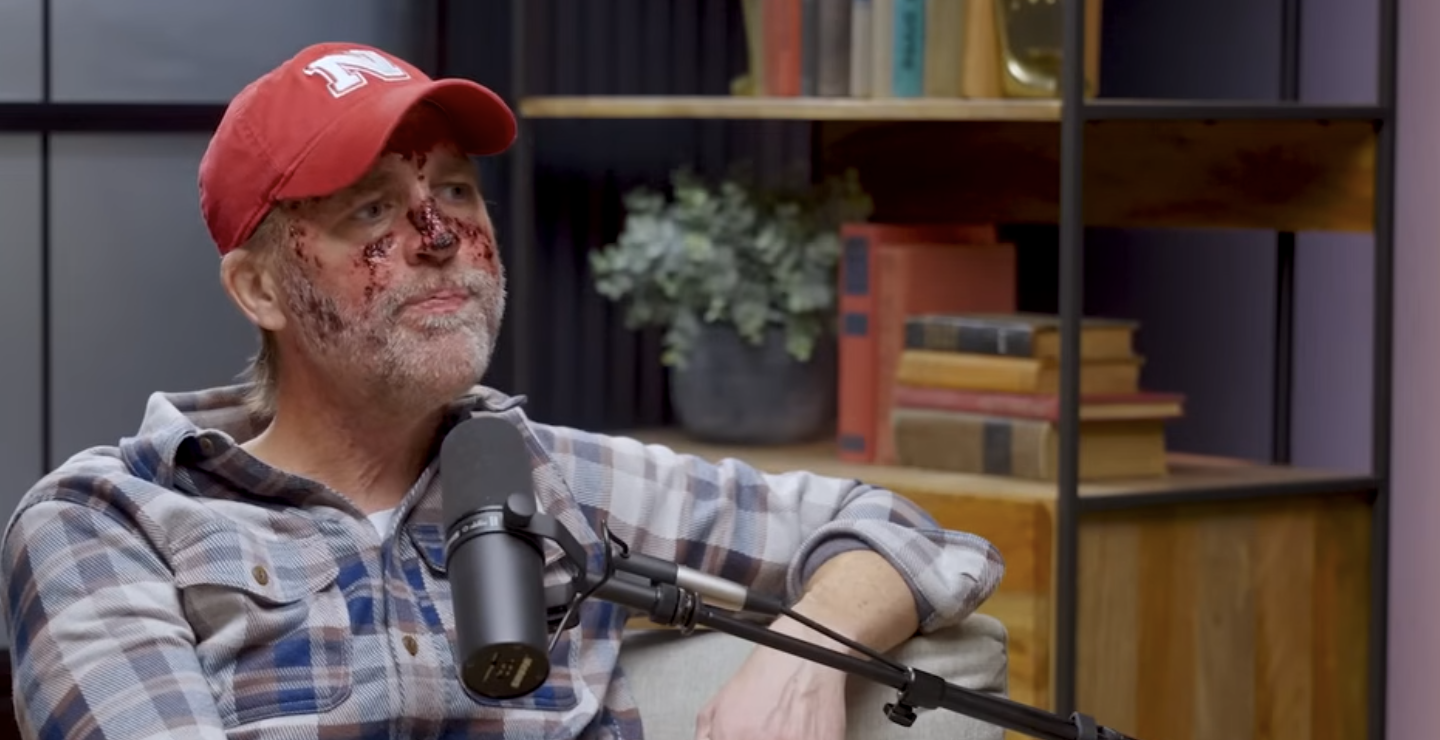
/
Ben Sasse is dying, and he is doing something strangely beautiful with the time he has left. He is telling the truth.
Not the sentimental kind of truth we usually get when public figures talk about mortality. Not the soft-focus Hallmark theology where death becomes merely “part of the journey.” Sasse is speaking like a man who has read his Bible, believes it, and knows he is about to meet the God who wrote it.
In that sense, he sounds almost like a modern-day Puritan. Not the caricature of dour men allergic to joy, but the real thing: Christians who knew how to look death in the face without pretending it was harmless. They called death an enemy, because Scripture does. They also knew Christ had defeated that enemy, because Scripture says that too.
Sasse, the former Republican senator from Nebraska, served in the U.S. Senate from 2015 to 2023 before becoming president of the University of Florida. In December 2025, he announced that he had been diagnosed with metastasized stage-four pancreatic cancer and wrote plainly, “I’m gonna die.” CBS reported that he was initially given three to four months to live, though treatment has given him more time than expected. As of his 60 Minutes interview, he described himself as living on “extended time already.”
But what makes Sasse worth watching right now is not merely that he is dying. Everyone is. Some of us just maintain the illusion of control. What stands out is how he is dying. He is not raging at God. He is not baptizing denial in religious language. He is turning to Scripture, confessing his dependence, and naming cancer as both wicked and, in the mysterious providence of God, sanctifying.
In his conversation with Ross Douthat, Sasse said he would not want a sovereign God to answer all his prayers with a yes, because he is not omniscient. He called his suffering a “winnowing,” not salvific, but sanctifying. In the same interview, when asked what he would say to the skeptic, Sasse did not reach for therapeutic fog. He said, “Let’s read the book of Romans together.” That is exactly the kind of answer a dying Christian should give. Take up and read.
In his 60 Minutes interview with Scott Pelley, Sasse was just as direct. “Death is wicked. Death is evil. Death is not how it’s supposed to be.” Then he added that his diagnosis has been “a touch of grace” because it forces him to tell the truth about himself. Cancer, he said, has made him closer to God because he can acknowledge his dependence in a new way.
That is not stoicism. That is Christianity with its spine still attached.
So watch Ben Sasse. Listen to him. Not because he is a flawless man or because his political résumé needs polishing. This is not hagiography. It is something more useful. It is an invitation to consider how a Christian faces the final enemy with an open Bible, a sober mind, and a confidence that death does not get the last word.
Here is a man who appears to be living well at the end of his life. We would be wise to pay attention before the moment passes.
Here’s a section of the New York Times interview with Ross Douthat asking Ben Sasse questions about his faith (starting at 1:00:50):
Ross Douthat: One of my recent guests was Bart Irman, who's New Testament scholar, well known, as a skeptic who was a Christian, was evangelical Christian for a time and lost his Christian faith. And in our conversation, he talked about the idea that he didn't lose his faith because he decided that the gospels weren't historically reliable, though that was mostly what we argued about, right, but because of the problem of evil, of human suffering. And he specifically talked about unanswered prayers. And as you know, I assume you've prayed for healing.
Ben Sasse: Yes, sir.
Ross Douthat: Not to be the guy who just beats the odds, but to be the miracle story, right? Um, God hasn't answered those prayers yet. Are you angry at God ever?
Ben Sasse: No.
Ross Douthat: Not at all?
Ben Sasse: No. I wouldn't want a sovereign God to defer to all of my prayers with a yes. Because I'm not omniscient. I don't know what the weaving together of the tapestry of full redemption should look like, but I know going through the period of suffering that I'm going through is a benefit because it is a winnowing. I'm filled with dross, and this suffering is not salvific, but it's sanctifying, and I'm grateful for it.
Tim Keller, who I know you knew, who's in my denomination, a Presbyterian pastor in New York, who also died of pancreatic cancer, said, "I hate pancreatic cancer. I would never wish it on anyone, but I would never want to go back to a time in my life where I didn't know the prayer of pancreatic cancer." Meaning I know in the midst of this disease know much more the truth of my finitude than I ever let myself believe in the past. The hubristic nonsense that I was actually, you know, ‘I believe in God and grateful and blessed, but I can build a storehouse that can be pretty deistically persuasive. My storehouse can have enough resources that I can operate without a need.’ But that's not true. I can't. I can't keep the orbits, the planets in orbit. I can't. I can't even grow skin on my face.
Ross Douthat: For the listener or viewer who, whether for man's reasons or others, doesn't believe in God, right, and finds your cosmic optimism admirable, but maybe thinks that you're deluding yourself on the brink of actual finitude. What would you say to that person?
Ben Sasse: Let's read the book of Romans together. In Romans 1, Paul's essentially laying out a catechetical argument for the structure of Christianity against a Jewish messianic hopeful backdrop. He says in chapter one, there are lots of intellectual arguments you can make against God, but you kind of have to start with a fundamental question about what do you do with this moral issue of our own conscience? And does the individual in your hypothetical really start with the claim that things are right in your soul? Because I can't relate to that. Things are not right in my soul. My soul thinks Ben should be God, and I want that to die. Cancer sucks, but I'm pretty grateful that cancer is a stake against my delusional selfdolatry.
Ross Douthat: Do you think you're ready to die? Do you feel ready?
Ben Sasse: I don't feel ready, but to whom would I go? I have confidence that when Jesus says to the disciples, he didn't want to be identified as the Messiah yet—”You keep these crowds away, you know, don't tell about the the water into wine miracle at the feast.” How amazing is it that Jesus’ first miracle is a big ass party? Let's drink more together. But he says, "You can't keep the children from me." And we're told that we get to approach the almighty. We get to approach the divine and call him daddy. Aba father. That's pretty glorious. And I know that that's what I need.
Here’s a section of the 60 Minutes with Scott Pelley (starting at 32:52):
Scott Pelley: You are completely devoted to your faith—what’s known as reformed Christianity or Calvinism. And one of the tenants of that faith is that God ordains everything. And I wonder why you think God has put you to this test.
Ben Sasse: Death is wicked. Death is evil. Death is not how it's supposed to be. And me getting a cancer diagnosis again is pretty small on the grand scheme of things, but it's a touch of grace because it forces me to tell the truth. And the lie I want to tell myself is that I'm the center of everything. And I'm going to be around forever. And I can work harder and store up enough that I can atone for my own brokenness. I can't. And so I hate cancer, but I'm also grateful for it. I tell a lot more truth to myself than I used to when I thought I was super omni-competent and interesting.
Tim Keller was a pastor in New York City. He's in my denomination, and he died of pancreatic cancer a couple of years ago. And he had a line. He said, 'I hate pancreatic cancer. I would never wish it on anybody, but I also would never want to go back to a time in life where I didn't know the prayer of pancreatic cancer.' And I feel that to be true.
I started being symptomatic the last couple weeks of October. I wasn't diagnosed until mid-December. We had trouble figuring out what was going on because I was training for some sprint triathlons, and I was doing some stupid stuff in my training. And so I thought I'd pulled a bunch of muscles in my abdomen. I was in really bad pain for a number of weeks. I'm now on a lot of morphine, and I've also got the benefit of this drug, which is, you know, scare quotes, but miraculously reduced my tumor volume enough that I have a lot less tumor pressure on my spine. So, the combination of a great drug and morphine, another useful drug, I'm in so much less pain now than I was from Halloween to Thanksgiving.
But at that point, I was on the floor in the shower, running the water, trying to remove a valve on my shower to make it hotter. I'd be five times a night up in the middle of the night in the shower, trying to scald my back to try to make the throbbing of what turned out to be tumors pushing on my spine cease. It was horrible. I'm super grateful that I had that pain.
Scott Pelley: Cancer has made you closer to God?
Ben Sasse: Definitely because I can acknowledge my dependence in a new way.