Summary of the Rhythms of the Festivals in Leviticus

As Christians, we live in a routine that’s shaped by the weekly rhythm of the Lord’s day. Some Christians also live in accordance with the rhythms of the “Church Calendar” tradition.  But these pale in comparison to the routines and rhythms of the Jewish calendar set in Leviticus 23-27. Here’s a summary:

Weekly Sabbath (Leviticus 23:1–3). Every seventh day was a Sabbath, a full day of rest and a “holy convocation,” which means God’s people gathered and treated the day as set apart for him (Lev 23:3). No regular work was to be done. Leviticus 23 does not add a special menu here, but elsewhere Israel often marked Sabbaths with extra offerings (Num 28:9–10). The purpose was simple and important. God was teaching his people that life is not only work. They belonged to him, and their time belonged to him. He would provide if they trusted him.

Passover and the Feast of Unleavened Bread (Leviticus 23:4–8). Passover commemorates the night God rescued Israel from slavery in Egypt and marks the beginning of a weeklong festival called Unleavened Bread (Lev 23:5–6; see Exod 12). During that week, they ate bread made without yeast, and on the first and seventh days the people gathered and did no ordinary work (Lev 23:7–8). Special food offerings were also presented to the Lord each day (Lev 23:8). The point was remembrance and trust. God saves. God keeps his promises. God’s people live differently because of what he has done.

Firstfruits (Leviticus 23:9–14). Firstfruits happened at the start of harvest. The people brought the first bundle of the barley harvest to the priest, and it was waved before the Lord as a sign that the whole harvest belonged to God (Lev 23:10–11). Along with it, they offered a burnt offering (a lamb), a grain offering, and a drink offering (Lev 23:12–13). They were not to eat bread or grain from the new harvest until this offering had been made (Lev 23:14). The purpose was to put God first. Before they enjoyed the harvest, they confessed that every good gift came from him.

Feast of Weeks (Pentecost) (Leviticus 23:15–22). Seven weeks after Firstfruits, Israel celebrated Weeks. They brought two loaves of bread baked with yeast as a special offering, along with multiple animal sacrifices (burnt offerings, a sin offering, and peace offerings) (Lev 23:16–20). Peace offerings were associated with a shared meal, and the text highlights that the bread and certain portions belonged to the priest (Lev 23:20). The purpose was gratitude and dependence. God provided the harvest. God deserved public thanks. In the same section, God also commanded generosity. Farmers had to leave some grain for the poor and the foreigner (Lev 23:22). Worship and mercy belonged together.

Feast of Trumpets (Leviticus 23:23–25). On the first day of the seventh month, the people rested and gathered for a memorial announced by loud trumpet blasts (Lev 23:24–25). They did no ordinary work and brought food offerings to the Lord (Lev 23:25). This day was like a spiritual wake-up call. It marked a turning point in the year and prepared everyone for the most serious day that followed, the Day of Atonement.

Day of Atonement (Leviticus 23:26–32). On the tenth day of the seventh month, Israel observed the Day of Atonement. The people gathered, did no work, and they humbled themselves, often with fasting and prayer (Lev 23:27–32). Food offerings were presented to the Lord (Lev 23:27). The purpose was cleansing and forgiveness at a national level. It taught that sin is real and dangerous. It also taught that God is willing to forgive and restore when people come to him on his terms. The detailed sacrifices for this day are explained more fully in Leviticus 16.

Feast of Booths (Tabernacles) (Leviticus 23:33–44). Beginning on the fifteenth day of the seventh month, Israel held a joyful weeklong celebration. They lived in temporary shelters made from branches to remember how God cared for them in the wilderness after the exodus (Lev 23:34, 42–43). The first day was a special gathering with rest from ordinary work, and the eighth day was another gathering with rest (Lev 23:35–36, 39). Food offerings were presented each day (Lev 23:37). The purpose was gratitude and joy. God had carried them through hard years. God still provided them a home and a harvest.

The lamp in the sanctuary (Leviticus 24:1–4). Israel had a daily and weekly rhythm of worship inside the tabernacle. Pure olive oil was brought so the lamp could burn continually before the Lord (Lev 24:2–4). This was not a public festival, but it was a steady reminder that God’s presence and God’s light were central to Israel’s life. Worship was not only for special days. It was meant to be ongoing.

The bread of the Presence (Leviticus 24:5–9). Every Sabbath, twelve loaves of bread were set before the Lord on a special table, with frankincense placed with them (Lev 24:5–7). The bread was then eaten by Aaron and his sons in a holy place because it was “most holy” (Lev 24:8–9). This showed that Israel lived before God. It also showed that the priests were supported through the worship system. God provided for those who served, and the people were represented before him.

Sabbatical year (Leviticus 25:1–7). Every seventh year, the land itself got a Sabbath. Fields were not to be planted, and vineyards were not to be pruned in the normal way (Lev 25:3–4). Whatever grew on its own could be eaten by everyone, including servants, hired workers, foreigners, and even animals (Lev 25:6–7). The purpose was trust and mercy. God taught his people to rely on him for provision. He also built this into the economy so the poor and the outsiders could eat.

Jubilee (Leviticus 25:8–55). After seven cycles of seven years, the fiftieth year was the Jubilee. It began with a trumpet blast on the Day of Atonement (Lev 25:9–10). In Jubilee, land that had been sold returned to the original family, and Israelites who had become servants because of poverty were set free (Lev 25:10, 13, 39–41). The purpose was restoration. God refused to let poverty permanently erase a family’s future. He reminded Israel that the land ultimately belonged to him and that his people were not to be treated like disposable property (Lev 25:23, 55).

You may be questioning what all of this looks like on our modern calendar. That’s where a great Study Bible chart can be helpful.

Weekly Sabbath (Lev 23:3): Every 7th day. For Jews today, that is sunset Friday to sunset Saturday.

Passover (Lev 23:5): 14th day of Nisan. Usually late March to late April.

Unleavened Bread (Lev 23:6–8): 15th to 21st of Nisan, immediately after Passover. Also, usually late March to late April.

Firstfruits (Lev 23:9–14): During Unleavened Bread, “the day after the Sabbath” (Lev 23:11). This is commonly during Passover week, typically late March to late April.

Feast of Weeks (Pentecost) (Lev 23:15–22): Seven weeks after Firstfruits, so usually late May to mid June.

Feast of Trumpets (Lev 23:23–25): 1st day of Tishrei. Usually September to early October.

Day of Atonement (Lev 23:26–32): 10th of Tishrei, 9 days after Trumpets. Usually from September to October.

Feast of Booths (Tabernacles) (Lev 23:33–44): 15th to 21st of Tishrei, with a concluding assembly on the 22nd (Lev 23:34–36, 39). Usually late September to late October.

Lamp and Bread of the Presence (Lev 24:1–9): an ongoing tabernacle rhythm, with the bread set out each Sabbath (Lev 24:8–9).

Vows and tithes (Lev 27): not a single holiday date. These happened as people made vows or as produce and herds increased through the year.

Sabbatical year (Lev 25:1–7): every 7th year, the land rested.

Jubilee (Lev 25:8–55): every 50th year, announced with a trumpet on the Day of Atonement (Lev 25:9–10).

A Summary of the Leviticus 1-7 Sacrifices

Bull

Reading Leviticus can leave your head swimming. Sometimes it’s helpful to have a summary overview first in order to know and understand the parts you are reading. Here’s a summary overview of the prescribed sacrifices in Leviticus 1-7:

Burnt offering (Leviticus 1).  A burnt offering was an animal from the herd or flock (and for the poor, a bird) that was completely burned on the altar. It had to be an unblemished male. The worshiper laid a hand on its head, and the priests handled the blood at the altar (Lev 1:3–4, 10–17). Nothing from the animal was eaten, because “all of it” was burned up (Lev 1:9, 13, 17). It was given so the worshiper could be “accepted” by God and “make atonement,” meaning God provided a way for the person to be welcomed despite sin (Lev 1:4).

Grain offering (Leviticus 2; 6:14–18). A grain offering was fine flour (often baked or cooked), mixed with oil and frankincense, and it could not have yeast (leaven) in it (Lev 2:1–10; 2:11). The priest burned a small “memorial portion” on the altar, and the rest became food for the priests, eaten unleavened in a holy place (Lev 2:2–3; 6:14–18). It was a way to honor God with the fruit of one’s labor and to support those serving at the tabernacle, while still being treated as “most holy.”

Peace offering (Leviticus 3; 7:11–21, 28–34). A peace offering (also used for thanksgiving, vows, and freewill gifts) was an unblemished animal from the herd or flock, male or female (Lev 3:1–17). The fat portions were burned on the altar as God’s portion, but much of the meat was eaten as a joyful meal. The priests received specific portions (the breast and right thigh), and the rest could be eaten by the worshiper and others who were ceremonially clean (Lev 7:19–20, 28–34). Some peace offerings had to be eaten the same day, and others by the next day, with anything left on the third day burned (Lev 7:15–18). This sacrifice expressed a restored relationship and shared fellowship with God, often in gratitude and celebration.

Sin offering (Leviticus 4:1–5:13; 6:24–30). A sin offering was brought when someone sinned unintentionally or became guilty through specific kinds of wrongdoing or uncleanness (Lev 4; 5:1–13). The animal varied by who sinned and what was involved, but the key actions were similar: the priests used the blood in a prescribed way, and the fat portions were burned on the altar (Lev 4:8–10, 20). In some cases (like a bull offered for the priest or the whole community), the hide and remaining parts were taken outside the camp and burned, not eaten (Lev 4:11–12). In other cases, the priest who offered it could eat the meat in a holy place, but any sin offering whose blood was brought into the tent of meeting could not be eaten and had to be burned (Lev 6:26, 30). The point was cleansing and forgiveness. It showed that sin defiles and harms our relationship with God, and God provided a way to deal with it so the person could be forgiven.

Guilt offering (Leviticus 5:14–6:7; 7:1–7). A guilt offering was brought when someone wronged God in a serious way involving “holy things” (things dedicated to worship) or when someone cheated, stole, or otherwise sinned against a neighbor and then realized it (Lev 5:14–16; 6:1–7). The sacrifice was a ram without blemish (Lev 5:15; 6:6). What made it distinctive is that it required repayment: the person had to restore what was taken or damaged and add an extra fifth (20 percent) (Lev 5:16; 6:4–5). The fat portions were burned on the altar, and the remaining meat belonged to the priests to eat in a holy place (Lev 7:3–7). The point was to make wrongs right. It combined forgiveness with real-world repair of the harm done.

Train Them to Listen to Sermons

Learning to listen to sermons does’t just happen by showing up, and the next generation needs to learn how to listen to sermons. It’s by listening to sermons with the desire to grow and think critically, week by week, over many years, that people learn and grow. In this episode, Bryan Catherman and Josiah Walker discuss the idea of preaching as discipleship and training. What is preaching? How does it do the training and discipleship work? Should the Gospel be there every week? What kind of preaching? They discuss these questions and many others. Listen to this episode wherever you get podcasts, watch on YouTube, or listen here:

Salty Believer Unscripted Train Then to Listen to Sermons

In addition, this episode of Salty Believer Unscripted was unsponsored by 9Marks and therefore shared an unsolicited, unpaid advertisement for the 9Marks podcast, “Bible Talk.” (Seriously, 9Marks didn’t pay us to talk about it, and they don’t even know we exist. We just like “Bible Talk” and think you should too.)

Subscribe to the Salty Believer Unscripted on your favorite podcast app, or use these links:
RSS FeedApple Podcasts | iTunes  | Amazon Music | Audible | Player FM | iHeartRADIO | Pocket Casts | Castbox | Podbean | Good Pods | Spotify | Podcast Addict | Pandora | Podchaser | Listen Notes | YouTube (audio) | YouTube (video)

Train Them Up: One-On-One Discipleship

A graphic with the words, One-on-One Discipleship

As we consider what's needed to train the next generation of Christians, Bryan Catherman and Josiah Walker discuss one-on-one discipleship. Why is one-on-one discipleship important? How do we do one-on-one discipleship? What’s the difference between formal and informal discipleship? What might be the pushback? Why don't we do it? They discuss these questions and share some tools they use for one-on-one discipleship. Subscribe and listen to this episode of Salty Believer Unscripted wherever you get podcasts, watch on YouTube, or listen here:

Salty Believer Unscripted Train Them Up: One-On-One Discipleship

Subscribe to the Salty Believer Unscripted on your favorite podcast app, or use these links:
RSS FeedApple Podcasts | iTunes  | Amazon Music | Audible | Player FM | iHeartRADIO | Pocket Casts | Castbox | Podbean | Good Pods | Spotify | Podcast Addict | Pandora | Podchaser | Listen Notes | YouTube (audio) | YouTube (video)

Train Them Up: An Introduction

Bryan and Josiah with the question, "Can The Next Generation Be Trained?"

There seems to be a boost of young men becoming Christians and engaging with the local church. Is it true? With the significance of generational differences, how are the Boomers and Gen-X generation going to train the Millennials and Zoomers (Gen-Z and Gen-A) if there are more young men coming to church? In this Salty Believer Unscripted series, Bryan Catherman and Josiah Walker start a series about training up the next generations for ministries. Bryan also deals with a negative email concern. And they've started an unsolicited, unsponsored advertisement that's fitting for an unscripted podcast. Listen wherever you get your favorite podcasts, watch on YouTube, or listen here:

Salty Believer Unscripted Train Them Up: An Introduction

Subscribe to the Salty Believer Unscripted on your favorite podcast app, or use these links:
RSS FeedApple Podcasts | iTunes  | Amazon Music | Audible | Player FM | iHeartRADIO | Pocket Casts | Castbox | Podbean | Good Pods | Spotify | Podcast Addict | Pandora | Podchaser | Listen Notes | YouTube (audio) | YouTube (video)

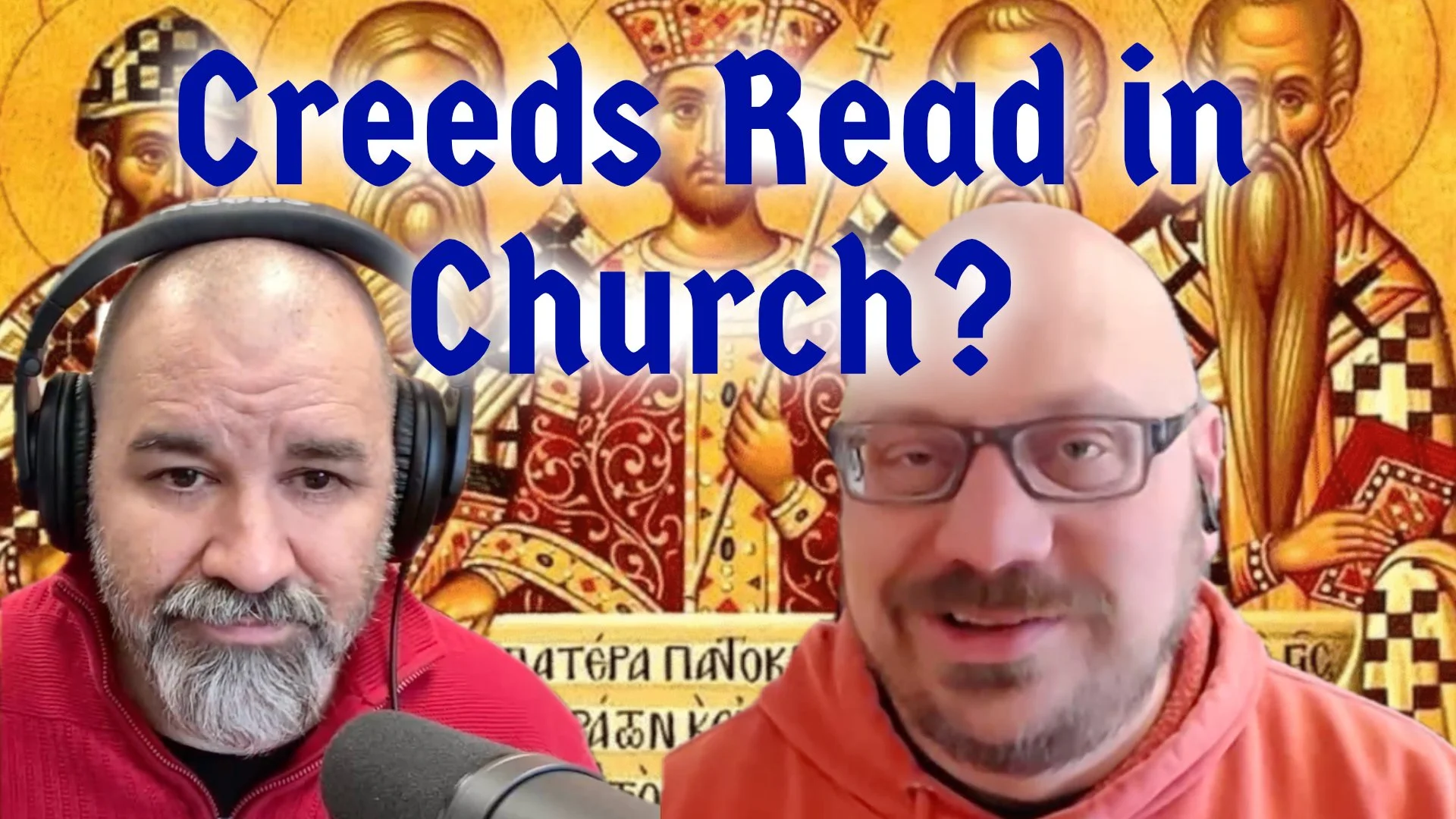
Should We Read Creeds in Church Services?

Text reading, "Creeds Read in Church?" with images of Bryan Catherman and Josiah Walker

How can a church incorporate a creed, confession, or catechism in weekly gatherings and services? Should they? Before dealing with the primary question, we must define the terms. What is a creed? What is a confession? What’s the difference? What is a catechism? How can we use these things in our spiritual journey? How do they help us grow? How can they be used in weekly worship services? Should they be used in a local church gathering? If a Pastor wants to integrate these things, how does he get there? In this episode of Salty Believer Unscripted, Bryan Catherman and Josiah Walker chat about creeds, confessions, and catechisms. Subscribe to the podcast wherever you get podcasts, watch on our YouTube channel, or listen here:

Salty Believer Unscripted Should We Read Creeds in Church Services?

Subscribe to the Salty Believer Unscripted on your favorite podcast app, or use these links:
RSS FeedApple Podcasts | iTunes  | Amazon Music | Audible | Player FM | iHeartRADIO | Pocket Casts | Castbox | Podbean | Good Pods | Spotify | Podcast Addict | Pandora | Podchaser | Listen Notes | YouTube (audio) | YouTube (video)

Disciplines of a Godly Man (and Heaven Taken by Storm)

A book titled Disciplines of a Godly Man sitting on a table.

There's something going on with young Christian men in America. Studies are finding more young men in church than young women. Bible sales are up, but not by a noticeable margin. More and more football players are talking about God on national television than ever before. College campuses are buzzing with theological talk, and the greater majority of it is among men. And this even seems to be stirring some action in older men. Therefore, there's never been a better time than now to press into being a godly man and raising up godly men.

Disciplines of a Godly Man by Kent Hughes is 19 chapters of easy-to-read, real-to-life, rich instruction for personal reflection, one-on-one discipleship, or men's group studies. I lead two small groups of young men, and we start with Disciplines of a Godly Man. I am also using the table of contents as the direction for our monthly men’s breakfasts at the church where I’m a pastor. (I am using a Text for each of the topics, but the topic is driving my choice of Texts.) The book has been in print since 1991 and has been updated a few times, but it is more important now than ever. It’s outstanding if you're looking to grow as a godly man. It’s also an excellent book for men’s groups and one-on-one discipleship.

Here’s a video of my thoughts and recommendations for Kent Hughes’ Disciplines of a Godly Man (Crossway, 2019). I also couldn’t help a brief discussion of Thomas Watson’s book, “Heaven Taken by Storm” (Banner of Truth).


Find this book wherever you buy good books or get it on Amazon here: https://amzn.to/3YN4Zbl. Find more book reviews and recommendations like this one on my book recommendations page.

Journey Through John: A 5-Minute Bible Study

Bryan Catherman is taking a journey through John on YouTube, with a simple, 5-minute daily Bible study. He and Josiah Walker discuss what’s behind it, why it's done, and how it works on this episode of Salty Believer Unscripted. Find the Journey Through John playlist on the SaltyBeliever.com YouTube channel. Listen to this episode of Salty Believer Unscripted wherever you get podcasts, watch this episode on YouTube, or listen here:

Salty Believer Unscripted Journey Through John: A 5-Minute Bible Study

Subscribe to the Salty Believer Unscripted on your favorite podcast app, or use these audio links:
RSS FeedApple Podcasts | iTunes  | Amazon Music | Audible | Player FM | iHeartRADIO | Pocket Casts | Castbox | Podbean | Good Pods | Spotify | Podcast Addict | Pandora | Podchaser | Listen Notes | YouTube

Watch the recording of this podcast on our YouTube Channel:
Salty Believer Unscripted Video Playlist

Intern Episode: Daniel Catherman

It’s important that Christian churches and ministries seek to raise up Christian ministers for and from the next generation. We want to do our part, even at a website and podcast of obscurity. This is why we have a podcast intern. We don't even know what that really is when it comes to a podcast like this one, but it gives us a good excuse to challenge young people to serve, learn, and grow. Over the past 14 years of the podcast, previous interns have gone on to become biblical counselors, missionaries, associate pastors, and even a lead Pastor. This is a special episode, so we could interview Daniel the Intern, moving him out from behind his other duties and putting him in front of the microphone. He discussed his premium Schuyler Bible, Tim Wildsmith, and many more things. He’s the youngest intern we’ve ever had, and yes, we know there could be some nepotism at play here. Listen to this episode wherever you get your podcasts or listen here:

Salty Believer Unscripted Intern Episode: Daniel Catherman

Or watch us record the episode on YouTube here:

Subscribe to the Salty Believer Unscripted on your favorite podcast app, or use these links:
RSS FeedApple Podcasts | iTunes  | Amazon Music | Audible | Player FM | iHeartRADIO | Pocket Casts | Castbox | Podbean | Good Pods | Spotify | Podcast Addict | Pandora | Podchaser | Listen Notes | YouTube

Dealing with Change

Change can be hard. It’s harder for some than others. And it seems like the hardest place for change in the local church. What is change so difficult, and how are we to navigate change? Josiah Walker and Bryan Catherman discuss change and the difficulties that come with change in this episode of Salty Believer Unscripted. Subscribe wherever you get podcasts or listen here:

Salty Believer Unscripted Dealing with Change

Or watch on YouTube here:

Subscribe to the Salty Believer Unscripted on your favorite podcast app, or use these links:
RSS FeedApple Podcasts | iTunes  | Amazon Music | Audible | Player FM | iHeartRADIO | Pocket Casts | Castbox | Podbean | Good Pods | Spotify | Podcast Addict | Pandora | Podchaser | Listen Notes | YouTube

Forming Better Spiritual Habits

How do we form better spiritual habits? How do we stick to them? How do we achieve our Bible reading goals? What stops us? How do we say no to bad habits and yes to good habits? Forming good spiritual habits and achieving our goals requires learning to say no to things. It’s also helpful to measure the right things. This is the conversation in this episode of Salty Believer Unscripted. Listen wherever you get podcasts or listen here:

Salty Believer Unscripted Forming Better Spiritual Habits

Or you can watch the recording of this podcast on YouTube here:

Subscribe to the Salty Believer Unscripted on your favorite podcast app, or use these links:
RSS FeedApple Podcasts | iTunes  | Amazon Music | Audible | Player FM | iHeartRADIO | Pocket Casts | Castbox | Podbean | Good Pods | Spotify | Podcast Addict | Pandora | Podchaser | Listen Notes | YouTube

What Devotionals are Helpful? (2026 Edition)

Books and an open Bible.

In this video, Josiah Walker and Bryan Catherman share the devotional materials they find helpful. What are their daily habits to grow closer to God? That's the question they answer. It may help you. Listen wherever you subscribe to podcasts or listen here:

Salty Believer Unscripted What Devotionals are Helpful (2026 Edition)

Subscribe to the Salty Believer Unscripted on your favorite podcast app, or use these links:
RSS FeedApple Podcasts | iTunes  | Amazon Music | Audible | Player FM | iHeartRADIO | Pocket Casts | Castbox | Podbean | Good Pods | Spotify | Podcast Addict | Pandora | Podchaser | Listen Notes | YouTube

The P.R.A.Y. Method for Prayer

Prayer doesn't come naturally. It's something to learn and be taught. There are plenty of tools out there, A.C.T.S. being one of the most popular. But the ACTS prayer method is missing something biblical. The PRAY model gets closer. In the video below, I discuss how PRAY might be healthier than ACTS. Also, here are some simple instructions for anyone asking, "How do I pray?"

P.R.A.Y.

P - Praise, Adoration, & Thanksgiving

Praise: Begin your prayer by taking several minutes to marvel in the God you serve. Think of some of His attributes and note how they are experienced by you each day. Remember His promises and how He has fulfilled them in the past. Think of the things that drive your affections toward God and tell Him about them. Notice the great things God is doing and declare His glory.

R - Repentance & Confession

Repentance: Acknowledge your struggles, trials, and shortcomings to God. Be upfront about your sins and let Him know you are genuinely sorry for them. This is not just remorse for getting caught, but real sorrow for choosing a false path. We acknowledge our sinfulness in contrast to His purity and confess who we are, considering who God is.

A - Asking & Intersession

Ask: Lay your specific requests before the Lord. There’s no need to be generic or “beat around the bush.” Share your needs, understanding that God already knows what you need before you ask, but He still wants you to ask. Pray for others. Bring the burdens of others before the Lord and intercede on their behalf. Nothing is too small or too big, just ask.

Y - Yielding & Honoring

Yielding: To yield to God in prayer is to submit to His plan and give him all glory. It involves choosing Him and what He is doing over what you want. Yielding puts Him in a position above you and above others. It can and should be stated in words in your prayer, but it’s practices over time as you preserve and trust in God’s timing. Continue to pray, wait, and watch for what God will do.

Calendar Years in the Bible

    When reading the Bible, we regularly come across statements like the one in Nehemiah 2:1: “in the twentieth year of Artaxerxes.” Or like Isaiah 6:1, “In the year that King Uzziah died.” These are significant statements because the numbering of the years was (and still is) tied to the reigning king. The first year of Artaxerxes would have been the first year he was in power. Every time a new king came into power, the numbering of each year would have started over.

    We use the same system today, but we base our calendar on King Jesus, starting in the year most believe was his earthly birth year, rather than arguing when Jesus’ kingly rule began. There is some debate about the starting year, with a range of 3 to 5 years. We still use the same language as the Old Testament: “in the year of our Lord,” but we say AD. AD is short for the Latin statement, Anno Domini, which means, “In the year of our Lord.” At the time of this writing, it’s AD 2025. AD comes first to identify which counting system we’re using. “In the year of our Lord, 2025.” And because Jesus is alive and will never die, our numbering system continues onward centered on Christ.

    But what about when we go back years before Jesus? Obviously, the author of Nehemiah didn’t know he was in 445 B.C. because he wouldn’t have known the starting point of the calendar system we use today. So to clarify, we count away in the negative, starting at the same point—Jesus’ earthly birth. However, rather than using a negative symbol, we use B.C. Because this is English for “Before Christ,” it’s abbreviated with periods.

    Some who want to avoid acknowledging Jesus have tried to change this system to B.C.E., meaning “before the common era,” and C.E., meaning “common era.”  This is humorous because the timeline is still based on Jesus. It’s also a form of chronological snobbery to assume that anything more than 2,225 years ago was uncommon, or that it happened before some magical common time. What defines something as the common era? If we try to remove Jesus from the timeline, what defines someone as in the common or before the common era?  

    The months of the Jewish calendar originally began with Passover and the Exodus. Some of the names changed after the exile into Babylon, but they continued to have twelve months that didn’t start over with each king. They are Abib (Nisan), Ziv (Iyyar), Sivan, Tammuz, Ab, Elul, Ethanim (Tishri), Bul (Marchesvan), Chislev, Tebeth, Shebad, and Adar.

Daily Doctrine by Kevin DeYoung: Yes or No?

In this episode of Salty Believer Unscripted, Bryan Catherman and Josiah Walker discuss their year going through Kevin DeYoung’s book, Daily Doctrine: A One-Year Guide to Systematic Theology (Crossway, 2024). After reading it, they review it. Would they recommend it to others? Their answer might surprise you. Why did they end up disappointed? Listen wherever you get podcasts or listen here:

Salty Believer Unscripted Daily Doctrine by Kevin DeYoung: Yes or No?

Or watch the YouTube video here:

Subscribe to the Salty Believer Unscripted on your favorite podcast app, or use these links:
RSS FeedApple Podcasts | iTunes  | Amazon Music | Audible | Player FM | iHeartRADIO | Pocket Casts | Castbox | Podbean | Good Pods | Spotify | Podcast Addict | Pandora | Podchaser | Listen Notes | YouTube

Social Media is Killing Biblical Community

Facebook’s newest advertisement is selling the community it killed. Does social media help or hurt real, meaningful community? It hurts. It was intended to help, but has it accomplished what we thought it would do? No. Has the effort to make money come at the cost of real community? Yes, and Meta is king. Is it causing depression and anxiety? Yes. Have we lost the idea of what community really is, and now long for something we already had? Yup. What is the cost? Doom scrolling is a thing, and doom is not a positive word. We need to talk about social media and the death of community. That's the topic of this episode of Salty Believer Unscripted. Subscribe or listen here:

Salty Believer Unscripted Social Media is Killing Community

Or watch here:

Subscribe to the Salty Believer Unscripted on your favorite podcast app, or use these links:
RSS FeedApple Podcasts | iTunes  | Amazon Music | Audible | Player FM | iHeartRADIO | Pocket Casts | Castbox | Podbean | Good Pods | Spotify | Podcast Addict | Pandora | Podchaser | Listen Notes | YouTube

Leadership Development Lessons for the Church, From Whittingham and Scalley

University of Utah Head Football Coach, Morgan Scalley.

    The University of Utah Football coach, Kyle Whittingham, announced his retirement, and already, the next head coach, Morgan Scalley, is ready to go. There wasn’t a single minute in question, and the team won’t skip a beat. While it became official for Scalley on December 13, 2025, the decision was made and announced by Utah Athletic Director Mark Harlan on July 1, 2024. There are lessons the Evangelical Church could learn from this living illustration.

    In an article titled “Empty Pulpits Coming to a Church Near You” (August 4, 2025), the EFCA reported that one in four pastors is planning to retire by 2030, and young people entering ministry are on the decline. Christianity Today reported the same situation across all Evangelical Churches, stating, “In 2022, just 16 per cent of Protestant senior pastors were 40 years old or younger. The average age of a pastor is 52. Thirty years ago, 33 percent of US pastors were under 40, and the median age was 44” (April 28, 2023). And in a Barna Report titled “The Pastoral Succession Crisis Is Only Getting More Complicated” (August 23, 2023), we learn that 79% of pastors believe “churches aren’t rising to their responsibilities to train up the next generation of Christian leaders.”

    In light of such a ringing alarm, what lessons could churches learn from Coach Whitt?

Make succession a culture, not a crisis.

    Utah didn’t wait until Whittingham’s last press conference to start thinking about Scalley. They treated continuity as part of the program’s identity. The team has known for well over a year that when Whittingham was ready to retire, Scalley would take over and keep moving. They selected him while Whitting was still on the job, and it’s likely that Wittingham was a part of the selection process. Churches often treat succession like an awkward conversation you have when the pastor hits a certain birthday, and everyone pretends not to notice. Or even worse, it’s a conversation that starts after the previous pastor’s moving truck pulls out of town.

    If the mission of the church matters (and it does), then leadership development can’t be a panic plan. It has to be a standing commitment. The leadership pipeline should go from the ground level all the way to the top and be a regular conversation.  Jesus loves his church and intends to keep feeding his sheep after any one shepherd is gone.

Stop hoping for mature leaders and start making them.

    Most churches want mature leaders to appear out of thin air, preferably well-trained, already tested, already humble, and already gifted. Scalley played Utah Football from 2001 to 2004. He was given a position as an administrative assistant in 2006. In 2008, Whittingham entrusted Scally with coaching the safeties and special teams. Recruiting Coordinator was added to his resume in 2009. In 2016, Scalley became the Defensive Coordinator. He’s had increasing responsibilities at the practices and on the field for years, growing into who he is today.  

    That’s discipleship. Paul didn’t tell Timothy, “Wait for the mature Christians to show up.” He told him to entrust the gospel to faithful men who will be able to teach others also (2 Tim. 2:2). That’s a pipeline. That’s a plan. That’s multiplication. It’s slow, inconvenient, and absolutely normal Christianity.

    I remember Mark Dever once saying that when churches replace a well-seasoned, aged Pastor, they shouldn’t go looking for another tiger, but look for a cub who will likely scratch up the furniture some, but grow into the tiger they’ll want. And he’ll be their tiger.  

Give the next guy real reps, not just theoretical preparation.

    Utah’s transition is going to work because Scalley wasn’t a name pulled from a committee hat. He’s had real responsibility before the handoff. He’s been tested some. Sure, Scalley will need to keep growing, but Utah knows him, and he knows Utah. Churches need to give young guys the opportunity to succeed and fail, but that means they need real opportunities.

   Leaders aren’t formed by reading books about leadership (although that can help). They are formed by carrying weight: teaching, counselling, leading, being corrected, learning the church’s culture, and absorbing the unwritten realities no seminary course can cover. Young men don’t grow into pastoral steadiness by accident; they grow into it by doing pastoral work under wise oversight.

Transition publicly, clearly, and with blessing rather than ambiguity and politics.

    Utah didn’t drift into a leadership change. They named it. They owned it. They communicated it. We all saw it coming and welcome it. And they honored the outgoing leader while setting up the incoming leader for credibility.

    Not every church gets the opportunity to transition well, but the chances are greater if the church works at it from the start. A healthy transition blesses both men: gratitude for the former, confidence in the next, and clarity for the people of God doing the mission of God.

    A football program can plan for the future because it knows what it’s trying to win. The church should be able to do the same, except our mission and the power behind it are far superior. Christ gives shepherds to his church (Eph. 4:11), and he loves to do it through ordinary means: faithful discipleship, qualified elders, tested character, and deliberate training.

    If one in four pastors really will step down by 2030, then this isn’t a problem for them out there. It’s a question for every local church. It’s time we get intentional about raising the next shepherds.

Crisis in Lexington

The Tyson beef packing plant in Lexington, Nebraska—a town of 10,000 people—is closing and laying off about 3,000 employees. It’s difficult to understand what might happen next. How should Christians respond to something like this? That’s the topic of conversation on this episode of Salty Believer Unscripted. Bryan and Josiah chat with Kirk Galster. Kirk does ministry work in Lexington. Subscribe and listen to Salty Believer Unscripted wherever you listen to podcasts or listen here:

Salty Believer Unscripted Crisis in Lexington

Or watch on YouTube. We had some video challenges, but it gave us the opportunity to include some pictures. Subscribe and watch on our YouTube channel or watch here:

Subscribe to the Salty Believer Unscripted on your favorite podcast app, or use these links:
RSS FeedApple Podcasts | iTunes  | Amazon Music | Audible | Player FM | iHeartRADIO | Pocket Casts | Castbox | Podbean | Good Pods | Spotify | Podcast Addict | Pandora | Podchaser | Listen Notes | YouTube

Is it Time for Christians to Freak Out?

Is “The Age of Disclosure” something we should pay attention to and freak out, or is it just high-level clickbait? It costs $20 to stream. Is it worth it? Bryan Catherman and Josiah Walker don’t know, but they do know that this isn't the first time Christians have freaked out over a documentary. In this episode of Salty Believer Unscripted, the guys discuss what Christians should do when they’re invited to a group freakout. What should Pastors do when their congregants bring these kinds of panic and worry to church? That’s the topic of this discussion. Listen wherever you listen to podcasts, or listen here:

Salty Believer Unscripted Is it Time for Christians to Freak Out?

Or watch this podcast on YouTube:

Subscribe to the Salty Believer Unscripted on your favorite podcast app, or use these links:
RSS FeedApple Podcasts | iTunes  | Amazon Music | Audible | Player FM | iHeartRADIO | Pocket Casts | Castbox | Podbean | Good Pods | Spotify | Podcast Addict | Pandora | Podchaser | Listen Notes | YouTube

Getting Started in the Book of Luke

An open Bible.

Luke is a wonderful place to begin a serious study of Scripture. That does not mean Luke is small, simple, or an easy skim. Luke is long. It is carefully arranged. It is deeply rooted in the Old Testament. It is tied to Acts in a way that matters for interpretation. Yet Luke is also deeply pastoral. It was written to strengthen certainty concerning Jesus Christ.

That makes Luke useful for the preacher, the Sunday School teacher, the small group leader, the new believer, and the longtime Christian who has heard many things about Jesus but needs to see him again with clarity and confidence. Luke does not merely give us religious information. He gives us an orderly account of what God has accomplished in Christ so that we may know the certainty of what we have been taught.

That word, certainty, matters. Luke tells Theophilus that he is writing so that he may have certainty concerning the things he has been taught (Luke 1:4). Luke is not writing to entertain curious religious consumers. He is not tossing inspirational confetti into the church lobby. He is giving an orderly, researched, Spirit-inspired account of Jesus Christ for the strengthening of faith and the spread of the gospel.

So, how should we get started in Luke?

Listen to the Salty Believer Unscripted Episode

We recorded a Salty Believer Unscripted episode on getting started in Luke. In that conversation, Josiah and I discussed Luke’s purpose, how Luke fits with Acts, why it is helpful to read the whole book early in the process, and several resources that may help preachers, teachers, and students of the Bible.

Start Where Luke Starts

Luke begins by telling us why he wrote. Others had undertaken to compile narratives about the things fulfilled among them. These things were handed down by eyewitnesses and ministers of the word. Luke carefully investigated everything from the beginning and wrote an orderly account for Theophilus so that Theophilus would know the certainty of what he had been taught (Luke 1:1-4).

This opening gives us several important handles for the whole book.

First, Luke is writing about things that have been accomplished or fulfilled. He is not merely telling us what happened. He is showing us how God’s promises have come to fulfillment in Jesus Christ. The gospel according to Luke is historical, but it is not bare history. It is redemptive history. God is keeping his promises.

Second, Luke is connected to eyewitness testimony. He is not giving legends. He is concerned with truth, order, testimony, and certainty. This is one reason Luke is such a helpful book for Christians who need assurance. He does not call his readers to close their eyes and leap into the mist. He opens their eyes to Christ.

Third, Luke writes to someone who has already been taught. This does not mean Luke is useless for evangelism. Lost people need to see Christ in Luke, and Luke clearly proclaims salvation in Christ. Yet Luke’s stated purpose is especially helpful for Christians and churches. Theophilus has been instructed. Luke writes so that he may be certain.

That is a good word for many in our churches. They have heard about Jesus. They know something of the gospel. They have listened to sermons, attended Bible studies, heard Christmas readings, and perhaps even nodded along through years of church life. But do they have certainty? Do they understand who Jesus is, what he came to do, why he died, why he rose, and why repentance and forgiveness of sins must be proclaimed in his name to all nations (Luke 24:46-47)?

Luke helps us answer those questions. He presses us to know Christ with confidence.

Read Luke With Acts Nearby

One of the most important things to know about Luke is that Luke does not stand alone. Luke and Acts are two books, but they are also two volumes of one work. Acts opens by referring back to the “first book” and says that the first volume dealt with all that Jesus began to do and teach until his ascension (Acts 1:1-2).

That wording is important. Luke is about what Jesus began to do and teach. Acts is about what Jesus continued to do after his ascension.

This means it is a mistake to think that Luke is about Jesus while Acts is about the Holy Spirit, the apostles, or the church. Acts certainly shows us the work of the Holy Spirit. It certainly shows us the apostles. It certainly shows us the early church. But the main actor in Acts is still the risen and ascended Lord Jesus Christ. He continues his saving work from the right hand of the Father by the Spirit through his people.

The ascension sits at the seam between Luke and Acts. Luke ends with the ascension. Acts begins with it. That overlap connects the two books and also marks the transition between Jesus’ earthly ministry and his ongoing ministry through his witnesses.

This matters when studying Luke. The Gospel of Luke is not merely a prequel to the really exciting church-growth material in Acts. Luke and Acts together show the saving work of Jesus Christ. In Luke, Jesus accomplishes salvation through his incarnation, sinless life, death, resurrection, and ascension. In Acts, Jesus continues to gather his people as the gospel goes out in the power of the Holy Spirit.

If you preach Luke, keep Acts in your peripheral vision. If you teach Luke, occasionally help your class see where Luke’s themes continue in Acts. If you study Luke devotionally, read Acts when you finish. The two belong together.

Listen for the Melodic Line

A helpful way to study any book of the Bible is to ask, “What is the melodic line?” Every song has a melody that holds the parts together. In a similar way, each biblical book has a main message or controlling theme that gives coherence to the parts.

Luke’s melodic line is not difficult to hear if we slow down and listen. Luke is showing us that God is bringing salvation through Jesus Christ to all who repent and believe. That melody continues in Acts as the risen and ascended Jesus continues to work out God’s saving plan by the Spirit through the witness of his people.

Several notes keep ringing throughout Luke.

The first note is salvation. Zechariah sings of a horn of salvation (Luke 1:69). Simeon holds the infant Jesus and says that his eyes have seen God’s salvation (Luke 2:30). Luke quotes Isaiah to say that all flesh will see the salvation of God (Luke 3:6). Jesus declares that the Son of Man came to seek and to save the lost (Luke 19:10). At the end of the Gospel, Jesus says repentance for the forgiveness of sins should be proclaimed in his name to all nations (Luke 24:47).

The second note is belief. Luke repeatedly shows the difference between receiving Christ by faith and rejecting him in unbelief. The gospel is not presented as an interesting religious option for those who enjoy ancient literature and storytelling. It demands a response. Salvation comes to those who repent and believe.

The third note is reversal. Luke repeatedly brings attention to those the proud and powerful tend to overlook or despise. Women, the poor, the sick, tax collectors, sinners, Samaritans, and Gentiles appear in striking ways. The religiously confident are often exposed. The lowly are lifted up. The outsider is brought near. The insider who trusts in himself is shown to be far from God.

This is not sentimental social commentary. It is the kingdom of God. Mary sings that God brings down the mighty and exalts those of humble estate (Luke 1:52). Jesus announces good news to the poor, liberty to captives, sight to the blind, and freedom for the oppressed (Luke 4:18-19). The tax collector goes home justified rather than the Pharisee who trusted in himself (Luke 18:9-14). Zacchaeus receives Jesus with joy, and Jesus says salvation has come to his house (Luke 19:1-10).

Luke keeps pressing this question: Who sees Jesus rightly? Often, it is not the person we expected.

See the Gospel in Luke

Luke does not merely define the gospel in abstract terms. He shows it. He gives us the story of Jesus Christ.

In Luke, we see the Son of God come in the flesh. We see the promised Son of David. We see the sinless Savior. We see his compassion, his authority, his teaching, his miracles, his suffering, his death, his burial, his resurrection, and his ascension. Luke shows us the good news that Jesus came to save sinners.

There are micro and macro views of the gospel in Luke.

The micro view is the saving work of Christ in his life, death, and resurrection. Jesus lives the obedient life we have not lived. He dies for sinners. He rises bodily from the dead. He commissions his witnesses to proclaim repentance and forgiveness of sins in his name.

The macro view is the great story of God’s redemptive plan from promise to fulfillment. Luke shows that Jesus is not God’s emergency adjustment after Israel’s story took a rough turn. Jesus is the fulfillment of the Scriptures. He is the one promised in the Law, the Prophets, and the Psalms (Luke 24:44).

This is one reason Luke is so helpful for preaching and teaching. Luke helps us proclaim the gospel as both personal and cosmic, both historical and theological, both promised and fulfilled. He shows us the salvation of individual sinners, and he shows us the unfolding plan of God for the nations.

Do Not Miss the Old Testament

Luke’s Gospel is full of Old Testament echoes, allusions, themes, and fulfillments. Matthew often makes these connections explicit with fulfillment formulas. Luke often expects the reader to hear the echoes.

The opening chapters of Luke are soaked in Old Testament language. The songs of Mary, Zechariah, and Simeon do not sound like Hallmark greeting cards. They sound like people whose minds and hopes have been formed by the Scriptures. They speak in the categories of covenant, promise, mercy, kingdom, redemption, and salvation.

Luke 4 is also critical. Jesus reads from Isaiah in the synagogue and announces that the Scripture is fulfilled in their hearing (Luke 4:16-21). That scene sets a trajectory for the whole Gospel. Jesus is the Spirit-anointed one who brings the good news promised by Isaiah.

Then Luke 24 makes the interpretive principle unmistakable. On the road to Emmaus, Jesus explains from Moses and all the Prophets the things concerning himself (Luke 24:27). Later, he tells the disciples that everything written about him in the Law of Moses, the Prophets, and the Psalms must be fulfilled (Luke 24:44-47).

Therefore, to study Luke well, keep asking how Luke is showing fulfillment. Where is he echoing the Old Testament? What promises are coming into view? How does Jesus fulfill Israel’s hope? How does Luke present Jesus as Son of God, Son of David, Savior, King, and Lord?

A study of Luke that ignores the Old Testament will flatten the book. It may still find moral lessons and touching stories, but it will miss the depth of what Luke is doing. The Old Testament is not optional background material. It is the soil from which Luke’s Gospel grows.

Pay Careful Attention to the Parables

Luke contains some of the most familiar parables in the Bible. That familiarity is both a gift and a danger.

The parables of the Good Samaritan, the rich fool, the prodigal son, the Pharisee and the tax collector, the persistent widow, and the rich man and Lazarus are well known. They are also frequently mishandled. Familiar texts are easy to assume rather than study. That is how we end up preaching the opposite of what Jesus is saying.

For example, the parable of the Pharisee and the tax collector is told to those who trusted in themselves that they were righteous and treated others with contempt (Luke 18:9). If we preach that parable in a way that leads hearers to say, “Thank God I am not like that Pharisee,” we have managed to become the Pharisee while warning others about Pharisees. The irony is visible from space.

Likewise, the parable of the Good Samaritan is prompted by a lawyer who sought to justify himself (Luke 10:29). If we preach it merely as “Good Christians are like the Good Samaritan, so go be good,” we may be feeding the very self-justifying instinct Jesus exposes.

Parables are not sentimental religious illustrations. They are provocative narratives that demand a response. They often reveal the heart. They turn the question back on the hearer. They expose self-righteousness, unbelief, pride, greed, and false security. They also display mercy, grace, repentance, joy, and the surprising ways of the kingdom.

When studying or teaching a parable in Luke, ask several questions.

Who is Jesus speaking to? What prompted the parable? What question, objection, event, or attitude stands behind it? Where does the parable sit in Luke’s larger argument? What response is Jesus demanding? How does the parable reveal the kingdom, expose sin, or point us to the mercy of God in Christ?

Those questions will not solve every difficulty, but they will save us from turning Jesus’ parables into little morality lessons.

Notice Luke’s Structure

There is some debate about the precise structure of Luke, but a simple four-part structure is helpful.

1. Luke 1:1-4:13, the prologue and preparation.
Luke gives his purpose, presents the births of John and Jesus, establishes Jesus’ identity, and moves through Jesus’ baptism, genealogy, and temptation. This section demonstrates the credibility of Jesus’ identity and mission.

2. Luke 4:14-9:50, Jesus’ ministry in Galilee.
Jesus teaches, heals, casts out demons, calls disciples, forgives sins, and displays his authority. This section shows us Jesus’ ministry and gives something like his public “resume.” It also shows salvation and summons people to respond.

3. Luke 9:51-19:10, Jesus’ journey to Jerusalem.
This is a long and important section. Luke 9:51 says Jesus set his face to go to Jerusalem. The tension builds as Jesus teaches about discipleship, the kingdom, repentance, money, prayer, humility, and the cost of following him. Much of what is unique to Luke is found here.

4. Luke 19:11-24:53, Jesus in Jerusalem, his death, resurrection, and ascension.
The Gospel moves toward the accomplishment of salvation. Jesus enters Jerusalem, confronts the religious leaders, institutes the Supper, suffers, dies, rises, opens the Scriptures, commissions his witnesses, blesses them, and ascends.

This structure helps preachers and teachers avoid treating Luke as a loose collection of Jesus stories. Luke is going somewhere. The journey to Jerusalem matters. The cross and resurrection are not merely the ending. They are the destination toward which the whole Gospel moves.

Read Large Sections Before You Study Small Sections

Luke is a big book. If a church preaches through it in a year, the preacher will likely need to cover large sections. Even in a longer series, there will be more in the text than any sermon or lesson can handle. The preacher studies a five-gallon bucket worth of material and then carries a thimble into the pulpit. That is the reality of preaching.

This means personal reading matters. If your pastor is preaching through Luke, read ahead. Read the passage before Sunday. Read the larger section around it. Read what comes before and after. You will hear the sermon better. You will notice connections. You will see what the preacher emphasizes and what he does not have time to address.

It is especially helpful to read the whole Gospel of Luke in large chunks early in your study. If possible, read the entire book in one sitting. Most readers can do this in a few hours. If that is not realistic, read it over several days in large sections. The point is to feel the movement of the whole book before slowing down over individual passages.

This is particularly important because our chapter divisions, verse numbers, and section headings were added later. They are useful tools, but they are not inspired. Luke did not write a series of detached sermonettes with publisher-approved headings. He wrote an orderly narrative. Reading large sections helps us see his arrangement, repetition, movement, and emphasis.

For example, Luke often places accounts together so they interpret one another. In Luke 8, Jesus’ authority is displayed over creation, demons, sickness, and death. Then he sends out the Twelve. Seeing those accounts together helps us understand Jesus' authority and the mission of his disciples. Likewise, the parables of the lost sheep, lost coin, and lost sons in Luke 15 belong together. If we isolate one from the others, we may miss the joy of heaven over the repentance of the lost and the exposure of the grumbling heart.

A slow study is good. A close study is good. But a close study without the whole-book view can become nearsighted. Luke deserves better than squinting at one pebble while missing the road to Jerusalem.

Suggestions for Preachers and Teachers

If you are preaching or teaching through Luke, begin with the whole book. Read it several times before building your schedule. Then read Acts. If time allows, read Luke and Acts back to back. Look for repeated words, themes, settings, conflicts, and turning points.

Pay attention to Luke’s stated purpose. Ask how each passage strengthens certainty concerning Jesus. This does not mean every sermon should sound the same. It means every sermon should serve Luke’s purpose rather than wandering off into whatever topic the preacher found interesting on Tuesday.

Keep Jesus at the center. Luke shows Jesus. He does not merely tell us doctrines about Jesus, though those doctrines are certainly present. The narrative form matters. Let the movement, tension, dialogue, surprise, and fulfillment of the text do real work in the sermon or lesson. Explain as you go, but do not drain the story of its force.

Preach the gospel from Luke as Luke gives it. Show Christ’s person and work. Show repentance and forgiveness. Show faith. Show the kingdom. Show fulfillment. Show the outsider brought near and the self-righteous exposed. Show the cross and resurrection as the necessary accomplishment of salvation.

Be careful with parables. Do not rush to the application before understanding why Jesus told the parable in that context. The parable’s sharp edge should remain sharp. Sanding it down into vague niceness helps no one.

Use larger units when needed. There is no virtue in taking fifteen years to preach Luke simply because every paragraph could become a sermon. Every paragraph could become a sermon. That does not mean every paragraph should become one. Sometimes a larger section reveals connections that a smaller section hides.

Also, be honest with your people. Tell them you will not be able to cover everything in each sermon. Encourage them to read the book for themselves. Give them a reading plan. Recommend a few resources. Invite them into the study rather than making them passive spectators.

Suggestions for Personal Study

If you are studying Luke personally, begin by reading the whole book. Then read it again more slowly.

As you read, keep a simple notebook. Write down repeated themes. Watch for words and ideas connected to salvation, faith, repentance, forgiveness, joy, the kingdom, the Spirit, the poor, the proud, the outsider, the table, and Jerusalem. Notice how often meals appear. Notice how often Jesus is questioned. Notice how often people respond with amazement, fear, joy, anger, faith, or unbelief.

Ask these questions as you read:

  1. What does this passage show me about who Jesus is?

  2. What does this passage show me about why Jesus came?

  3. How does this passage connect to what came before and what comes after?

  4. How does this passage show fulfillment of the Old Testament?

  5. What response does this passage demand?

  6. How does this passage strengthen certainty concerning Christ?

  7. How does this passage prepare for the proclamation of repentance and forgiveness of sins in Luke 24?

Do not turn every reading into a technical project. Sometimes you simply need to read, pray, and behold Christ. But do not be allergic to study either. Love the Lord with your mind. The mind is not the enemy of devotion. Laziness is.

Helpful Resources

A few resources may help depending on your purpose and level of study.

For devotional or lay-level study, the Christ-Centered Exposition volume on Luke is a helpful place to begin. It is accessible, readable, and intentionally focused on Christ.

For sermon structure and study planning, the St. Helen’s Bishopsgate study guides on Luke can be helpful, especially for thinking through larger units and teaching divisions.

For theological themes across Luke and Acts, Darrell Bock’s A Theology of Luke and Acts is useful. It is more demanding, but it helps readers trace major themes like redemption, kingdom, reversal, and the mission to the nations.

For more technical work in the Greek text, the Exegetical Guide to the Greek New Testament volume on Luke may serve preachers and teachers who are working closely with the original language.

For a recent whole-Bible theological treatment of Luke and Acts, Nancy Guthrie’s Saved is also worth considering. Her attention to the saving work of God in Luke and Acts is especially helpful.

Use resources as servants, not masters. The text of Scripture is the authority. Commentaries and guides help us see what is there. They must never become a substitute for looking carefully.

Luke Gives Us Certainty in Christ

Luke is not merely a Christmas Gospel, though it gives us some of the richest material for celebrating the birth of Christ. It is not merely a Gospel for historians, though it is deeply concerned with eyewitness testimony and orderly presentation. It is not merely a Gospel for preachers, though preachers will find more than enough to keep them busy.

Luke is a Gospel for those who need certainty in Christ.

It shows us the Savior promised in the Scriptures. It shows us the Son of David whose kingdom will have no end. It shows us the Son of Man who came to seek and save the lost. It shows us the compassionate Lord who welcomes sinners and exposes the proud. It shows us the crucified and risen Christ who opens the Scriptures and sends his witnesses to proclaim repentance and forgiveness of sins to all nations.

So get started in Luke. Read it in large chunks. Study it carefully. Teach it faithfully. Preach it with Christ at the center. And if you are simply reading it devotionally, read it with prayerful expectation.

Luke wrote so that we may have certainty. That certainty is not found in ourselves, our religious performance, our moral improvement, or our ability to identify with the respectable character in every parable. It is found in Jesus Christ, the Savior of sinners and the King whose kingdom will have no end.

That is a good place to start.