
Leadership Development Lessons for the Church, From Whittingham and Scalley
/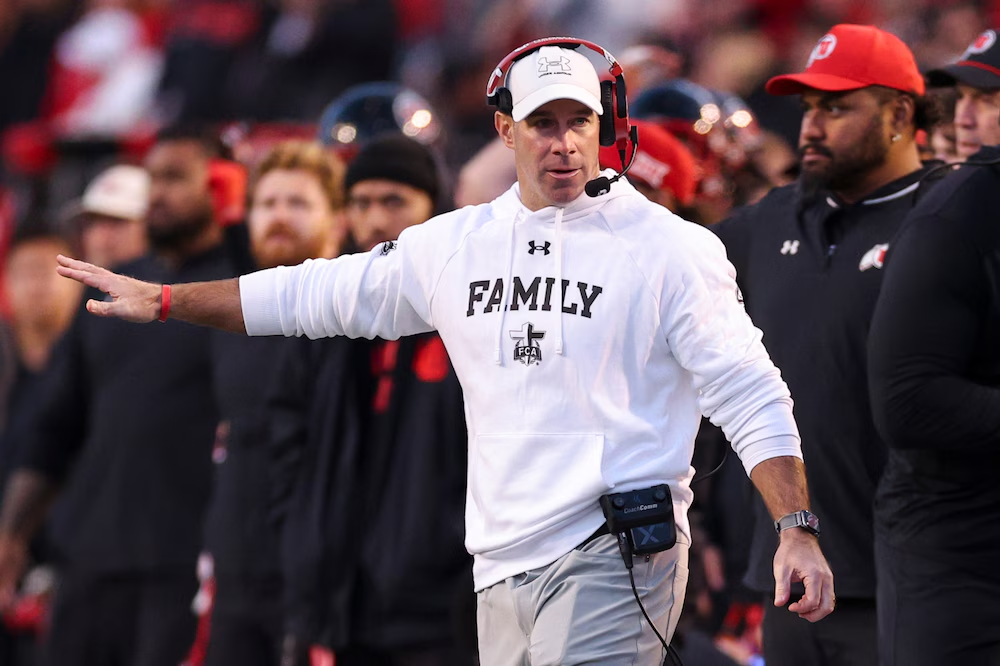
The University of Utah Football coach, Kyle Whittingham, announced his retirement, and already, the next head coach, Morgan Scalley, is ready to go. There wasn’t a single minute in question, and the team won’t skip a beat. While it became official for Scalley on December 13, 2025, the decision was made and announced by Utah Athletic Director Mark Harlan on July 1, 2024. There are lessons the Evangelical Church could learn from this living illustration.
In an article titled “Empty Pulpits Coming to a Church Near You” (August 4, 2025), the EFCA reported that one in four pastors is planning to retire by 2030, and young people entering ministry are on the decline. Christianity Today reported the same situation across all Evangelical Churches, stating, “In 2022, just 16 per cent of Protestant senior pastors were 40 years old or younger. The average age of a pastor is 52. Thirty years ago, 33 percent of US pastors were under 40, and the median age was 44” (April 28, 2023). And in a Barna Report titled “The Pastoral Succession Crisis Is Only Getting More Complicated” (August 23, 2023), we learn that 79% of pastors believe “churches aren’t rising to their responsibilities to train up the next generation of Christian leaders.”
In light of such a ringing alarm, what lessons could churches learn from Coach Whitt?
Make succession a culture, not a crisis.
Utah didn’t wait until Whittingham’s last press conference to start thinking about Scalley. They treated continuity as part of the program’s identity. The team has known for well over a year that when Whittingham was ready to retire, Scalley would take over and keep moving. They selected him while Whitting was still on the job, and it’s likely that Wittingham was a part of the selection process. Churches often treat succession like an awkward conversation you have when the pastor hits a certain birthday, and everyone pretends not to notice. Or even worse, it’s a conversation that starts after the previous pastor’s moving truck pulls out of town.
If the mission of the church matters (and it does), then leadership development can’t be a panic plan. It has to be a standing commitment. The leadership pipeline should go from the ground level all the way to the top and be a regular conversation. Jesus loves his church and intends to keep feeding his sheep after any one shepherd is gone.
Stop hoping for mature leaders and start making them.
Most churches want mature leaders to appear out of thin air, preferably well-trained, already tested, already humble, and already gifted. Scalley played Utah Football from 2001 to 2004. He was given a position as an administrative assistant in 2006. In 2008, Whittingham entrusted Scally with coaching the safeties and special teams. Recruiting Coordinator was added to his resume in 2009. In 2016, Scalley became the Defensive Coordinator. He’s had increasing responsibilities at the practices and on the field for years, growing into who he is today.
That’s discipleship. Paul didn’t tell Timothy, “Wait for the mature Christians to show up.” He told him to entrust the gospel to faithful men who will be able to teach others also (2 Tim. 2:2). That’s a pipeline. That’s a plan. That’s multiplication. It’s slow, inconvenient, and absolutely normal Christianity.
I remember Mark Dever once saying that when churches replace a well-seasoned, aged Pastor, they shouldn’t go looking for another tiger, but look for a cub who will likely scratch up the furniture some, but grow into the tiger they’ll want. And he’ll be their tiger.
Give the next guy real reps, not just theoretical preparation.
Utah’s transition is going to work because Scalley wasn’t a name pulled from a committee hat. He’s had real responsibility before the handoff. He’s been tested some. Sure, Scalley will need to keep growing, but Utah knows him, and he knows Utah. Churches need to give young guys the opportunity to succeed and fail, but that means they need real opportunities.
Leaders aren’t formed by reading books about leadership (although that can help). They are formed by carrying weight: teaching, counselling, leading, being corrected, learning the church’s culture, and absorbing the unwritten realities no seminary course can cover. Young men don’t grow into pastoral steadiness by accident; they grow into it by doing pastoral work under wise oversight.
Transition publicly, clearly, and with blessing rather than ambiguity and politics.
Utah didn’t drift into a leadership change. They named it. They owned it. They communicated it. We all saw it coming and welcome it. And they honored the outgoing leader while setting up the incoming leader for credibility.
Not every church gets the opportunity to transition well, but the chances are greater if the church works at it from the start. A healthy transition blesses both men: gratitude for the former, confidence in the next, and clarity for the people of God doing the mission of God.
A football program can plan for the future because it knows what it’s trying to win. The church should be able to do the same, except our mission and the power behind it are far superior. Christ gives shepherds to his church (Eph. 4:11), and he loves to do it through ordinary means: faithful discipleship, qualified elders, tested character, and deliberate training.
If one in four pastors really will step down by 2030, then this isn’t a problem for them out there. It’s a question for every local church. It’s time we get intentional about raising the next shepherds.