
Persuasive Preaching: Getting God’s Word Across
/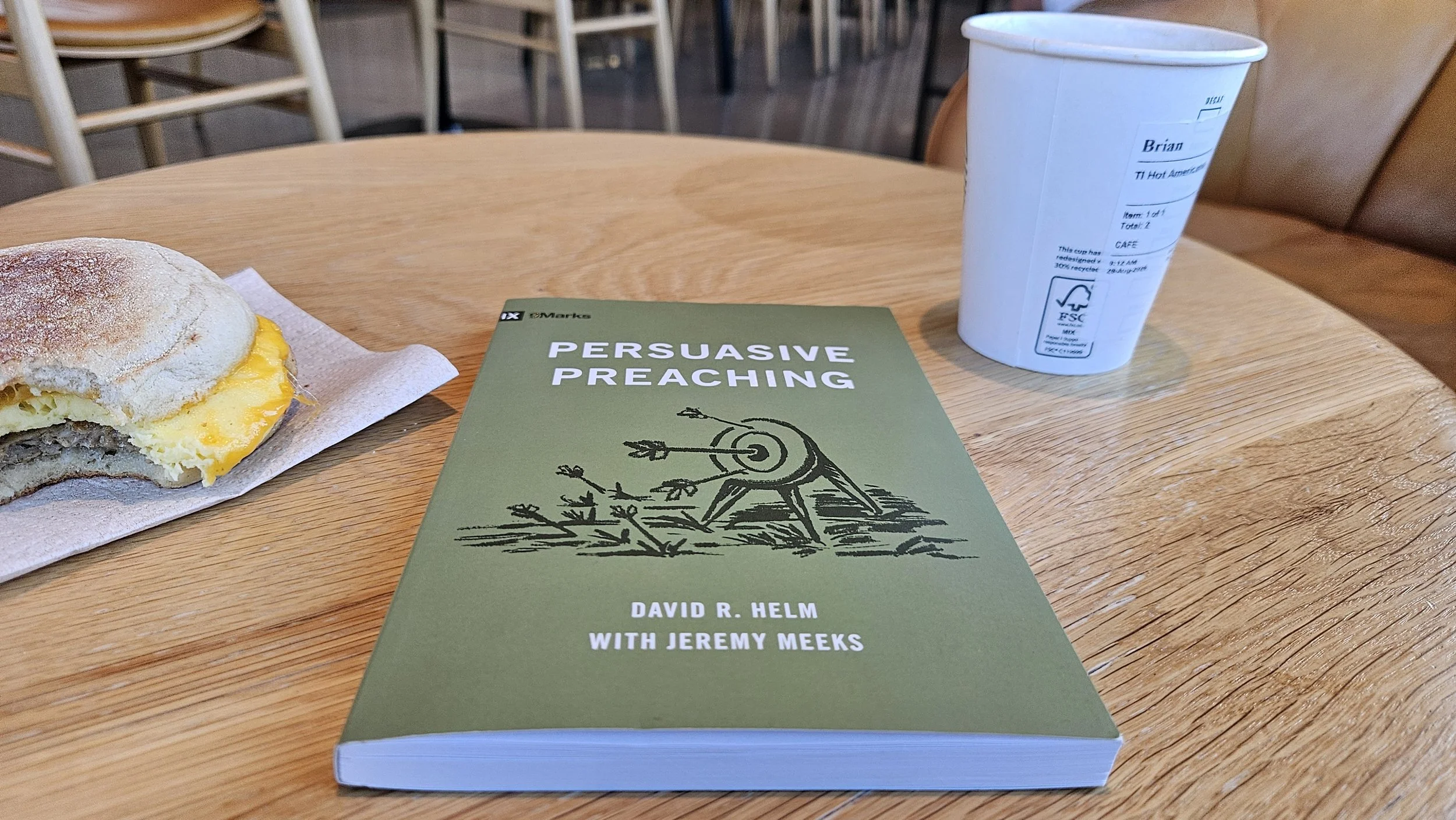
In their new book, Persuasive Preaching, Dave Helm and Jeremy Meeks devote 103 pages to “that moment in sermon preparation when the preacher turns his attention from the text to today, from getting it right to getting it across—and doing so in a clear and compelling way” (ix). If you’ve read Dave’s previous book, Expositional Preaching: How We Speak God’s Word Today, or attended a Charles Simeon Trust workshop, that goal will bring you a little flutter of joy. This is what’s been missing. If you’ve not read that first book or have no idea what a CST workshop is, you should probably pick up Expositional Preaching first. Then you’ll race to read Persuasive Preaching.
Helm and Meeks “argue that all preaching is persuasion.” It’s the first line of the first page. No surprise there. Agree or not, they make a compelling case in the introduction. From there, they show why persuasion matters and how it works its way into every sermon. The chapters deal with the preacher’s ethos, argument, audience, arrangement, application, and adornment. An illustration of an archer ties it all together, making the material memorable and reproducible.
I read this book in one sitting, cover to cover. I never do that. But that’s how well-written and well-argued this book is. Like good preachers, Helm and Meeks give little recaps and directional cues along the way. You always know where you are and where they’re headed. It makes for easy reading. They’ve organized the material to make a strong, persuasive argument for persuasive preaching. You’d expect that from a book with this title, and they hit the target.
I sat up a little straighter when I reached Chapter 3: Audience. I’ve read a lot of books on preaching, and this chapter still gave me ideas I haven’t read anywhere else. When it comes to knowing the audience, “we have been encouraged to make lists of the various kinds of people who hear our preaching” (36). Some preachers write the names of people in the congregation on their manuscript. I’ve done this. But is this the best way to know the audience? Other preachers offer another suggestion. “They encourage us, when we consider our audience, to press beyond a better knowing of our people and toward a better knowing of their world” (36). I’ve read this elsewhere too, especially in Stott. Helm and Meeks affirm both approaches, but then they add a third. I suspect their addition will find its way into preaching books moving forward. And I’ll surely see the chart at the next CST workshop I attend.
I also appreciated the gracious way Helm and Meeks handle different approaches to illustrations. They gave me more permission to get creative and do what I have to do to make the text’s argument. Their approach isn’t rigid or one-size-fits-all. Instead, it feels like heavy encouragement from a grandpa preacher talking to his preaching grandson. Rather than taking the hard, black-and-white approach to illustrations found in many preaching books, Helm and Meeks evaluate the strengths and weaknesses of different approaches and suggest how to get the most out of them. Why? Because Persuasive Preaching is about making a compelling argument, and the preacher should learn to use the tools available to him in faithful service of the Text’s argument.
I have one criticism, although it may say as much about the strength of the book as its weakness. At 103 pages of actual content, Persuasive Preaching moves quickly. At times, too quickly. Helm and Meeks introduce ideas that deserve more development, more examples, and more opportunity to see them worked out in actual sermons. This is especially true because Persuasive Preaching feels like the natural companion to Helm’s earlier Expositional Preaching. The first book helps the preacher get the text right; this one turns his attention toward getting it across. I found myself wishing the two were not merely companion volumes but one larger, integrated treatment of preaching.
That may also explain my admittedly petty complaint about the books themselves. Expositional Preaching is a hardback in the 9Marks Building Healthy Churches series and about half an inch shorter. Persuasive Preaching is still a 9Marks book, but it’s a paperback outside that series. They don’t even look like companions on the shelf. More importantly, they read like two parts of a larger project that has yet to be assembled. Combine them, expand the areas that move too quickly, and add another seventy-five pages of examples showing these principles at work, and Helm and Meeks would have the makings of an outstanding preaching textbook. I finished Persuasive Preaching convinced by what they said. I also finished wishing they had said more.
This book will get a second read before the year is out. It’s that good. Preachers should labor to get God’s Word right. Helm and Meeks make a compelling case that our work isn’t finished there. We should also labor to get it across. I highly recommend Persuasive Preaching to anyone who preaches or who loves preaching.