Social Media is Killing Biblical Community

Facebook’s newest advertisement is selling the community it killed. Does social media help or hurt real, meaningful community? It hurts. It was intended to help, but has it accomplished what we thought it would do? No. Has the effort to make money come at the cost of real community? Yes, and Meta is king. Is it causing depression and anxiety? Yes. Have we lost the idea of what community really is, and now long for something we already had? Yup. What is the cost? Doom scrolling is a thing, and doom is not a positive word. We need to talk about social media and the death of community. That's the topic of this episode of Salty Believer Unscripted. Subscribe or listen here:

Or watch here:

Subscribe to the Salty Believer Unscripted on your favorite podcast app, or use these links:
RSS FeedApple Podcasts | iTunes  | Amazon Music | Audible | Player FM | iHeartRADIO | Pocket Casts | Castbox | Podbean | Good Pods | Spotify | Podcast Addict | Pandora | Podchaser | Listen Notes | YouTube

Leadership Development Lessons for the Church, From Whittingham and Scalley

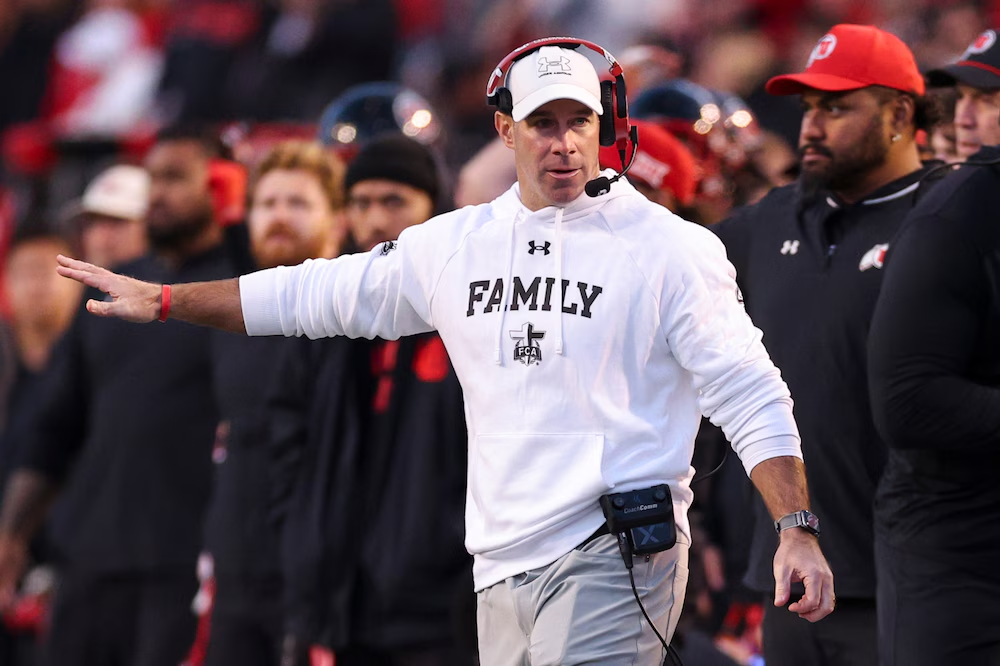
University of Utah Head Football Coach, Morgan Scalley.

    The University of Utah Football coach, Kyle Whittingham, announced his retirement, and already, the next head coach, Morgan Scalley, is ready to go. There wasn’t a single minute in question, and the team won’t skip a beat. While it became official for Scalley on December 13, 2025, the decision was made and announced by Utah Athletic Director Mark Harlan on July 1, 2024. There are lessons the Evangelical Church could learn from this living illustration.

    In an article titled “Empty Pulpits Coming to a Church Near You” (August 4, 2025), the EFCA reported that one in four pastors is planning to retire by 2030, and young people entering ministry are on the decline. Christianity Today reported the same situation across all Evangelical Churches, stating, “In 2022, just 16 per cent of Protestant senior pastors were 40 years old or younger. The average age of a pastor is 52. Thirty years ago, 33 percent of US pastors were under 40, and the median age was 44” (April 28, 2023). And in a Barna Report titled “The Pastoral Succession Crisis Is Only Getting More Complicated” (August 23, 2023), we learn that 79% of pastors believe “churches aren’t rising to their responsibilities to train up the next generation of Christian leaders.”

    In light of such a ringing alarm, what lessons could churches learn from Coach Whitt?

Make succession a culture, not a crisis.

    Utah didn’t wait until Whittingham’s last press conference to start thinking about Scalley. They treated continuity as part of the program’s identity. The team has known for well over a year that when Whittingham was ready to retire, Scalley would take over and keep moving. They selected him while Whitting was still on the job, and it’s likely that Wittingham was a part of the selection process. Churches often treat succession like an awkward conversation you have when the pastor hits a certain birthday, and everyone pretends not to notice. Or even worse, it’s a conversation that starts after the previous pastor’s moving truck pulls out of town.

    If the mission of the church matters (and it does), then leadership development can’t be a panic plan. It has to be a standing commitment. The leadership pipeline should go from the ground level all the way to the top and be a regular conversation.  Jesus loves his church and intends to keep feeding his sheep after any one shepherd is gone.

Stop hoping for mature leaders and start making them.

    Most churches want mature leaders to appear out of thin air, preferably well-trained, already tested, already humble, and already gifted. Scalley played Utah Football from 2001 to 2004. He was given a position as an administrative assistant in 2006. In 2008, Whittingham entrusted Scally with coaching the safeties and special teams. Recruiting Coordinator was added to his resume in 2009. In 2016, Scalley became the Defensive Coordinator. He’s had increasing responsibilities at the practices and on the field for years, growing into who he is today.  

    That’s discipleship. Paul didn’t tell Timothy, “Wait for the mature Christians to show up.” He told him to entrust the gospel to faithful men who will be able to teach others also (2 Tim. 2:2). That’s a pipeline. That’s a plan. That’s multiplication. It’s slow, inconvenient, and absolutely normal Christianity.

    I remember Mark Dever once saying that when churches replace a well-seasoned, aged Pastor, they shouldn’t go looking for another tiger, but look for a cub who will likely scratch up the furniture some, but grow into the tiger they’ll want. And he’ll be their tiger.  

Give the next guy real reps, not just theoretical preparation.

    Utah’s transition is going to work because Scalley wasn’t a name pulled from a committee hat. He’s had real responsibility before the handoff. He’s been tested some. Sure, Scalley will need to keep growing, but Utah knows him, and he knows Utah. Churches need to give young guys the opportunity to succeed and fail, but that means they need real opportunities.

   Leaders aren’t formed by reading books about leadership (although that can help). They are formed by carrying weight: teaching, counselling, leading, being corrected, learning the church’s culture, and absorbing the unwritten realities no seminary course can cover. Young men don’t grow into pastoral steadiness by accident; they grow into it by doing pastoral work under wise oversight.

Transition publicly, clearly, and with blessing rather than ambiguity and politics.

    Utah didn’t drift into a leadership change. They named it. They owned it. They communicated it. We all saw it coming and welcome it. And they honored the outgoing leader while setting up the incoming leader for credibility.

    Not every church gets the opportunity to transition well, but the chances are greater if the church works at it from the start. A healthy transition blesses both men: gratitude for the former, confidence in the next, and clarity for the people of God doing the mission of God.

    A football program can plan for the future because it knows what it’s trying to win. The church should be able to do the same, except our mission and the power behind it are far superior. Christ gives shepherds to his church (Eph. 4:11), and he loves to do it through ordinary means: faithful discipleship, qualified elders, tested character, and deliberate training.

    If one in four pastors really will step down by 2030, then this isn’t a problem for them out there. It’s a question for every local church. It’s time we get intentional about raising the next shepherds.


Crisis in Lexington

The Tyson beef packing plant in Lexington, Nebraska—a town of 10,000 people—is closing and laying off about 3,000 employees. It’s difficult to understand what might happen next. How should Christians respond to something like this? That’s the topic of conversation on this episode of Salty Believer Unscripted. Bryan and Josiah chat with Kirk Galster. Kirk does ministry work in Lexington. Subscribe and listen to Salty Believer Unscripted wherever you listen to podcasts or listen here:

Or watch on YouTube. We had some video challenges, but it gave us the opportunity to include some pictures. Subscribe and watch on our YouTube channel or watch here:

Subscribe to the Salty Believer Unscripted on your favorite podcast app, or use these links:
RSS FeedApple Podcasts | iTunes  | Amazon Music | Audible | Player FM | iHeartRADIO | Pocket Casts | Castbox | Podbean | Good Pods | Spotify | Podcast Addict | Pandora | Podchaser | Listen Notes | YouTube

Is it Time for Christians to Freak Out?

Is “The Age of Disclosure” something we should pay attention to and freak out, or is it just high-level clickbait? It costs $20 to stream. Is it worth it? Bryan Catherman and Josiah Walker don’t know, but they do know that this isn't the first time Christians have freaked out over a documentary. In this episode of Salty Believer Unscripted, the guys discuss what Christians should do when they’re invited to a group freakout. What should Pastors do when their congregants bring these kinds of panic and worry to church? That’s the topic of this discussion. Listen wherever you listen to podcasts, or listen here:

Or watch this podcast on YouTube:

Subscribe to the Salty Believer Unscripted on your favorite podcast app, or use these links:
RSS FeedApple Podcasts | iTunes  | Amazon Music | Audible | Player FM | iHeartRADIO | Pocket Casts | Castbox | Podbean | Good Pods | Spotify | Podcast Addict | Pandora | Podchaser | Listen Notes | YouTube

Getting Started in the Book of Luke

A person writing a note from the Bible in a Bible study.

Bryan Catherman has journeyed through the Book of Luke at Trinity Church, and Josiah Walker is just getting started at Redeeming Life Church. What should we think and do as we get started in this book? How do we study it? How should we break it down? Anyone preaching through this book is thinking about these things, but those sitting under the preaching in Luke should be thinking about it too. That’s the conversation between these two Pastors, and listeners are invited to hear the conversation. Listen wherever you get podcasts or listen here:

Or you can watch this podcast on YouTube here:

Subscribe to the Salty Believer Unscripted on your favorite podcast app, or use these links:
RSS FeedApple Podcasts | iTunes  | Amazon Music | Audible | Player FM | iHeartRADIO | Pocket Casts | Castbox | Podbean | Good Pods | Spotify | Podcast Addict | Pandora | Podchaser | Listen Notes | YouTube

Books and Black Friday

Even the Christian book sellers get crazy on Black Friday. They are in the business to sell books just like the non-Christian publishers. In this episode of Salty Believer Unscripted, Josiah Walker and Bryan Catherman talk about books, book publishers, and those who sell Christian books. They also consider those who tend to offer huge Black Friday sales. Reformation Trust, 10 of Those, ChristianBook.com, Crossway, Banner of Truth, and many more are mentioned and discussed. Used books? Why not? Ministries that also sell books? Yes! If you’re looking for good books, this episode is for you. Listen to this episode wherever you get podcasts or listen here:

Subscribe to the Salty Believer Unscripted on your favorite podcast app, or use these links:
RSS FeedApple Podcasts | iTunes  | Amazon Music | Audible | Player FM | iHeartRADIO | Pocket Casts | Castbox | Podbean | Good Pods | Spotify | Podcast Addict | Pandora | Podchaser | Listen Notes | YouTube

What are the Elements of Liturgy?

White puzzle pieces.

When it comes to a Sunday morning service, what are the kinds of aspects that find their way into the liturgy? There are elements that some churches do and others don’t. What’s necessary? What can be dropped? What should be added? What’s required for a biblical church service? These are the questions Josiah Walker and Bryan Catherman discuss in this episode of Salty Believer Unscripted. Subscribe and listen wherever you listen to podcasts, or listen here:

Subscribe to the Salty Believer Unscripted on your favorite podcast app, or use these links:
RSS FeedApple Podcasts | iTunes  | Amazon Music | Audible | Player FM | iHeartRADIO | Pocket Casts | Castbox | Podbean | Good Pods | Spotify | Podcast Addict | Pandora | Podchaser | Listen Notes | YouTube

Longing for Liturgy: What is Authentic?

Some might argue that high liturgy is a more authentic expression of faith and worship. Some might baulk at that assessment. What is authentic? In this episode of Salty Believer Unscripted, Josiah Walker and Bryan Catherman discuss high and low liturgy and where we can find authentic expression, or the lack thereof, in both. Subscribe wherever you get podcasts or listen here:

Subscribe to the Salty Believer Unscripted on your favorite podcast app, or use these links:
RSS FeedApple Podcasts | iTunes  | Amazon Music | Audible | Player FM | iHeartRADIO | Pocket Casts | Castbox | Podbean | Good Pods | Spotify | Podcast Addict | Pandora | Podchaser | Listen Notes | YouTube

Longing for Liturgy: An Introduction

Generation Z and Generation Alpha are looking for an authentic expression of faith. Many of them believe they are finding that in churches with high liturgy. Most don’t even know what liturgy is. What is liturgy? Is it bad to be liturgical? Why have some been afraid of more structured, high liturgy? We’re starting a series that walks through a conversation about liturgy in the local church. Everyone has a liturgy. What’s yours? Subscribe and listen wherever you get podcasts, or listen here:

Subscribe to the Salty Believer Unscripted on your favorite podcast app, or use these links:
RSS FeedApple Podcasts | iTunes  | Amazon Music | Audible | Player FM | iHeartRADIO | Pocket Casts | Castbox | Podbean | Good Pods | Spotify | Podcast Addict | Pandora | Podchaser | Listen Notes | YouTube

Putting Discipleship into Practice

Josiah Walker and Bryan Catherman finish up our “Dangerous Discipleship” series with a discussion about how they put discipleship into practice. They each share what they are doing to disciple others and offer additional ideas. There’s a discussion of Pilgrim’s Progress, men’s groups, and much more. Listen to this episode of Salty Believer Unscripted wherever you get podcasts or listen here:

Subscribe to the Salty Believer Unscripted on your favorite podcast app, or use these links:
RSS FeedApple Podcasts | iTunes  | Amazon Music | Audible | Player FM | iHeartRADIO | Pocket Casts | Castbox | Podbean | Good Pods | Spotify | Podcast Addict | Pandora | Podchaser | Listen Notes | YouTube

The Necessity of Having Multiple Streams of Discipleship

Many organizations and books contend for a strong discipleship model where one person is the disciple-maker and the other is the learner. The relationship is strong, but often there’s an avoidance of other avenues for growth. The solo discipleship path can be dangerous for both parties.

Join Josiah Walker, Bryan Catherman, and guest Kirk Galster as they discuss the dangers of having a single discipler and the value of having multiple streams of discipleship in your life. How do we have robust discipleship and growth? How does having numerous resources of discipleship protect us from problems and draw us closer to Jesus? These are some of the questions this discussion seeks to answer. Subscribe to Salty Believer Unscripted wherever you listen to podcasts or listen here:

Subscribe to the Salty Believer Unscripted on your favorite podcast app, or use these links:
RSS FeedApple Podcasts | iTunes  | Amazon Music | Audible | Player FM | iHeartRADIO | Pocket Casts | Castbox | Podbean | Good Pods | Spotify | Podcast Addict | Pandora | Podchaser | Listen Notes | YouTube

The Chiastic Structure of Luke 22:31-62

There are multiple ways to view and interpret Luke 22:31-62. The most obvious might be with the narrative tools of rising tension and conflict. The Use of character focus is helpful too. But have you ever considered the chiastic structure?

Luke 22:31-62 is a chiasm. The outer envelope is Peter's denial (31-34, 54-62). The next movement inward is Judas and the world's denial to be numbered among the transgressors (35-38, 47-53). Then the center of the chiasm is Jesus' prayer in 39-46.

Luke brackets the center section with Jesus' two-times statement: "Pray that you may not enter into temptation" (40, 46). Jesus faced the greatest temptation, asking that the cup might pass, but he would do God's will no matter what the temptation, even in the face of death. Peter acted like he would do this, too, but he failed. Judas didn't even try.

Going back to the outer section of the chiasm, we have Simon, who claims he's all-in no matter what, but then, at the end of the account, we see he fell to temptation. In the next layer in the chiasm, it's Judas who is tempted with the world to deny Jesus, going all-in against Jesus (37). The result is what we see in 47-53. Scripture had to be fulfilled, and we see the sword come into play wrongly. Once again, Peter acted on his temptations as if to fulfill what he claimed in the first part. It won't work that way. Judas' denial of Christ led others to follow Judas, aiding their rejection of Christ. Judas' denial is worse than Peter's denial. The picture is escalating in consequences. Worse of all would be if Jesus succumbed to temptation. Praise the Lord! He did not.

Peter's event with the sword demonstrates his idea of what it means to stand with Jesus. Fight? Go to the sword? Action in strength? But Jesus says that's not how it works. Instead, we stand by truth in word and deed, not being afraid to stand with Jesus even when he's on trial. Peter couldn't even do that much when a servant girl asked. (How strong are you now, Peter?)

A couple of things worth noting. First, Satan demanded to have Peter, and God could have said no. He did not. It looks like Job in many ways. In addition, God knew it was for Peter's and our good, because by reading this account, Acts, and Peter's writing, we see how God redeems his people. We also see how Satan is on God's leash.

Second, even Jesus needed strengthening in and after his temptation. Verse 43 shows that God sent an angel to help Jesus. God sends the Holy Spirit to support and strengthen us. Jesus models how we get through temptation through prayer and reliance on God--not by strength, as Peter tried.

The growing plot and resolution leave everything unresolved until after the resurrection. That's not a wrong approach to this Passage, but the chiasmus approach lets you stay in more of this Text without going to the end to resolve the tension.

One of the most beautiful pictures of the Gospel comes in verse 32. Jesus knows Peter will fall, but because Jesus knows Peter is in Christ, he also knows he will turn again (repentance) and then strengthen his brothers (the fruit of being in Christ). Nothing in this statement implies that Peter will lose his salvation, and everything requires that Peter is indeed already saved. This foundation goes back to another time when Jesus was praying in Luke 9:18-20. In verse 20, Peter confesses that Jesus is the Christ of God. That's how Peter was saved, by faith. So, although Satan is going to sift Peter (31), and Peter is going to sin terribly, Peter sees the problem and weeps bitterly (62). Judas seems not to understand repentance. Judas never fell--he was never with them in the first place. What an encouragement for those who know Christ. What a call for those who do not.

How to Select Discipleship Resources

Discipleship is important, but when you don’t know where to start, it can be daunting. There are thousands of resources out there. How can we sift through it all and find what’s going to be the most helpful? It’s not magic. There are some simple steps that will prove helpful. In this episode of Salty Believer Unscripted, Bryan Catherman and Josiah Walker walk through steps to help discern which resources are better and which should be avoided. Subscribe and listen wherever you get podcasts, or listen here:

Subscribe to the Salty Believer Unscripted on your favorite podcast app, or use these links:
RSS FeedApple Podcasts | iTunes  | Amazon Music | Audible | Player FM | iHeartRADIO | Pocket Casts | Castbox | Podbean | Good Pods | Spotify | Podcast Addict | Pandora | Podchaser | Listen Notes | YouTube

The Danger of Christian Social Media Influencers

In this episode, Josiah Walker and Bryan Catherman discuss the dangers and the benefits (if there are any) of Christian social media influencers. When it comes to discipleship, what contribution are the famous online disciple makers making to the Christian? How has this social media trend changed discipleship? What do we do with the “fanboys”? Are we exercising caution with rage-bait posts or just eating it up? How social media influencers shape and change the way we view our local pastors? Do we need to rethink our favorite social media heroes? That’s the topic of this conversation. Subscribe and listen to this episode wherever you get your favorite podcasts, or listen here:

Subscribe to the Salty Believer Unscripted on your favorite podcast app, or use these links:
RSS FeedApple Podcasts | iTunes  | Amazon Music | Audible | Player FM | iHeartRADIO | Pocket Casts | Castbox | Podbean | Good Pods | Spotify | Podcast Addict | Pandora | Podchaser | Listen Notes | YouTube

Dangerous Discipleship: The Disaster of Social Media Discipleship

Robot looking back at the user.

In this episode of Salty Believer Unscripted, Josiah Walker and Bryan Catherman take a hard look at the pros and cons of social media in relation to discipleship. What’s dangerous and why is it a problem? Is the algorithm serving the mission of Romans 12:1-2 or doing something else? How does doom scrolling serve God, if it does? Can it? Is there any redeeming value to social media? How is our phone conforming us to the world? This is the topic of conversation in Episode 2 of our series “Dangerous Discipleship.” Subscribe and listen to the Salty Believer Unscripted wherever you listen to podcasts or listen here:

Subscribe to the Salty Believer Unscripted on your favorite podcast app, or use these links:
RSS FeedApple Podcasts | iTunes  | Amazon Music | Audible | Player FM | iHeartRADIO | Pocket Casts | Castbox | Podbean | Good Pods | Spotify | Podcast Addict | Pandora | Podchaser | Listen Notes | YouTube

Dangerous Discipleship: Thoughts on Kirk and the World Today

An image of a yellow danger sign.

This episode of Salty Believer Unscripted kicks off a new series titled “Dangerous Discipleship.” We’re starting this series with a discussion on the ramifications of the Charlie Kirk murder, internet discipleship, and how the world is shaping Christians. It may be helpful to pause to think more deeply about how social discipleship is impacting nearly everyone, regardless of faith. The bigger question is, “How does all of this affect Christians?” How long has the internet been used to disciple Christians, and what role have internet personalities played in this process? What’s the present response? How should we respond? What’s the better answer? In this series, we discuss these questions and many more. Please consider subscribing to the podcast and listen to this series or listen here:

Subscribe to the Salty Believer Unscripted on your favorite podcast app, or use these links:
RSS FeedApple Podcasts | iTunes  | Amazon Music | Audible | Player FM | iHeartRADIO | Pocket Casts | Castbox | Podbean | Good Pods | Spotify | Podcast Addict | Pandora | Podchaser | Listen Notes | YouTube

Thoughts on Luke 21:5-38

There are Passages in our Bibles that get people worked up about the future, misdirected about what to do in the meantime, and off the guidance Jesus gave his people for living in the end times. Luke 21:5-38 is one such passage. What’s being said here? How should Christians understand this Text? Here are some brief thoughts to get the conversation started.

Luke 21:5-7 creates the setup for everything that follows in the Passage. Jesus points out that the adornments of the Temple they were admiring won't last, and in fact, will be destroyed. They ask when, but they also ask for the warning signs.

"These things" or "all this" (vv. 7, 9, 12, 28, 31, 36) hold the structure together and tie everything Jesus is answering to the two questions the discipled asked: "when will these things happen, and what will be the sign these things are about to take place. In the answer "these things" refers back to the statements that prompted the questions: "the days will come when there will not be one stone left apon another that will not be thown down." Jesus had previously mentioned no "stone on another" in Luke 19:41-44, where he gives more details about the specifics, which seem to point to the events of A.D. 70. However, in verse 9, Jesus states that the end will not come at once, suggesting that there is a progression, including an order that begins with things that must take place "first."

Furthermore, specific shifts in language suggest that there are two horizons in view — one close and one in the distance. Specific language like "you will be brought before kings" (21:14) and "when you see Jerusalem surrounded" (21:20) points to a near horizon. Yet, verse 27 seems to point to the Great Day of the Lord, promised in Daniel 7:13. There is a pronoun shift from "you," referring to the disciples and their lifetime, to "they," referring to a time in the future. Luke seems to overlap these horizons at times. While some events start closer in time to this Passage and others are further away, they all seem to fall within the end.

There are significant imperatives, mostly clustered together in this Passage. "See that you are not led astray" (21:8), "do not be terrified" (21:9), "settle it," that is, don't prepare a defense (21:14), "flee" and "do not enter" (21:21), "straighten up" (21:28), "rasie your heads" (21:28), "look" (21:29), "know" (21:31), "watch yourselves" (21:34), "stay awake" (21:36), and "pray" (21:36). While there are some instructions when he discusses the destruction of the Temple and city, most of these instructions fall toward the end after he has explained what will happen. It's a pastoral instruction, not just a statement about the end times or instructions about what to watch for. It's his pastoral instruction for how to live in light of the coming end and his return. It follows much of the same teaching that has led up to this point — live in this way and stay ready.

The structure contrasts what falls (stones, heaven, and earth) with what stands (his Word), bringing great weight to trusting and obeying his Word. Jesus shifts the focus and emphasis away from sign-watching and places it on the imperatives of taking up vigilance, prayer, and endurance. Luke wants his readers to trust in the certainty of Jesus' Word and adopt a posture of faithful endurance, regardless of the signs. He certainly doesn't want us to become enthralled with the speculation of signs. Therefore, we too should shift our focus from watching for the signs to maintaining vigilance, prayer, and endurance, regardless of when the signs appear.

There are fantastic grounds for assurance for those who are in Christ found in this Text. "For I will give your mouth wisdom" (21:15), "none of your adversaries will be able to withstand" (21:15), "not a hair of your head will perish" (21:18), and "by your endurance you will gain your lives" (21:19). This Text should not cause the Christian any worry or fear of what's coming.

Much of what Jesus says in this Text echoes Daniel. It may be more than simply fulfilling the proof texts. It may be that the circumstances for the Christian in this age resemble those of Daniel and the Jews during Daniel's time. They were living in a land that was not their home and encouraged to look with great hope for the future, longing for home, trusting that God would care for them, and remain faithful (like Daniel and his friends who went to the furnace). They didn't fully understand what was happening in the future, and they didn't spend all their time trying to figure it out. They gave their energy to remaining faithful in the moment.

The Gospel gives us great hope. Without it, the destruction of the Temple would signal nothing but doom and despair. But because of Christ, the perfect sacrifice, and his crucifixion, the people of God can be relieved. Something (someone) better than the Temple is here. At the point when Jesus spoke, they still had great reason to feel the tension of coming judgment, but in Christ, they could find hope. Today, we still see our hope in Jesus. Jesus calls his people to endurance, but this is only possible because of the Gospel and the gift of the Holy Spirit--without these, there would be no way to endure. And it's terrific to see the Son of Man promised in Daniel, revealed in Luke and Acts, and glorified in Revelation.

Luke 21:5-38 is encouragement and a charge for Christians. Stand firm and endure by trusting in Christ's unfailing Word until our complete redemption dawns.

Budget Bibles

In this episode of Salty Believer Unscripted, Josiah Walker and Bryan Catherman discuss budget Bibles. What are the least expensive Bibles, and why should people use and have these? What makes them inexpensive? What should we know about the budget Bibles? What do we do with inexpensive Bibles we’re no longer using? These are the questions the guys are discussing. Subscribe and listen wherever you get podcasts, or listen here:

Subscribe to the Salty Believer Unscripted on your favorite podcast app, or use these links:
RSS FeedApple Podcasts | iTunes  | Amazon Music | Audible | Player FM | iHeartRADIO | Pocket Casts | Castbox | Podbean | Good Pods | Spotify | Podcast Addict | Pandora | Podchaser | Listen Notes | YouTube

Help Me Share the Gospel: A Quick Evangelism Tutorial

A Christian in love with Jesus doesn’t need to appeal to Matthew 28:16-20 as a reason to share the Gospel because we love to talk about who or what we love. That being said, most of us still need a little guidance when it comes to evangelism; that is, we need help knowing how to share our faith with someone who has not yet surrendered to and been redeemed by Jesus.

There’s a brief “getting started” video about sharing the gospel:

After watching the “getting started” video, you may want more instruction. The next two videos are, first, a demonstration of the 3 Circles Gospel sharing method (with Brett Ricley). Part 2 of the demonstration is a discussion of Scriptures for every part of the presentation.

But the Gospel is not only for those who need to believe. The Gospel is for Christians! Here’s a demonstration about how to use the Thee Circles method to preach the gospel into your soul every day. It’s for Christians.

Finally, here are some other Gospel presentations to help you think about how you might share the Gospel with others.

Thus Says the Lord, Today?

What am I supposed to think when someone claims, "God told me"? Should I believe them? Is this any different than cult leaders or false prophets? Answers to these questions have a great deal to do with how we understand God's revelation to His people when he was dual-authoring the Bible compared to today. How do we understand God breathing out his Word?

Outside of Christianity, we find the TV-type prophets, the LDS and Jehovah's Witnesses founders, and those claiming to be modern-day Apostles representing God to the entire world. These individuals often avoid appealing to Scripture for themselves because there is a greater likelihood that others will use the same Scriptures to claim the office of Prophet. Instead, they appeal to an "internal witness" that's hard to verify. It's a story about how God appeared to them. When we hear their claims, we should test them against Scripture. Is it another gospel (Galatians 1:8-9)? Do these people have a strong doctrinal fidelity to the Triune God and the true Christ (1 John 4:1-3)? Are these cliamants obeying the already-given Word (Deuteronomy 13:1-5, 18:20-22, 2 Timothy 3:16-17, and Revelation 22:18-29)? Do these "teachers" demonstrate Godly fruit and character (Matthew 7:15-20)?

It's easy to discuss those outside of biblical Christianity. How should we think about those holding views within orthodox Christianity? Interpretations fall along a spectrum. On one end is the Continuationist/Charismatic. On the other end is the Cessationist. Between these poles is the Open-But-Cautious Christian. However, don't think there are only three views; when, in fact, this is a spectrum with many different ideas falling somewhere along a diverse line.

The Contiuatioist will claim that God may guide and illuminate his Word today through impressions and prophecies, but all of these words must be weighed against Scripture. The Charismatic might appeal to Acts 13:2, 20:22-23, 1 Thessalonians 5:19-22, and 1 Corinthians 14:29. Most who understand God speaking today who fall in this category will likely still argue that a word from God must still be submitted to the church and seek guidance from Scripture.

An Open-But-Cautious Christian might argue that the Holy Spirit prompts and guides, but never contrary to Scripture and never with apostolic authority. It's not for all Christians, and it's not equal to the Bible. Everything said to be modern words from the Lord must be humbly tested in community by other brothers and sisters in Christ. Those who hold to this view might appeal to Acts 15:28, Romans 8:14, Galatians 5:16–25, and 1 Thessalonians 5:19–22.

Finally, a Cessationist claims that the revelatory gifts (such as propheticly getting a word from God) have ceased with the Apostles. A Cessationist might argue that "God told me" might be misleading language and is imprecise. The Cessationist appeals to Hebrews 1:1-2, John 16:13, Ephesians 2:20, 2 Timothy 3:16-17, and Revelation 22:18-19.

Regardless of which camp one might be coming from, it's wise to test anything said by one claiming it's from God. Test it. Does it agree with Scripture (Isaiah 8:20, Galatians 1:8–9, and 2 Timothy 3:16–17)? Does it uphold the faithful Christ and the gospel (1 John 4:1-3, 1 Corinthians 15:1-4)? Is it humbly submitted to the church for testing (Acts 15:28, 1 Thessalonians 5:19-22, and 1 Corinthians)? Does the character of the claimant match wisdom from above (Matthew 7:15–20, Galatians 5:22–23, and James 3:17)?

There's a triage process in place for determining how to deal with individuals who claim to have heard God speak to or through them.

The first category is the Wolves and manipulators. They are either outside orthodoxy or domineering inside the church. Publicly reject them, warn the flock, and bar them from teaching. If in membership and unrepentant, proceed to church discipline (Romans 16:17–18, Titus 3:10–11, 2 Peter 2, and Jude). Their track record and refusal to submit are the key points here, not a single bad guess.

The second category is the brothers or sisters who engage in sloppy "prophecy-talk." For these, correct with the doctrine. Show them that Scripture alone binds. Prophecy—if you believe it continues—is weighed and can be wrong. Call for repentance. Seek to repair any harm done. This would be another circumstance in which the person should be restricted from teaching until the matter is corrected. Regardless of which viewpoint you are coming from, teaching takes precedence over prophecy and must govern practice. Re-evaluate over time and remember that fruitfulness and humility should prevail (Matthew 7:16 and 1 Peter 5:5).

The final category is the ordinary Christians, who confuse impressions with revelation. This is a place for pastoral gentleness and care. Encourage prayer, Scripture, counsel, and prudence (Romans 12:2 and James 1:5). Teach them the difference between guidance through the Word and mystical impulses that bypass it.