Thoughts on Luke 19:11-27

In Luke 19:11-27, Jesus shifts from speaking plainly, in clear language, back to using parables. Verse 11 hints that their proximity to Jerusalem may be, in part, the cause; however, the other reason is that the hearers (most likely the grumblers who were giving Jesus and Zacchaeus grief) asked about the immediate restoration of the Kingdom. The parable is about the Kingdom, and it seems that the consummation is the primary focal point.

In this parable, there is a nobleman who will become King, his servants/slaves, citizens who hate the nobleman and do not want him to rule over them, and someone who will both hear the citizens' delegation and give the nobleman the kingship. The nobleman gave clear instructions to his servants in verse 13: "Engage in business until I come." He did not say "keep my investment safe or make more money for me." When the man returned, now a king, he called his servants to ask what they had gained by doing business (verse 15). He was not asking how much more money they made or if they kept the money safe, but what they gained. Those who were faithful received substantially more, but the more was not the money. It was their ability to rule alongside the King, given responsibilities over entire cities. They also seemed to be allowed to keep the money, as evidenced by verse 25, where it is noted that when the first servant received the extra mina from the unfaithful servant, he already had 10, implying that he didn't have to receive even more. Their reward was not more money, but the trust and partnership of the King.

Furthermore, it was never their money. The King gave them money and asked them to engage in business. So they didn't have the option to do whatever they wanted with it because it wasn't theirs. They had instructions, and the money was just the resources they needed to complete the task they were asked to undertake. They clearly understood it was not their money because all three servants referred to it as "your mina" to the King (16, 18, and 20). They were stewards.

There were 10 servants in verse 13, but we only hear about three of them. The assumption is that nine servants were likely faithful. We didn't need to listen to the entire report to understand the pattern. The unfaithful servant believed the King was severe. There's nothing in the responses of the other servants that sounds like this, so this servant is more like the wicked citizens than the other servants.

Furthermore, the King doesn't say that the servant is right about the King, but that the King would use the servant's own words to judge him. Even based on these words, the servant didn't obey the instruction--to engage in business. The servant's unfaithfulness exposes his unbelief. That's what got him judged, not the success or failure in making more money. He didn't trust the Master enough to obey him. It's about faithfulness, not financial results. Therefore, the servant is deemed "wicked" by the King (verse 22). That being said, the King did not throw this servant into the lot with the citizens for destruction. The King called him wicked, yet he was not identified as an enemy of the King. The enemies were those citizens who did not want the nobleman to be King. It implies the unfaithful servant was still a servant of the King, but to him, more was NOT given. That may be an overreading of the parable, but it is interesting and worth more study.

This parable is Jesus' answer to a question about the coming Kingdom. He had already said that the Kingdom would not come as they expected or could observe (Luke 17:20). His disciples ask Jesus the same question after the resurrection — probably assuming it was then that he would be the earthly King of their expectations — but he gives them an interesting answer. Be my servants and bring in the Kingdom by sharing Jesus' good news. (Acts 1:6-8). Faithfully engage in Jesus' business.

Thoughts on Luke 18:9-30

The emphasis of Luke 18:9-30 is evident in the passage's structure. Luke opens with a parable, moves to an illustration, then to a narrative encounter that climaxes with the main point in verse 27: "What is impossible with man is possible with God." With each movement from one to the next, the point becomes increasingly evident. Justification, Kingdom citizenship, and eternal life cannot be earned; they can only be received by grace through humble, dependent trust in God.

The progression of passages opens with a description of the sin condition in the hearers Jesus is addressing. They are people who "trust in themselves that they were righteous and treated others with contempt" (verse 9). It seems (although this is not certain) that Jesus was addressing the Pharisees. The reader is left to conclude that, but then the target is made clear in verse 15. Not even the disciples are exempt from this kind of sinful thinking, despite what we might think of ourselves. Then Luke brings in a case study — a Law-keeping rich person who most would think surely must be bound for the Kingdom. Jesus exposes the problem in the rich man. He is trusting in himself (or his riches and his performance), which brings us right back to the opening problem. The remedy is found in Jesus' words in verse 22. "Follow me." Jesus reaffirms this solution in verse 28 when Peter, seeking assurance that they are on the right track, says, "We have followed you." Entrance into the Kingdom of God depends not on human merit, status, or possessions, but on humble, dependent faith in Christ, who is ultimate in merit, status, works, and possessions.

Verses 9-13 contrast self-righteousness and legalistic thinking with genuine humility and repentance. It shows that true justification comes only by God's mercy, not human righteousness. We need what Luther called an "alien righteousness," that is, one that comes from outside ourselves. It's foreign to us. Verses 15-17 raise the bar and increase the pressure, first by showing that the disciples are not free from the problem, and second, by demonstrating that the Kingdom belongs to those who receive it like a helpless child, which requires utter dependence on God and humility to realize this truth. Finally, verses 18-30 show the impossibility of entering the Kingdom by one's own achievements or possessions. It's as impossible as a one-ton camel going through a pinhole most seniors can't even see! Without the previous two sections, it might be easy to think that it's impossible to enter the Kingdom by works and money, but that doesn't capture the complete picture of impossibility here. It's impossible to be genuinely humble without Jesus. It's impossible to be truly dependent on God without Jesus.

The end of the first two sections drop hits at the central point in verse 27. Verses 14 and 17 anchor in the significance of humility. It is the humble who enter the Kingdom, but with man, entry is impossible. It is only the one who truly humbled himself and perfectly submitted himself to God--even to death on a cross--who can enter the Kingdom. And it is only by his work and status that he freely credits to us, while even taking on our sinful work and sinful status, which makes a way for us to enter the Kingdom.

The Law exposes our failures, but the only solution is found in the grace Jesus extends to us. In the illustration of the little children, we're supposed to relate most to the babies. It's not enough to think we're winning if we're disciples who let the babies come to Jesus. We're instructed to be like the babies! They are the heroes of the story (without even trying, because if they try, they are no longer totally dependent on one outside themselves). Luke shows us the wonder of God's grace — the impossible made possible through Jesus Christ. "With man it is impossible, but not with God. For all things are possible with God" (Mark 10:27).

"Yours, Mine, Ours": A Tool to Help Churches Find Balance

Every church must make decisions about how to utilize its limited time and resources for the benefit of the entire church. What ministries get the prime announcement time? What new things should the church do, and how should the leaders of the church decide in a sea of the congregation’s suggestions? How do leaders decide? The leadership tool, “Yours, Mine, Ours,” is an approach every leader should know and put into practice. In addition, church members will be substantially more helpful to his or her leadership when they too understand the “Yours, Mine, Ours” principle. That’s the topic of this episode of Salty Believer Unscripted. Listen wherever you get podcasts, or listen here:

Subscribe to the Salty Believer Unscripted on your favorite podcast app, or use these links:
RSS FeedApple Podcasts | iTunes  | Amazon Music | Audible | Player FM | iHeartRADIO | Pocket Casts | Castbox | Podbean | Good Pods | Spotify | Podcast Addict | Pandora | Podchaser | Listen Notes | YouTube

Paid Content?

What should we think about preachers who are switching to paid content sermons behind a pay wall? What about podcasts or special content that requires subscriptions? In this episode, Bryan Catherman and Josiah Walker discuss a listener’s question about preachers switching to a fee-based content model. Listen to this episode wherever you get podcasts or listen here:

Subscribe to the Salty Believer Unscripted on your favorite podcast app, or use these links:
RSS FeedApple Podcasts | iTunes  | Amazon Music | Audible | Player FM | iHeartRADIO | Pocket Casts | Castbox | Podbean | Good Pods | Spotify | Podcast Addict | Pandora | Podchaser | Listen Notes | YouTube

Bible Talk

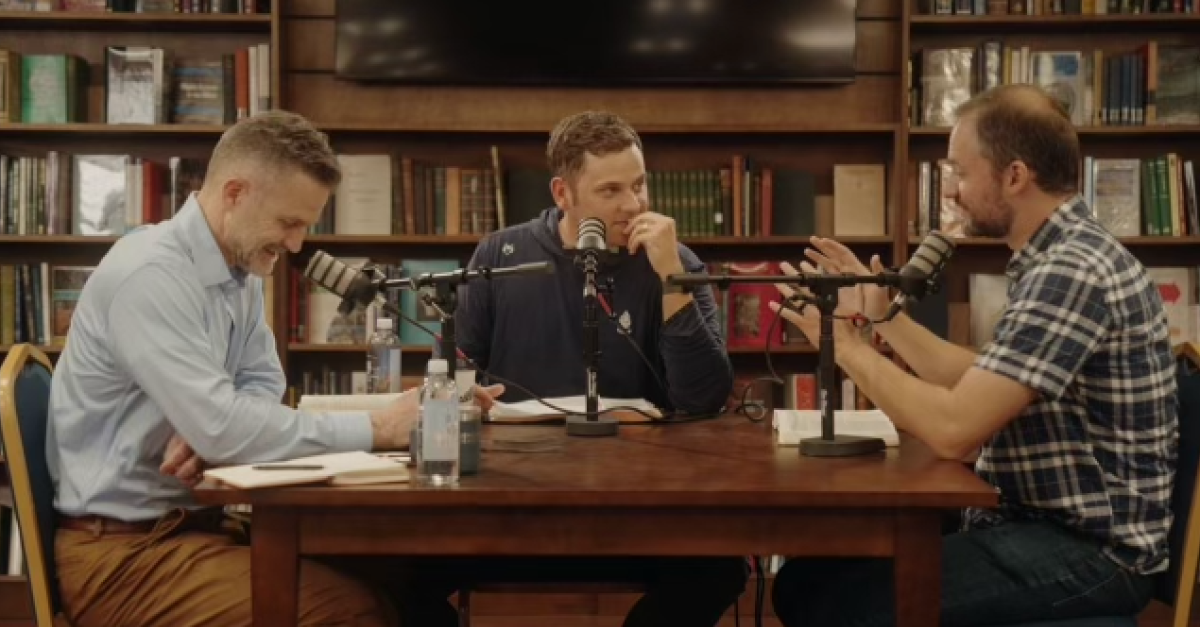
Three men recording a podcast.

On this episode of Salty Believer Unscripted, Josiah Walker and Bryan Catherman talk about another podcast. 9Mark’s offers a podcast called “Bible Talk,” and these guys think it’s worth checking out. This is a podcast worth listening to, and it's also a great opportunity to study the Bible alongside the episodes. Bryan shares this simple study method that will greatly bless any student of the Bible. Subscribe to SaltyBeliever wherever you get podcasts or listen here:

Subscribe to the Salty Believer Unscripted on your favorite podcast app, or use these links:
RSS FeedApple Podcasts | iTunes  | Amazon Music | Audible | Player FM | iHeartRADIO | Pocket Casts | Castbox | Podbean | Good Pods | Spotify | Podcast Addict | Pandora | Podchaser | Listen Notes | YouTube

On Premium Bibles

A person can spend, $250, $400, or even $1,000 for a Bible. They’re called premium Bibles, and there’s a lot that goes into one of these high-end Bibles. What’s the deal with these Bibles, and should a Christian spend money on one? That’s the topic of this episode of Salty Believer Unscripted. Bryan Catherman and Josiah Walker weigh in. What’s the nicest Bible you own? Listen to this episode wherever you get podcasts or listen here:

Subscribe to the Salty Believer Unscripted on your favorite podcast app, or use these links:
RSS FeedApple Podcasts | iTunes  | Amazon Music | Audible | Player FM | iHeartRADIO | Pocket Casts | Castbox | Podbean | Good Pods | Spotify | Podcast Addict | Pandora | Podchaser | Listen Notes | YouTube

After MacArthur: Transitioning Well

Runner in starting blocks with a baton

After the passing of John MacArthur, the big question becomes, “What will the transition look like at his various ministries?” MacArthur was the Lead Pastor of Grace Community Church and the Chancellor of the Master’s Seminary. What’s going to happen there? This then raises another question: “What’s it going to look like when the Boomer generation Pastors exit their pulpits and positions and the next generation comes in. What does it look like to transition church leadership well? That’s the topic of this episode of Salty Believer Unscripted. Subscribe and listen to Salty Believer Unscripted wherever you listen to podcasts or listen here:

Subscribe to the Salty Believer Unscripted on your favorite podcast app, or use these links:
RSS FeedApple Podcasts | iTunes  | Amazon Music | Audible | Player FM | iHeartRADIO | Pocket Casts | Castbox | Podbean | Good Pods | Spotify | Podcast Addict | Pandora | Podchaser | Listen Notes | YouTube

Biblical Theology as a Study Tool

Biblical theology is a useful tool for Bible study and should be readily available in the toolbox of any student of the Bible. But what is biblical theology? How does it differ from systematic or historical theology? In this video, Bryan Catherman shares some resources for beginners, looking to learn more about biblical theology and understand how it's used for good Bible study.

The books mentioned in the video are What Is Biblical Theology?: A Guide to the Bible's Story, Symbolism, and Patterns by James Hamilton Jr., God's Big Picture: Tracing the Storyline of the Bible by Vaughan Roberts, Biblical Theology in the Life of the Church: A Guide for Ministry by Michael Lawrence, According to Plan: The Unfolding Revelation of God in the Bible by Graeme Goldsworthy, Read the Bible for Life: Your Guide to Understanding and Living God's Word by George H. Guthrie, and Reader’s Guide to the Bible: A Chronological Reading Plan by George H. Guthrie.

Should We Trust the Bible?

Scrabble tiles spelling the word, "Trust"

With all we know about the Bible, one question remains: Can We Trust the Bible? Should we trust it? Many people say no. Bryan Catherman and Josiah Walker say we can and we must. In this episode of Salty Believer Unscripted, they discuss why the Bible is trustworthy and why we must depend on what it says. Subscribe and listen wherever you get podcasts, or listen here:

Subscribe to the Salty Believer Unscripted on your favorite podcast app, or use these links:
RSS FeedApple Podcasts | iTunes  | Amazon Music | Audible | Player FM | iHeartRADIO | Pocket Casts | Castbox | Podbean | Good Pods | Spotify | Podcast Addict | Pandora | Podchaser | Listen Notes | YouTube

The Bible: Aspects of God's Word

Parts of a complicated items, all neatly spaced out

As their discussion about the Bible continues, Josiah Walker and Bryan Catherman chat about aspects of the Bible. What are the key characteristics of the Bible? What do they mean, and why are they important? What are inerrancy, infallibility, clarity, reliability, sufficiency, and authority for example? What have been the past arguments about aspects of the Bible? What are the arguments focused on today? This is the conversation of this episode of Salty Believer Unscripted. Subscribe and listen wherever you get podcasts, or listen here:

Subscribe to the Salty Believer Unscripted on your favorite podcast app, or use these links:
RSS FeedApple Podcasts | iTunes  | Amazon Music | Audible | Player FM | iHeartRADIO | Pocket Casts | Castbox | Podbean | Good Pods | Spotify | Podcast Addict | Pandora | Podchaser | Listen Notes | YouTube

The Bible: From Then to Now

A long, lonely road through rolling hills.

How did the Bible we have today evolve from the tablets of the Ten Commandments to the plethora of economy Bibles, mass-marketed and translated into multiple languages, now sitting on shelves around the world? It’s a message that was superintended and protected by God, but the Bible did develop from stones and parchment to the paper Bible we have today. That’s a long journey. In this episode of Salty Believer Unscripted, Josiah Walker and Bryan Catherman discuss the journey of the Bible from then to now. Subscribe to Salty Believer wherever you listen to podcasts, or listen here:

Subscribe to the Salty Believer Unscripted on your favorite podcast app, or use these links:
RSS FeedApple Podcasts | iTunes  | Amazon Music | Audible | Player FM | iHeartRADIO | Pocket Casts | Castbox | Podbean | Good Pods | Spotify | Podcast Addict | Pandora | Podchaser | Listen Notes | YouTube

The Bible: The New Testament Books

And image of the New Testament Introduction Page

The Old Testament instructs not to add anything to the canon, but the New Testament includes additional books. What’s going on here? Were those Old Testament authors only talking about individual books? Is it okay for God to add more books? How do we have these books, and how do we know we have the right ones? Can more still be added? In this episode of Salty Believer Unscripted, Bryan Catherman and Josiah Walker talk about the New Testament canon. Subscribe and listen to Salty Believer Unscripted wherever you get podcasts or listen here:

Subscribe to the Salty Believer Unscripted on your favorite podcast app, or use these links:
RSS FeedApple Podcasts | iTunes  | Amazon Music | Audible | Player FM | iHeartRADIO | Pocket Casts | Castbox | Podbean | Good Pods | Spotify | Podcast Addict | Pandora | Podchaser | Listen Notes | YouTube

The Bible: The Intertestamental Period

As Josiah Walker and Bryan Catherman discuss the question, “What is the Bible?” they’ve hit the intertestamental period, otherwise known as “the quiet years.” What do the quiet years have to do with the Bible, and how is it helpful to understand what was happening during that time? In this episode, they discuss the significance of those years to the Bible we have today. Subscribe and listen wherever you get podcasts, or listen here:

Audio Block
Double-click here to upload or link to a .mp3. Learn more

Subscribe to the Salty Believer Unscripted on your favorite podcast app, or use these links:
RSS FeedApple Podcasts | iTunes  | Amazon Music | Audible | Player FM | iHeartRADIO | Pocket Casts | Castbox | Podbean | Good Pods | Spotify | Podcast Addict | Pandora | Podchaser | Listen Notes | YouTube

How Can I Delight in the Law? (Psalm 1)

In his comments on Psalm 1, Charles Spurgeon says, Psalms 1 and 2 are "the text upon which the whole of the Psalms make up a divine sermon." It seems clear that Psalm 1 serves as the instruction or reading strategy for all the Psalms. But the best part is that it's not a command to obey, but to delight. There's a profound difference.

God's instruction to Joshua in 1:7-8 is similar to Psalm 1 in that Joshua was instructed to meditate on the Law day and night. Kings, too, were instructed to read the Law throughout their lives and be guided and shaped by it (Deuteronomy 17:18-20). Yet, the call to "delight" was not as straightforward as is found in Psalm 1. And it's not God himself this Psalm calls its readers to delight in, but the Law of the Lord. Not even Psalm 111:2 calls for delight in the Law, but in God's past acts! Typically, it's God who delights in His people throughout the Old Testament, but here the people learn they can find delight in the Law.

While much can be said of Psalm 1--its structure, blessing, and so forth--I'm most interested in this call to delight in the Law. How were the people in the time the Psalm was written to understand this instruction, and how do we, who are free from the Law to live in Christ, still find blessing from Psalm 1:2?

Those who first sang or prayed this Psalm could take delight in the Law because having the Law meant they had a divine Law-giver who desired a relationship with them. Without the Law, there was no way to come in contact with God. Unclean things were doomed to destruction. But the Law provided a way for unclean things to become clean, and clean things were then offered a way to be in contact with the Holy. God's blessed provision for this was the Law. To believe this was true and sacrifice an expensive bull demonstrated faith under the Law, that it would do what God promised the Law would do.

Furthermore, the Law offered the people wisdom and guidance. It was a light to their steps (Psalm 119:105), a source of wisdom and understanding (Deuteronomy 6:24-25), and a path to blessing, not burden (Deuteronomy 30:19-20). Following this wisdom brought joy, comfort, and a relationship with God, all of which are blessings.

However, with the Law came an awareness of our greater problem. The Law is not the problem--our sin is the problem, and the Law exposes it in us. So, while the original audience could take delight in God's salvation through faith by trusting God's Law, it was God's means to show his people the need for the Perfect One who follows Psalm 1 perfectly. And even trusting God to reveal this truth from the Law is reason to take delight in the Law, knowing that a loving God keeps His promises, even as far back as Genesis 3:15. The delight flows from relationship, not performance.

A Christian under the New Covenant can take true (and a fuller) delight in the Law of God, as instructed in Psalm 1, through a gospel-shaped, Spirit-empowered understanding of the Law. This view is rooted in union with Christ, empowered by the Holy Spirit, and oriented toward communion with God.

Jesus is the final aim of the Law (Romans 10:4). He fulfilled it perfectly (Matthew 5:17) and bore its curse (Galatians 3:13) on our behalf. Therefore, the Christian no longer relates to the Law as a covenant of works and obedience, but as a pattern for sanctified living fulfilled by our loving Savior. Romans 8:1-4 shows that the righteous requirement of the Law is fulfilled in those who walk according to the Spirit. While our delight still flows from relationship rather than our performance, we also take delight in Jesus' performance under the Law in our place.

Now the Law is written on our heart (Jeremiah 31:33 and Ezekiel 36:26-27). Now we can say with Paul, "I delight in the law of God, in my inner being" (Romans 7:22). But like Paul, we see that the work of God's grace is not complete in us. The Law still exposes our sin, but that is a gift!

Far too often, Christians are taught that the Law is bad. Typically, the Law is associated with legalism. But if God wrote the Law on a redeemed believer's heart, and if Jesus perfectly fulfilled the Law, it's not a bad thing to be feared. We're still called to delight in the Law, but we can only truly do so when we see it as a gift of God and fulfilled by Jesus. We're freed from the curse of the Law to live in the blessings of the Law.

On the opposite side of legalism, Christians run to antoninianism. Thinking they are freed from something bad, they toss out the Law. If a Christian does this, there's no way to live out Psalm 1. One could say they meditate on God's Word, but God's Word does not exclude the Law, and this Psalm. So, what is this Christian to do? The answer is found in Psalm 1.

Psalm 1 because it portrays the Law not as a burden or curse, but as the path to blessing, joy, and stability. The blessed Christian delights in the Law of the Lord and meditates on it day and night. This is not legalistic obligation but relational devotion. Psalm 1 invites the believer to see God's Law as the means to communion with Him, shaping our affections and direction. The imagery of the tree planted by streams of water (v.3) reveals that delighting in the Law is not about earning life, but about being nourished by God's Word. The tree didn't earn its place there. It was planted there, and this is the description, not a prescription.

Psalm 1 confronts both legalism and antinomianism, rebuking the self-righteous who believe they can merit blessings through their works, and it rebukes the lawless who reject God's revealed will. Instead, it calls the Christian to walk in the way of the gospel. Here, delight in the Law flows from a heart transformed by grace. In Christ, the Law is no longer a curse to fear or a system to master, but a revelation of the character of God we love, a path in which we joyfully walk by the Spirit. Psalm 1 presents the redeemed with a picture of true life — anchored in the Word, rooted in grace, and flourishing in communion with God.

The Bible: Do We Have the Right Books?

In this episode of Salty Believer Unscripted, Josiah Walker and Bryan Catherman discuss the books of the Bible and how we know these books belong in our Bibles and others do not. How do we know we have the right books? What’s the standard? What’s the canon? What were the very first written words of the Bible, and who wrote those words? Listen to this episode wherever you get your favorite podcasts or listen here:

Subscribe to the Salty Believer Unscripted on your favorite podcast app, or use these links:
RSS FeedApple Podcasts | iTunes  | Amazon Music | Audible | Player FM | iHeartRADIO | Pocket Casts | Castbox | Podbean | Good Pods | Spotify | Podcast Addict | Pandora | Podchaser | Listen Notes | YouTube

The Bible: A New Series Introduction

We’re launching a new series to explore the question, “What is the Bible?” Join Josiah Walker and Bryan Catherman as they discuss the Bible. What is the Bible? Where does it come from? Is it God’s Word? How do we know we can trust this book? Does it contain errors? In this series, they’ll discuss these questions and many more. Subscribe wherever you get podcasts or listen here:

Subscribe to the Salty Believer Unscripted on your favorite podcast app, or use these links:
RSS FeedApple Podcasts | iTunes  | Amazon Music | Audible | Player FM | iHeartRADIO | Pocket Casts | Castbox | Podbean | Good Pods | Spotify | Podcast Addict | Pandora | Podchaser | Listen Notes | YouTube

Media and the Bible

In this episode of Salty Believer Unscripted, Josiah Walker and Bryan Catherman discuss media and the Bible. Specifically, what are we to think when we see biblical material expressed on various media? What should Christians do about The Chosen? How about the King of Kings? The Ten Commandments? What about Disney’s Prince of Egypt? Should Christians watch The House of David? And how could we forget Russel Crowe’s film, Noah? That’s the topic of this episode. Listen wherever you get podcasts or listen here:

Subscribe to the Salty Believer Unscripted on your favorite podcast app, or use these links:
RSS FeedApple Podcasts | iTunes  | Amazon Music | Audible | Player FM | iHeartRADIO | Pocket Casts | Castbox | Podbean | Good Pods | Spotify | Podcast Addict | Pandora | Podchaser | Listen Notes | YouTube

Context: Should a Church Have More Than One Service?

Join Josiah Walker and Bryan Catherman as they deal with the question: “Should a church have two or more services?” Mark Dever has made this a popular question. If a church has two services, does it have two churches? Not only do the guys deal with this question, but also with what time the service should be, on which day, and many more related questions. How might context shape these questions? That’s the topic of this episode of Salty Believer Unscripted. Subscribe wherever you get podcasts or listen here:

Subscribe to the Salty Believer Unscripted on your favorite podcast app, or use these links:
RSS FeedApple Podcasts | iTunes  | Amazon Music | Audible | Player FM | iHeartRADIO | Pocket Casts | Castbox | Podbean | Good Pods | Spotify | Podcast Addict | Pandora | Podchaser | Listen Notes | YouTube

The Benefit of the Mid-Week Bible Study

Josiah Walker, Bryan Catherman, and Daniel the Intern discuss the value of the mid-week Bible study. Have these meetings run their course, or is there still value in doing them? How do we get the most out of them? What are they for? Do I have to go to a small group Bible study?

They also answer the question, “What is a Salty Believer Unscripted intern, and what does this intern do?” Daniel is our newest intern and they took a moment to chat with him about the Salty Believer Unscripted podcast. Subscribe wherever you get your podcasts or listen here:

Subscribe to the Salty Believer Unscripted on your favorite podcast app, or use these links:
RSS FeedApple Podcasts | iTunes  | Amazon Music | Audible | Player FM | iHeartRADIO | Pocket Casts | Castbox | Podbean | Good Pods | Spotify | Podcast Addict | Pandora | Podchaser | Listen Notes | YouTube