Sign or No Sign?

John was in prison, but word about Christ's deeds still reached him. Jesus instructed the two disciples John sent to return and tell John what they saw. When the disciples asked if Jesus was the Messiah they had been hoping for, he pointed to the blind receiving sight, the lame walking, lepers cleansed, the deaf hearing, the dead raised, and the good news preached to the poor (Matthew 11:1-6).

Not much later, scribes and Pharisees asked Jesus for a sign. Presumably, they wanted proof that he was the Messiah they had been waiting for. This time, Jesus told them, "An evil and adulterous generation seeks for a sign, but no sign will be given it except the sign of the prophet Jonah" (Matthew 12:39). John the Baptist sent for encouragement, and he was told to look at the events of Jesus' ministry. The Pharisees demanded a sign to prove that Jesus was who he claimed to be, and they were rebuked, called an evil generation who would only receive the sign of Jonah. Which is it? Why the difference?

In both cases, the deeds of Christ were evident. The blind, lame, lepers, deaf, and dead received the miracles prophesied in Isaiah 29:18-18, 35:5-6, and 61:1. These may have been the deeds John had already heard about. Yet, when John was genuinely seeking the Messiah, he was gently reminded to see the fulfillment of Scripture in the events of Christ's ministry. The Pharisees, however, were already set on rejecting the events and demanding Jesus prove himself by their terms. They had already rejected Christ. Therefore, Jesus told them the only sign a wicked and evil generation would receive was the sign of Jonah.

Jesus went on to describe one aspect of the sign of Jonah--that just as Jonah was in the fish for three days, so the Son of Man will be three days in the earth. But this is less of a sign than what Jesus says next. "The men of Nineveh will rise up at the judgment with this generation and condemn it, for they repented at the preaching of Jonah, and behold, something greater than Jonah is here" (Matthew 12:41).

The more excellent sign of Jonah is repentance. Everyone but Jonah repents and willingly obeys God in the book of Jonah except Jonah. Creation submits to God even when Jonah does not. Yet the book of Jonah ends with another chance for repentance. Because Jesus will be in the earth for three days, repentance and salvation are possible. One must repent if one desires to see and believe that Jesus is who he says he is. As their actions showed, the Pharisees had already rejected that sign.

When preaching either Text—Matthew 11:1-6 or 12:38-41—the contrast between John the Baptist and the Pharisees provides a straightforward approach to presenting repentance in light of Jesus's deeds. These two events are well-tied together and worth seeing side-by-side.

The Book of Jonah

Jonah is likely the minor prophet with which people are the most familiar.  The book of Jonah is a short narrative parallel, unlike any other prophetic book.  Because it’s narrative and only four chapters, preachers often select the book of Jonah for a series, and often, the series is four parts, following the lines of Stephen Langton’s chapter breaks. 

The structure of the book of Jonah is formed of two parallel narratives, where the second narrative mirrors the first but more largely and deeply.  This allows Jonah to show us the key lessons by going through them a second time in the same way as the first.  At the end of the second narrative, Jonah brings the reader into a glimpse of the mind of Jonah and of the mind of God (Chapter 4).  Jonah 1:1 and 3:1 echo the same language as the opening of each narrative.  Then the narratives parallel one another following a sequence: The Word of the Lord comes to Jonah, Jonah acts in response, non-Israelites enter the picture, God demonstrates his sovereignty, Jonah prays, and God acts.  

The reader should expect nobody except Jonah the Prophet to obey God, but in a shocking reversal, every person and all of God’s appointed creation obey the Lord. It’s Jonah who struggles, which is an intentional aspect of the book.  

The second narrative ends abruptly to nudge the reader to a correct response.  It’s as if the reader is to fill in the correct answer based on the first narrative, thus, bringing the reader into the same reality as Jonah.  The first narrative teaches the complete pattern, such as A+B+C=D, and then the second narrative tests the reader’s understanding of the pattern as AA+BB+CC=__.  If the reader correctly understands the pattern, then the reader knows the answer is DD.  Knowing the right response for Jonah leads to the same response by the reader.  In this case, the correct answer for Jonah and the reader is repentance and worship.  In the first narrative, D would be the repentance seen in Chapter 2.  The answer beyond Chapter 4 (DD) should be this same kind of repentance and praise, but bigger and better. 

Themes of the book of Jonah include (but are not limited to) the fear of the Lord, obedience, repentance, God’s patience and grace, sanctification, and God’s sovereignty in mission.

The book of Jonah is deeply connected to the gospel through Jesus’ use of Jonah in relation to the scribes and Pharisees in Matthew 12:38-42 or a wicked generation in Luke 11:29-32.  When they demand a sign, Jesus replies that the only sign will be the sign of Jonah.  While Matthew adds detail about Jonah in the belly of the fish and the Son of Man in the heart of the earth, that is only a small part of the sign.  Luke does not include such detail.  Instead, the sign is the larger idea of God’s sovereignty in salvation.  “Salvation belongs to the Lord” (Jonah 2:9).  

Furthermore, the account of Jesus calming the storm (Matthew 8:23–27, Mark 4:35–41, and Luke 8:22–25) alludes to Jonah 1.  The sailors call upon Jonah to call upon his God so that perhaps, they wouldn’t perish (1:6).  The wind and seas obey the Lord and when it ceases to rage, the sailors fear the Lord exceedingly and offer sacrifices to God.  The disciples are concerned they will perish and even suggest that Jesus does not care (tying to God and Jonah’s conversation in Jonah 4).  The wind and waves obey Jesus, and the disciples become afraid and worship, marveling that the wind and waves obey Jesus.  If God can command the wind and waves in the book of Jonah, much is being said of Jesus in the New Testament accounts.

It may be valuable to preach or teach the book of Jonah as a complete unit, drawing on the connections between the first and second narratives.  Then to solidify the themes, look at the New Testament passages through the lens of the book of Jonah. 

Bouncing Around the Bible

     One preacher will have dozens of Scripture references in a single sermon every time he preaches because that’s what he does.  Another preacher will hug a Text so closely that he never references another Passage, ever.  And then there is that preacher who seems to know precisely when it’s necessary to go elsewhere in the Bible for help. 

     When is it right to leap from one Text to another in a sermon, and when should the preacher camp out in a single Passage?  In other words, how should the preacher decide when to reference other Scriptures in a sermon?  

     The correct answer is not, “The more Scriptures from everywhere in the Bible, the better,” nor is it “Never depart the main Text.”  There is indeed a sweet spot that flows naturally. Uncovering it has to do with the sermon Text itself. 

    Some Passages are plain and simple.  The hearer knows what the words mean.  Nothing is confusing in them.  Culture has not built up an enormous disconnect that requires a bridge.  Or if there’s something unclear or perplexing, the Text explains.  Luke 15:8-10 serves as a simple example.  The hearer knows what it means to lose a coin.  Lamps are not confusing; neither is sweeping.  If the preacher needs to consult any other Scripture, it should be the parable of the lost sheep and the parable of the two lost sons that precede and follow Luke 15:8-10.  In the case of Mark 4:1-20, Jesus tells a parable and follows it up with an explanation of what it means.  The preacher needs only to go to the supplied explanation. 

     However, some Passages need a great deal of help from other Passages.  Other Scripture may be more precise or provide some explanation.  Sometimes, background information is necessary for understanding.  Leveraging biblical theology may help unlock the meaning.  Revelation 10:1-11 provides an example of a Passage that may be helped by referencing other Scriptures.  While there are many Texts available to help understand things like the cloud and rainbow, the little scroll, and why eating the scroll may taste sweet like honey, there’s no better place for the preacher to take his audience than to Ezekiel 1-3.  

     The prevailing rule of thumb is to use other Passages if they are needed to explain the Text or offer an illustration.  Going to other Texts just for the sake of having more verses tends to distract from the point and give the sermon less punch, not more.  Also, if further explanation is unnecessary, the hearer is less likely to remember the added material when reading the Text later. Use other verses to help the hearers, not impress them.   

This is the Place to Start Good Discipleship

How do we do discipleship? Where do we start? Many things contribute to good discipleship, but few produce as lasting fruit as sitting under the preached Word of God over a lifetime. It's God's design for the local church. It's also how most Christians have been (and are still being) discipled. So many people will say it was by being in church for so long that they grew, and when you drill down, you’ll find the bulk of that was through the Sunday gathering over the course of many years. Teaching our children how to listen to preaching well is a gift that will bless them forever. This is an early and lasting spiritual growth and transformation step for most.

Christopher Ash's little book (booklet), Listen Up!: A Practical Guide to Listening to Sermons is a helpful tool. It's an easy and convicting read on the topic. It’s one you could read around the dinner table with your family and then commit to doing. Few things are better for discipling your children than showing them what it looks like to go to church well. Listen Up! helps us do just that even better.

Mark Dever says, “We give Listen Up to all our new members.” Vaughan Roberts says, “A great resource to help grow a new generation of believers who both tremble at God’s word and are changed by it.” If you want to grow and help your family grow too, this book is well worth your attention.

Teaching: How to Get Started

You feel called to teach a class, but you’ve never done that before. Or maybe you are feeling a call to ministry. Where do you start? How do you start? What could this look like? If you’re a Pastor or leader, how do you help new teachers get started? This is the topic of this episode of Salty Believer Unscripted. Bryan Catherman and Josiah Walker discuss where to start if you’re a new Christian, where to start if you’ve been a Christian for a few years, and even how to get started in any step in your Christian journey. Listen to Salty Believer Unscripted wherever you get podcasts or listen here:

Subscribe to the Salty Believer Unscripted on your favorite podcast app, or use these links:
RSS FeedApple Podcasts | iTunes  | Amazon Music | Audible | Player FM | iHeartRADIO | Pocket Casts | Castbox | Podbean | Spotify | Podcast Addict | Pandora | YouTube

Disciplines for the Long Haul

There are many spiritual disciplines. Some might be short-lived, and some may sustain us for the long haul. Some are more helpful than others. In this episode of Salty Believer Unscripted, Bryan Catherman met with Kevin Lund, Pastor of Trinity Church, to discuss the disciplines that have been better for him over the years. At the time of the recording, Kevin is 65 and has tested these disciplines well. Listen to this episode wherever you get podcasts, or listen here:

Subscribe to the Salty Believer Unscripted on your favorite podcast app, or use these links:
RSS FeedApple Podcasts | iTunes  | Amazon Music | Audible | Player FM | iHeartRADIO | Pocket Casts | Castbox | Podbean | Spotify | Podcast Addict | Pandora | YouTube

Talking Missions with Doug Reed

Doug Reed is the Managing Director of Possibilities Africa USA. He sat down with Bryan Catherman to discuss mission work, a potential paradigm shift in missions, and how Possibilities Africa is doing mission work in many African countries. Are there some things we must consider to improve missions and pastoral training? How does context play into these questions? What might we be doing that could actually be hurting the ministry work in other places? Listen in to the conversation on Salty Believer Unscripted. Find them wherever you get podcasts or listen here:

Subscribe to the Salty Believer Unscripted on your favorite podcast app, or use these links:
RSS FeedApple Podcasts | iTunes  | Amazon Music | Audible | Player FM | iHeartRADIO | Pocket Casts | Castbox | Podbean | Spotify | Podcast Addict | Pandora | YouTube

Snowed In: How to Worship at Home

It's Sunday morning, and Mother Nature has shut down the city. The roads are closed. Nobody is going anywhere. Some Christians shout joyfully, "Yeah, we get a week off from church!" Others recall COVID pandemic training and prepare to watch a live stream of something and "gather" on the web of the world's internet. Some mourn the lost opportunity to gather with the saints (Hebrews 10:25). Some prepare for worship alone or with the family at home.  

A transformed life is a life of worship (Romans 12:1-2), and the Bible talks about worship in a couple of different ways. There's individual worship (sometimes called personal or secret worship), which we see when Jesus retreats to pray alone. David, Daniel, and Peter model it. It's private prayer and private giving. It's the way we work for our employer. It's private Bible study, devotion, and our quiet times with God. It's enjoying God's creation and marveling at all God has done. It's repentance and growing still. There's also an aspect of worship that's public or corporate (from the word corpus meaning body). This worship is a collective encounter or experience with God as God's people. Some include family worship as another expression of public worship, as seen in Exodus 12:3 and directed by Deuteronomy 6:6-7.

A snow day (or natural disaster, sickness, war, or persecution) affords Christians another opportunity to question what it means to gather with other believers for public worship. What is corporate worship? Where does it happen? Why gather with other believers? Why on the Lord's Day, and what is that (Revelation 1:10)? What is necessary for a worship gathering, and what makes it worship? What's the difference between a worship experience in the gathering of believers and an event on the stage or screen? Where and how is the Holy Spirit involved in Christ's Church?

To start, one might appeal to Matthew 18:20, which says, "For where two or three are gathered in my name, there am I among them." The "for" tells us that this statement is giving us the anchor for something that came before and that something is church discipline. This passage is Jesus' guidance to help the local church determine when an unrepentant sinner has reached the point when the local church should no longer affirm that person as a Christian. This passage is undoubtedly instructive for the gathering of believers, but maybe not in the way most think about it when taken out of context.  

Ephesians 5:15-21 instructs Christians on relating to one another as fellow children of Light. It says Christians should address "one another in psalms and hymns and spiritual songs, singing and making melody to the Lord with your heart, giving thanks always and for everything to God the Father in the name of our Lord Jesus Christ, submitting to one another our of reverence for Christ." While the passage is not restricted to a Lord's Day worship service, it certainly includes that time when Christians are together. Christians should sing together, but when they do, they sing to God. They join the choir and praise the Lord, much like we see modeled by the angels in the heavenly realm. Our worship includes singing and giving thanks together.

1 Timothy 4:13 instructs a young pastor on the gathering of Christians, encouraging Timothy to "devote [himself] to the public reading of Scripture, to exhortation, to teaching." When Christians gather, Scripture should be read publicly (out loud with others), and preaching should include both exhortation and teaching.  

Prayer is an integral part of the public gathering. Acts 2:42 says, "They devoted themselves to the apostle's teaching and the fellowship, to the breaking of bread, and the prayers." 1 Timothy 2 instructs Christians to pray, and the context is corporate. These prayers were likely part of their worship gatherings because the instruction shifted to teaching and how women and men relate in these gatherings. It's reasonable that James 5:13-16 includes the context of a corporate gathering of Christians, too, and the call is to pray.

The breaking of bread, or the Lord's Supper, is also a part of the worship gathering. The Lord's Day gathering during the early Church was in the evening, possibly because, in the Hebrew tradition, the day started at sunset. In Acts 20:7, Luke writes, "On the first day of the week, when we gathered together to break bread." Paul preached, and the verse says that he went on until midnight. It's doubtful that it started in the morning. As an evening gathering, it included a meal based on Jude 1:12 and 1 Corinthians 11:17-34. These meals included taking the Lord's Supper together in remembrance of Jesus.  

1 Corinthians 14:26-40 instructs that the gathering should be orderly and not a wild free-for-all. Hebrews 12:28 says it should be reverent and filled with awe as we give God our acceptable worship.  

John seems to have been alone on the Lord's Day. Can there be Lord's Day worship without a gathering of other believers? What was his Lord's Day worship for him? Could John have believed there was some connection while engaging in private worship while others were in public worship? Revelation 1:10 says he was "in the Spirit on the Lord's Day," which may be connected to John 4:24 when Jesus said, "God is spirit, and those who worship him must worship in spirit and truth." What does it mean that he was worshiping in spirit and truth? (I'll leave that to you to consider, although another post may be coming on this topic.)  

So now you find yourself snowed in. How will you respond?  

Here's a simple guide for family worship without a live stream to join:

  1. Gather your family around the family room or dining room table.  

  2. Have someone open with a prayer. You could each take turns if you desire.  

  3. Select a passage of Scripture to read together. Have someone read it out loud.  

  4. Sing a psalm, hymn, or spiritual song (or songs) together. If that's a stretch, select some worshipful music and listen to it together or sing along. You could have someone read the words of a Psalm. You could also read a good hymn out loud (these are easy to find if you have the internet, or you could keep a hymnal on the shelf for these opportunities).  

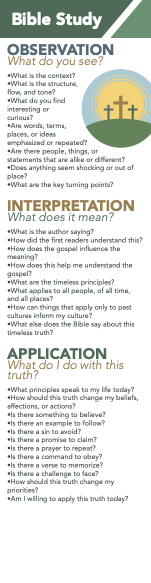
  5. Have someone read a passage of Scripture (it could be the same one you opened with) and discuss it. If this is something you are uncomfortable with, trust that God will help. Pray and see if the Spirit might bring even one exhortation forward. Even if you can't teach it, there may be something the Text calls upon your family. Do you see it? If you have a Bible study bookmark on hand, walk through that for a few minutes.

  6. Pray again together. If you'd like, sing another song. You could be finished here, or each person could share something God has been doing in his or her life lately. You could rehurse the goodness of the gospel. Or you could pray more specifically for each person. It's really up to you.  

Corporate worship doesn't have to be in a big room with lots of people, lights down, with a well-planned something on the stage. It may not include musical instruments or a trained preacher at all. These things can significantly help bring corporate worship together, but they are not the guaranteed ingredients. Seek to worship our Triune God, through his power, for his glory and see what happens. This snow day might be more edifying than you imagined when you first looked out the window.  

Dwell's Missed Opportunity

Dwell, you grossly missed a grand opportunity with your Melodic Line daily devotional.

I use and enjoy the Dwell app for listening to the Bible. I've used it for years. I was excited about this one-year devotional called The Melodic Line. In the ramp-up to the start of the devotional, Tripp Prince's promotional information discussed how "each book contributes its own melody to the overarching theme." Prince defines the melodic line by writing, "The Melodic Line is designed to guide you through these key movements and themes of the Bible. Each passage has been carefully selected to highlight the major points of the Bible's storyline, helping you see the bigger picture." This sounded great.

The Charles Simeon Trust has been teaching a principle called the Melodica Line for years. They say, "Just as every song has a unique melody, every book of the Bible has a unique message." The point is that key themes run through the book, and when we understand the book's big idea, we better interpret specific passages. In addition, the Bible has key themes throughout the book. It's one story. (Here's a discussion of the melodic lines of Luke and Acts, and even a melodic line of both books taken together. Click here.)

With the Charles Simeon Trust teaching of the melodic line in my mind, I was thrilled to go through key passages of the Bible to see the major themes of the Bible. I hoped each book's melodic line might be more apparent through the Dwell reading plan.

Boy, was I wrong!

Instead, Dwell used the title, "The Melodic Line" to sound artistic and cool while missing any meaning in the name. The first devotional (by John) was a slow reading of a handful of verses from Genesis 1 and then a rapid jump to a spiritualized application void of any anchor to the meaning of the Text. It was simply an excuse for an artistic reflection of the self. The second devotional by Jessika was the same. How unfortunate.

While I'm still using the Dwell app and greatly appreciate the reading plans, I won't be visiting "The Melodic Line" daily devotional again. In the meantime, I'll continue to pray for a one-year plan that shows the more significant themes of the entire Bible while exposing the Charles Simeon Trust idea of the Melodic Line of each book. Now, that would be a great plan!

When Your Bible Reading Plan Crashes

You got off to a great start, but now you’ve hit Leviticus, and your Bible reading plan has crashed and burned. How do you start up again? Start over? Get going, but end late? Read a ton in one day? The better question might be, what is at the heart of your reading plan? Join Josiah Walker and Bryan Catherman as they discuss what we might do when our Bible reading plan crashes and burns. Listen to this episode wherever you get podcasts, or listen here:

Subscribe to the Salty Believer Unscripted on your favorite podcast app, or use these links:
RSS FeedApple Podcasts | iTunes  | Amazon Music | Audible | Player FM | iHeartRADIO | Pocket Casts | Castbox | Podbean | Spotify | Podcast Addict | Pandora | YouTube

When Our Heroes are Sinners

Martin Luther was an anti-semite. He had strong feelings against the Jewish people. Hundreds of years later, Hitler used some of Luther’s statements to build a national argument against the Jews. What are we to think about this? What do we do with Luther? That’s the topic of this episode of Salty Believer Unscripted. What now? What about when a person’s theology shifts? What about worship leaders and songwriters with theological issues? Authors? We spend little time thinking about this topic, but the guys take on it in this unscripted conversation. Listen to Salty Believer Unscripted wherever you get podcasts, or listen here:

Subscribe to the Salty Believer Unscripted on your favorite podcast app, or use these links:
RSS FeedApple Podcasts | iTunes  | Amazon Music | Audible | Player FM | iHeartRADIO | Pocket Casts | Castbox | Podbean | Spotify | Podcast Addict | Pandora | YouTube

Good Books for Good Churchmen

An image of a man sitting in a large church by himself.

In this episode of Salty Believer Unscripted, Bryan Catherman and Josiah Walker recommend good books for the man or woman in the pew. What books help people be good churchmen and women? SBU has a new intern (Daniel the Intern), which prompted this conversation. If you’re in church and you want to grow in your Christian walk, this episode offers some books other than the Bible to help you. Find this episode wherever you get podcasts, or listen here:

Subscribe to the Salty Believer Unscripted on your favorite podcast app, or use these links:
RSS FeedApple Podcasts | iTunes  | Amazon Music | Audible | Player FM | iHeartRADIO | Pocket Casts | Castbox | Podbean | Spotify | Podcast Addict | Pandora | YouTube

What is Hospitality?

Welcome mat, stating, "Be Our Guest" on it.

Most people think hospitality is opening your home to others and eating with them, and it is. It’s not less than that, but it is so much more. What is hospitality? Is hospitable thinking what causes a church to seem friendly to new people? Is there a way for those who don’t have a home to open up and be hospitable? In what ways do we miss it and not even realize that rather than being hospitable, we become clicky? Is there a more robust way to think about hospitality that may cause us to do this better? These are the questions Josiah Walker and Bryan Catherman discuss in this episode of Salty Believer Unscripted. Listen to this episode wherever you get podcasts, or listen here:

Subscribe to the Salty Believer Unscripted on your favorite podcast app, or use these links:
RSS FeedApple Podcasts | iTunes  | Amazon Music | Audible | Player FM | iHeartRADIO | Pocket Casts | Castbox | Podbean | Spotify | Podcast Addict | Pandora | YouTube

Teaching Well from OIA Preparation

Good preparation for Bible study is essential, but it’s not over until the class is taught. We have to get the Word of God right, and we have to get it across. How do we go from a good Observation-Interpretation-Application (OIA) study or a robust Charles Simeon Trust worksheet on the pathway to leading a class? In this episode of Salty Believer Unscripted, Josiah Walker and Bryan Catherman discuss how to go from preparation to the teaching moment. It’s not as easy as it looks. They chat about what has worked and has not worked well for them. Listen to this episode wherever you subscribe to Salty Believer Unscripted, or listen here:

Subscribe to the Salty Believer Unscripted on your favorite podcast app, or use these links:
RSS FeedApple Podcasts | iTunes  | Amazon Music | Audible | Player FM | iHeartRADIO | Pocket Casts | Castbox | Podbean | Spotify | Podcast Addict | Pandora | YouTube

The New Bible Study Bookmark

On this episode of Salty Believer Unscripted, Bryan Catherman and Josiah Walker discuss a simple tool for good Bible study. It’s the new Bible study bookmark. Using the OIA Bible study method, this bookmark makes it easy to study the Bible anywhere for any amount of time. It’s simple and reproducible. One side is a Bible study, and the other is a discipleship pathway to make that easy, too! Learn more about this simple tool by listening to the podcast. Listen wherever you get podcasts, or listen here:

You can also download the bookmark here:
Front (The Bible Study) PDF PNG
Back (Discipleship Questions) PDF PNG

Subscribe to the Salty Believer Unscripted on your favorite podcast app, or use these links:
RSS FeedApple Podcasts | iTunes  | Amazon Music | Audible | Player FM | iHeartRADIO | Pocket Casts | Castbox | Podbean | Spotify | Podcast Addict | Pandora | YouTube

The Nuts and Bolts of Printed Bibles

On this episode of Salty Believer Unscripted, Josiah Walker and Bryan Catherman discuss the nuts and bolts of printed Bibles. When picking a Bible, what should we think about the binding, paper quality, number or ribbons, font size, red letter, and even the $300-500 Bibles? Journaling Bibles? What about cross-references? Double or single column? Goat skin? There are many things we don’t often discuss when selecting a Bible, but these things are good to consider. Listen to this episode of Salty Believer Unscripted wherever you get podcasts, or listen here:

Subscribe to the Salty Believer Unscripted on your favorite podcast app, or use these links:
RSS FeedApple Podcasts | iTunes  | Amazon Music | Audible | Player FM | iHeartRADIO | Pocket Casts | Castbox | Podbean | Spotify | Podcast Addict | Pandora | YouTube

Picking a Christmas Devotional

Do you read a regular devotional? How about a special Christmas devotional? In this episode of Salty Believer Unscripted, Josiah Walker and Bryan Catherman discuss devotionals and how to pick one. They also consider devotionals for Christmas. Do they help you get into the Christmas spirit? Do they bring something else? How do you bring in more devotional materials when time is short? These are some of the many questions they attempt to answer in this episode. Listen to this episode wherever you get podcasts, or listen here:

Subscribe to the Salty Believer Unscripted on your favorite podcast app, or use these links:
RSS FeedApple Podcasts | iTunes  | Amazon Music | Audible | Player FM | iHeartRADIO | Pocket Casts | Castbox | Podbean | Spotify | Podcast Addict | Pandora | YouTube

How to Find a New Church

When you move to a new city, you need to find a new church. This is not always an easy task. How do you do it? What should you look for? What should you avoid? Any tips? This is the topic of this episode’s conversation. Listen to Salty Believer Unscripted wherever you get your podcasts or listen here:

Subscribe to the Salty Believer Unscripted on your favorite podcast app, or use these links:
RSS FeedApple Podcasts | iTunes  | Amazon Music | Audible | Player FM | iHeartRADIO | Pocket Casts | Castbox | Podbean | Spotify | Podcast Addict | Pandora | YouTube

The Real David Platt Documentary

Upset members at McLean Bible Church made and released a YouTube documentary aimed at David Platt. They may be right, or they may be wrong. Is making a documentary the right way to handle their concerns? Should Christians who are not members of McLean Bible Church watch the documentary? How should Christians think about these kinds of documentaries? What about other similar documentaries like “The Rise and Fall of Mars Hill,” “Hillsong: A Megachurch Exposed,” or “The Making of a Minister” series? That’s the topic of conversation for this episode of Salty Believer Unscripted. Listen wherever you get your podcasts, or listen here:

Subscribe to the Salty Believer Unscripted on your favorite podcast app, or use these links:
RSS FeedApple Podcasts | iTunes  | Amazon Music | Audible | Player FM | iHeartRADIO | Pocket Casts | Castbox | Podbean | Spotify | Podcast Addict | Pandora | YouTube

A Theology of Voting in the USA

Does the Bible have something to say about elections? What and how should a Christian think about his or her ballot? Should these questions be dealt with from the pulpit on a Sunday morning? If so, how? Some believe politics and the pulpit should never mix. Others argue that no verse in the Bible says politics is off-limits. Should Christians have a theology of elections and voting? If so, what should that theology be? What Scriptures speak to such a theology?

The Elders of Trinity Church (Holdrege, Nebraska) asked Bryan Catherman to address what the Bible says about voting and elections through three mini-sermons that would equal an entire sermon when heard together. It was a challenging and sensitive task. The result is a theology of voting in the USA. What does the Bible say? How should the Bible inform Christians on the topic? How should a local church handle these topics? Right or wrong, Trinity attempted to address a problematic topic in a time when many Christians have many questions.

This video (mini-sermon series) collects all three of Catherman's questions: 1. What does the Bible say about voting? 2. What does the Bible say about ballot measures (or initiatives)? and 3. What does the Bible say about selecting our government leaders?